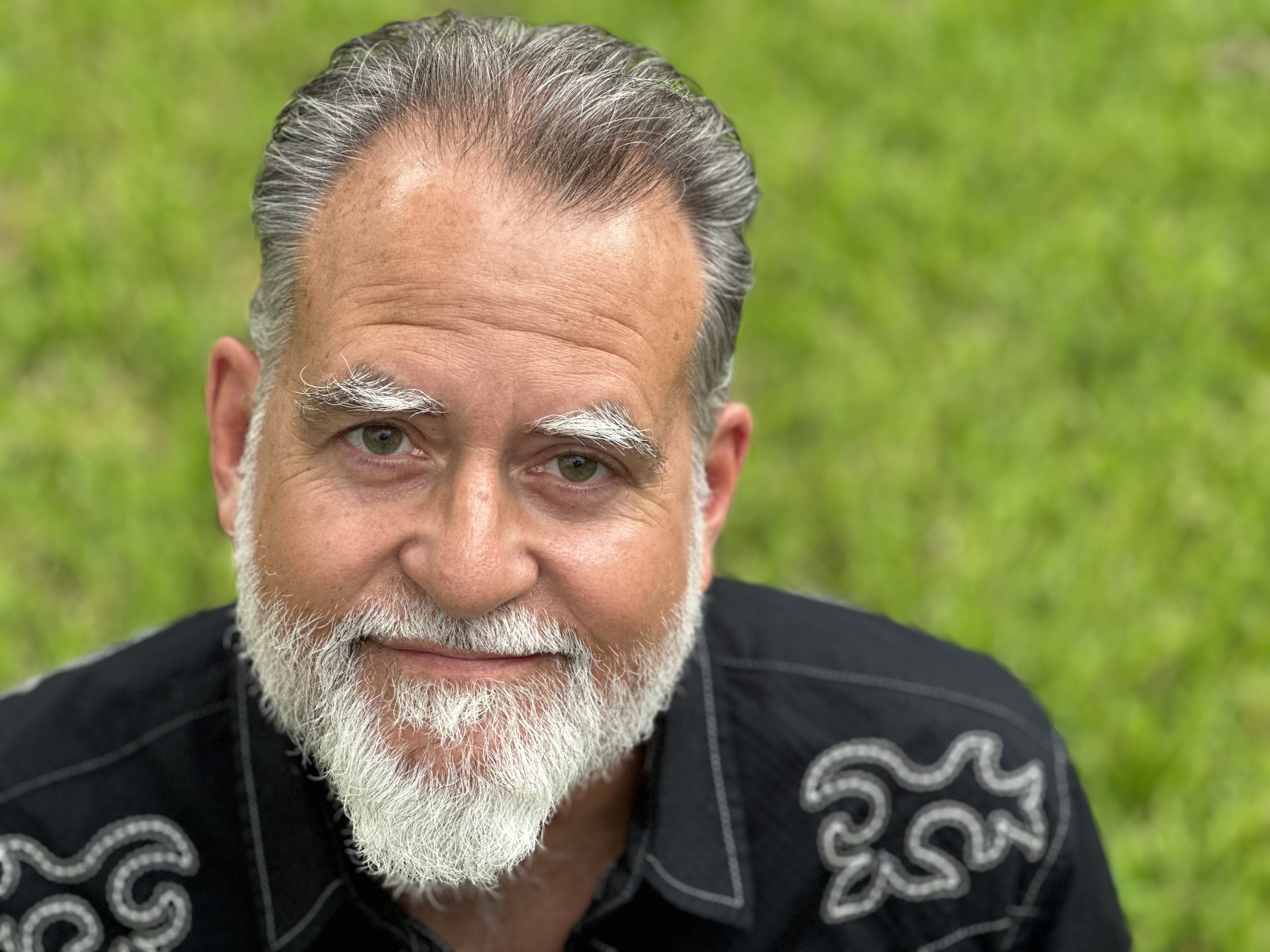
The content of this post has largely to do with where I work: A college campus, where romance and dating are, well, of significant interest.
You may recall from Psychology 101 Freud’s stages of psychosocial development: Oral, Anal, Phallic, Latency, and Genital. Well, as tomorrow is February 1 I’d just like to point out that I find Valentine’s Day over-genitalized. And I’d like your help in reversing the trend.
This post came to mind a few days ago when my wife brought home the class valentines for my sons to hand out to their respective Kindergarten and 3rd Grade classes. I love elementary school Valentine’s Day. Remember when everyone got a Valentine’s card? And it didn’t matter what gender you were? Boys gave valentines to boys and girls to girls. And so forth.
And then it dawned on me. My boys are in the latency stage (ages 6 to puberty). They don’t worry about homoeroticism (or heteroeroticism for that matter) when they exchange valentines. Their classrooms are not sexually charged.
But then puberty hits. And we enter Freud’s Genital Stage. And all of the sudden we become sexual creatures. For the rest of our lives. And Valentine’s Day gets ruined.
Remember Valentine’s Day in High School? Compare it to Valentine’s Day in elementary school. In elementary school, Valentine’s Day was about friendship and inclusion. Love was about philia.
But in High School Valentine’s Day becomes about boyfriends and girlfriends, about romance and hinted at sexuality. Love was about eros. And, thus, it became not about the many, but the few. The few lucky ones who had that special someone. Now, many people hate Valentine’s Day. It has become a reminder not of what you have—a host of friends who love you—but what you might not have (a date on February 14) or about what you have lost.
So I declare: Dr. Freud, your genital stage has ruined Valentine’s Day. I like the elementary school version better.
And I’m going to do what I can the change the trend. Valentine’s Day for all!
Holiness and Moral Grammars

The psychologist Jonathan Haidt, a leading moral psychology researcher, has suggested that there are four moral grammars that humans employ when making judgments of “wrongness.” These are:
Fairness/Justice: Things are deemed “wrong” when they are unfair or unjust (given cultural criteria).
Harm: Things are deemed “wrong” when harm is done. This can be all sorts of harm: Bodily harm, economic harm, status harm, emotional harm, etc.
Hierarchy Violation: Things are deemed “wrong” because a hierarchical relationship has been violated. Examples include issues of respect or deference or the differential rights/privileges of social groups of different standing.
Purity Violation: Things are deemed “wrong” when a previously “pure” state is contaminated by either a group or a behavior.
Haidt points out that each of these moral grammars have their own internal logic guiding judgments of “wrongness,” “sin,” or “morality.” Further, cultures mix these grammars in a multitude of ways. In some cultures a particular grammar is ascendant. In another culture the same grammar might be generally absent. But, at the end of the day, if someone deems an act to be “wrong” the claim generally is governed by one of these four grammars.
Haidt points out that in the contemporary American culture wars the difference between Christian conservatives and secular liberals is that each group deploys different moral criteria. Generally, liberals work with only two of the grammars: Harm and Justice. That is, they feel that an action should be sanctioned only if it either harms people or treats people unfairly. By contrast, conservative Christians deploy all four grammars. That is, even if an act doesn’t harm or cause injustice, it still might be ruled “wrong” for hierarchical (e.g., we must obey God’s law) or purity (e.g., contamination of a scared space, institution, or object, like one’s body) reasons.
It is due to the differential deployment of grammars which causes much of the culture wars. Take homosexuality as an example, as I did a few weeks ago in my adult bible class at Highland.
For the liberal, who only deploys two moral grammars, homosexuality isn’t “wrong.” The analysis runs like this:
Liberal Moral Grammar applied to Homosexuality
Harm? No.
Unfair? No.
Hierarchy Violation? NA
Purity Violation? NA
In fact, if we revisit the Fairness/Justice entry, we find that homosexuals are being treated unfairly. Thus, efforts on their behalf, on the grounds of justice, commence.
Let’s now look at the conservative Christian analysis of the “wrongfulness” of homosexuality:
Conservative Christian Moral Grammar applied to Homosexuality
Harm? No.
Unfair? No.
Hierarchy Violation? Yes. (Defiance of God’s Law.)
Purity Violation? Yes. (Act is deemed unnatural and deviant.)
What Haidt helps us see is this: Liberals and conservatives are talking past each other on these issues because they are not even applying the same moral criteria. They don’t agree, on a fundamental level, about what makes something “wrong.” Unless they each change their moral criteria, agreement is impossible.
Now, this discussion isn’t just between secular people and Christians. It’s a debate within Christianity as well.
In my opinion, the debate centers on if purity categories are, in essence, a form of harm. That is, is it intrinsically harmful to consider persons sources of pollution, defilement, corruption, disgust, and contamination? Are not those attributes, along with their socio-psychological sequelae, when applied to people demeaning, hurtful, and harmful?
If so, which moral grammar should trump in this debate? Harm or purity? As evidence of this current debate within Christianity, consider this comment from Walter Brueggemann:
[I]t is evident that the current and freighted dispute in the U.S. church concerning homosexual persons, especially their ordination, indicates the continuing felt cruciality of the tradition of holiness, even after we imagine we have moved beyond such “primitiveness.” It is my impression that the question of equal rights and privileges for homosexuals (in civil society as in the church) is a question that may be adjudicated on the grounds of justice. It is equally my impression, however, that the enormous hostility to homosexual persons (as to proposals of justice for them) does not concern issues of justice and injustice, but rather concerns the more elemental issues of purity—cleanness and uncleanness. This more elemental concern is evidenced in the widespread notion that homosexuals must be disqualified from access to wherever society has its important stakes and that physical contact with them is contaminating.
In Brueggemann’s quote “holiness” is a standing in for Haidt’s purity grammar. In short, we see the tension clearly articulated: What moral grammar gets applied to an issue like homosexuality?
I don’t necessarily want to dwell on homosexuality in this post, although it’s fine to take this post in that direction in your comments if you wish. I would like to meditate on the issue of holiness.
In my Highland class, as I was discussing Haidt’s grammars and applying them to the issues of homosexuality, a member of the class, one of ACU’s bible professors, said something along these lines: “This issue really just boils down to holiness.”
The comment stumped me. I couldn’t figure out what it meant.
First, perhaps the bible professor meant to equate holiness with purity. If so, then the issue doesn’t really “boil down” to holiness as there are other criteria that Christians like Brueggemann and myself are concerned with (e.g., justice).
Second, perhaps the bible professor meant to group all four of Haidt’s grammars (purity, hierarchy, justice, and harm) under the umbrella term of Holiness. If so, then that move doesn’t get us anywhere as some of those grammars conflict and require adjudication (see Brueggemann’s quote above).
In sum, I didn’t know what the bible professor was saying. I mean, it sounded good. Very theological. But as I unpacked the comment in my mind I found the term “holiness” (as used in this exchange) semantically (or at least rhetorically) vacuous. My suspicion is that the word “holiness” is so abstract as to be almost unhelpful in conversation. As a synonym for purity it is too narrow. Yet, as an umbrella term it fails to give guidance when making difficult adjudications between competing moral goods.
Free Will, Causality, Character, and Moral Accountability: Part 2
![]()
“If a ‘free’ act be a sheer novelty, that comes not from me, the previous me, but ex nihilo, and simply tacks itself on to me, how can I, the previous I, be responsible? How can I have any permanent character that will stand still long enough for praise or blame to be awarded?”
-William James
“Since your majesty and your lordships desire a simple reply, I will answer without horns and without teeth. Unless I am convicted by scripture and plain reason--I do not accept the authority of popes and councils for they have contradicted each other--my conscience is captive to the Word of God. I cannot and I will not recant anything, for to go against conscience is neither right nor safe. Here I stand, I cannot do otherwise.”
-Martin Luther during his trial at Worms (pictured here)
I want to mediate on Choice and Character in the church. In my comments to Pecs in the last post I said that I would like the church to begin making the following transitions:
Choice to Character
Rhetoric to Behavior Change
Trying to Training
Evangelism to Moral Formation
Missions to Social Justice
Moral Blame to Moral Luck
Let me elaborate on this list.
Choice to Character: I think the church makes mistakes when she is overly confident in her appeals to choice. The church should rather focus on the formation of character and the acquisition of virtue.
Rhetoric to Behavior Change: Elaborating further, character is not formed by persuasive rhetoric (i.e., a weekly appeal from the pulpit to be a good person). Rhetoric is excellent for changing opinions and, thus, an excellent tool for improving doctrine. But it is a poor tool for transforming the lives in the pew. That is, we are NOT volitionally nimble. We possess characterological inertia and causal forces will need to be brought to bear upon us to form us into the image of Christ. The word form (as in mold or shape) nicely captures the idea. We don't choose. We are formed.
Trying to Training: Thus, the focus of Kingdom living is less about "trying to be a better person" (via what William James called a "slow heave of the will") than about "training to be a better person." Church should be a kind of boot camp for Kingdom living.
Evangelism to Moral Formation: What I mean here is an evangelism that is volitionally-based, the traditional "Do you accept Jesus as your Lord and Savior? Yes or no?." The move should be to what Jesus asked for in the Great Commission: "Make disciples." Again, the word make gets at the idea very well.
Missions to Social Justice: These last two go together. Mission work should move away from "persuasion models" to actually changing the world. The question for missionaries should shift from "How many souls were saved?" to "How have you transformed that community into the Kingdom of God?"
Moral blame to Moral Luck: We shift from seeing the moral landscape as populated by the "righteous" and the "blameworthy" to seeing the "fortunate" and the "unfortunate." As Immanuel Kant said: “And how many there are who may have lead a long blameless life, who are only fortunate in have escaped so many temptations.”
If we make this shift, from strong volitional to weak volitional models, what gets lost? Actually very little. And the gains are enormous. By embracing causality and the contingent nature of will--by focusing on Character over Choice--the church might actually start being more effective (a nice causal word) in this world. We will rely less and less on God Talk and more and more on, well, actually doing things. You know, make a difference.
But what does get lost in this shift away from strong volitional models is a robust sense of moral blame or praise. In the contingent picture I paint you can't take credit for your good character and neither can we "blame" others for poor character. Yet much of Christian theology seems to hinge on notions of moral praise and blame. Particularly soteriological visions of Heaven and Hell.
But let's reflect on this a little. Do any of us really “take credit” for our character? I don’t. In my reflective moments I really just feel fortunate. I feel fortunate for my family, my wife, my opportunities, my friends, my church, and, ultimately, my God. I see myself as the product of a myriad of causal influences and I simply feel fortunate. Thomas Talbott, philosopher and theologian, in the book Universal Salvation?: The Current Debate, puts it this way:
“So how, then, do the [theologians of free will] explain the supposedly final division within the human race? Presumably by an appeal to human freedom: We ultimately determine our own destiny in heaven or hell. But if that is true, then the redeemed are also in a position to boast, it seems, along the following lines: ‘At the very least, some of my own free choices—my decision to accept Christ, for example—were a lot better than those of the lost, and these choices also explain, at least partially, why my character ended up to be a lot more virtuous than theirs.’
So the question I would put to [these thinkers] is this: Do you really believe that the differences between you and those who will supposedly be lost forever, or even between you and the world’s worst criminals, lies in the superior character of your own free choices? For my own part, I can find nothing either in myself or in the New Testament that would justify any such belief as that. I also find it revealing that few first person accounts of conversion sound anything like liberation free choices. To the contrary, a persistent theme in such accounts is how the Hound of Heaven gradually boxes someone in and closes off every alternative…God drags people to Christ by closing off their options and by undermining over time every conceivable motive for resistance. In that way God gradually restricts and then eliminates altogether one’s power to resist his grace…”
In sum, God gets us to a point where our character is formed like that of Martin Luther. Where we can stand for the Kingdom and the Cross and declare, not our freedom, but of a divine and blissful failure of freedom:
"Here I stand, I cannot do otherwise."
Free Will, Causality, Character, and Moral Accountability: Part 1

Over the last few months I've written a lot about the coming theological crisis concerning free will. In those posts and in the comments that followed I did not state what I felt was the biggest problem with free will doctrines. I'd like to get that problem out on the table. The problem concerns the relationship between free will and character formation.
I think it would be easiest to see the issues at stake by contrasting two commonly cited statements in the free will literature. The first quote, in support of a supernatural origin for free will, is from Roderick Chisholm:
“If we are responsible…then we have a prerogative which some would attribute only to God: each of us, when we act, is a prime mover unmoved. In doing what we do, we cause certain events to happen, and nothing—or no one—causes us to cause those events to happen.”
Chisholm’s phrase, that each of us is a “prime mover unmoved,” harkens back to Aristotle’s description of God as the Prime Mover Unmoved, the idea that God, being in the beginning, is not the product of prior causes. In this view, God creates and acts; God is a “Mover,” but is not “moved” by anything. God is, so to speak, an Uncaused Cause.
Chisholm correctly suggests that this is how we are if supernatural indeterminism were true. We are “prime movers unmoved.” Free will is like a ongoing, daily miracle. That is, like God, all the prior effects upon me, my past experiences, my current circumstance, my physical state cannot ultimately “move” me. This appears to be the common Christian view of free will.
However, can this view support moral accountability? Compare Chisholm’s comments with the sentiments expressed by the American psychologist and philosopher William James:
“If a ‘free’ act be a sheer novelty, that comes not from me, the previous me, but ex nihilo, and simply tacks itself on to me, how can I, the previous I, be responsible? How can I have any permanent character that will stand still long enough for praise or blame to be awarded?”
James points out the problem with Chisholm’s “prime mover unmoved.” Specifically, if you, as “a prime mover unmoved,” make a choice, what led you to make that particular choice? Simple question, but its answer undermines the link between “free” will and moral accountability. If your will is completely free, disconnected, and uninfluenced by prior experience, education, moral training, rewards, punishments and other causal influences then why did you make the choice you made? There seems to be no reason. The choice was made “out of the blue” (or ex nihilo as James phrases it). "But," you may counter, "I made my choice because it seemed logical to me" or "I desired to do the will of God" or "I wanted to be a good neighbor." But the question follows, where did you learn about these things? Why do you care about these things? The only logical response is from your prior experience and that places you firmly within the deterministic system.
Think about it this way. Either your “soul” has preferences (that is, it sees some things as more desirable than others) or it doesn’t. If your soul doesn’t have preferences then any choice it would make would be sheer whim; you don't really care one way or another. Clearly, this is not what we want from free will, the absence of preferences, goals, and values. But if your “soul” has preferences, where did it acquire them? The only sensible answer seems to be that the soul acquired these preferences through its experiences. That is, the “soul’s” goals, values, and preferences are the product of the soul’s prior education and experience. If this is true, if the soul is influenced by experience, then the will isn’t “free” like we claim it to be.
Look at it from yet another perspective. Why punish a child, or anyone for that matter, if the physical or emotional pain of punishment doesn’t have any causal influence upon the will? Punishment should have no effect upon a “free” will. Why teach a child? A “free” will can, because it is completely unconstrained, simply consider the teaching mere noise and choose something completely counter to the teaching. In short, why wouldn’t the “free” will simply act randomly?
A simple response to these questions is to suggest that the will isn’t completely free, that the will is only partly influenced by causal factors such as punishment or education. The difficulty with this suggestion is that a “partly free will” is an incoherent concept. It is impossible to make such a solution workable. For example, let’s say that part of our will, call it Part A, is influenced by experience thereby acquiring goals, values, and preferences. The second “free” part of the will, call it Part B, is the part that consults Part A and then “freely” makes the choice. But the question remains, why should the “free” part of the will, Part B, choose to consult your learning history in Part A? If Part B is “free” from those values you have acquired through life, stored in Part A of your will, then Part B has no intrinsic desire or motive to go with your values or oppose them. The choice of Part B again reduces to mere whim.
Let me elaborate so there is no confusion. Let’s say the soul, both Part A (the storage unit of life experience) and Part B (the free “maker of choices”), start off in life as generally “blank,” with no specific knowledge of right from wrong. During life I teach my child “Do not steal.” This value gets implanted in Part A of the soul, the repository of my experiences. This sequence of events is entirely deterministic. I teach my child, my child forms a memory. If I don’t teach the value, my child has an impoverished moral upbringing, with little in his experience to discriminate right from wrong. Now, at some later date, my child is confronted with the choice to steal. Part B, the free part of the will, will have to make this choice since only free (i.e., nondeterministic) choices are believed to create moral accountability. So, Part B of the soul consults Part A, the history of prior moral influences (good and bad). Part B sees that Part A learned, at some point, that “Stealing is wrong.” So, what should Part B do? Well, Part B we know is free of all deterministic influences. Thus, Part B is independent of the influence of Part A, which means that the mechanism of choice is causally disconnected from all prior moral education and training. Thus, Part B can choose whatever it “wants” to, but, since Part B intrinsically doesn’t “want” anything (how could it?), its choice is essentially random. If this is true, why teach our children not to steal? In short, as I hope it can be seen, a “partly” free will is a nonstarter.
The conclusion, as I see it, is this: Free will disconnects us with our moral training and efforts. This is simply intolerable. The mechanism of choice must be causally connected to our moral training. How else could moral training be effective? But if we accept this conclusion we are trapped by the equally unpleasant conclusion that our choices are the causal product of our moral upbringing. If so, this undermines moral accountability: How can I be held accountable for stealing if I was, let’s say, raised by thieves and praised for stealing? I would simply be the current product of my past.
This, then. is the little noticed problem concerning free will. Supernatural indeterminism does appear to get around causal determinism, but in the end it doesn’t really support moral accountability. It seems that moral accountability, as traditionally understood, is an incoherent concept that is incompatible with both determinism and free will. If this is so, can the idea of moral accountability be rescued? More on that next week.
The Narcotic Functions of Faith: Inside the Defensive Theology Scale

In my blogbook Freud's Ghost, I spend a great deal of time reflecting on Freud's notion that religon is a narcotic, a defense mechanism protecting us from the existential realities of life. I refer you to Freud's Ghost for a fuller discussion.
One of the issues I left on the table in Freud's Ghost was this: If your faith did have narcotic functions (metaphorically speaking), how could you tell? What would a defensive faith configuration look like?
In recent research of mine, I poured over the existential literature on defense mechanisms and looked closely at William James' descriptions comparing the healthy minded believer and the sick soul believer. From these literatures I was able to propose some hypothetical distinctions between narcotic and non-narcotic faith. Those intial ideas were published in 2004. But later, published in 2006, I took those ideas and created the Defensive Theology Scale as a tool to capture some of these defensive themes for research purposes.
Following my theoretical work in 2004, the Defensive Theology Scale was designed to assess five theological tendencies:
1. Special protection
Theme: The belief that the believer will experience less misfortune than non-believers due to God's protection.
Narcotic Function: Creates an aura of "safety," allowing for equanimity and a reduction of basic anxiety.
2. Special Insight
Theme: The belief that the believer can clearly discern the actions of God in life and the will of God in personal choices.
Narcotic Function: Reduces the existential burden of freedom and choice. Further, allows seemingly chaotic circumstances to be "explained" by God's Providence.
3. Divine Solicitousness
Theme: The belief that all the believer's concerns, even the most trivial, are of import to God.
Narcotic Function: Makes the mundane issues of life cosmically significance. Creates a sense of "specialness" to have the Deity acting as, to put it crudely, a butler.
4. Special Destiny
Theme: The belief that God has a very specific plan for one's life.
Narcotic Function: Allows life to be seen as intrinsically meaningful and heroic. Reduces the existential burden of meaning: A pre-existing "destiny" is handed to the person rather than constructed by the person by hard work and risk.
5. Denial of Randomness
Theme: The belief that God's hand is involved in all the events around us, that nothing is inherently "due to chance."
Narcotic Function: Unpredictability is inherently scary. Further, chaos makes us feel that God is not in control. Thus, by banishing randomness/chance/accidents/chaos from the world the believer maintains his/her equanimity.
Let me be quick to say, as I said to concerned reviewers of both the 2004 and 2006 papers, that I'm not denying that God cannot cannot be interested in the minutiae of life or have a plan for someone's life. My interests here are not theological. My interests are, and this is difficult for people to keep clear, psychological. How is the faith system functioning, psychologically, in the mind of the believer? If you look at themes 1-5 above and imagine a person really believing each of these, without nuance, what strikes you about that person? This is my assessment: This person has constructed a happy theological bubble for themselves. All disruptive or distressing material is banished from his/her world. Consider:
There are no accidents, all is a Plan.
I am protected from misfortune.
My choices and life are already laid down for me, I just follow the Path.
All my choices are significant, important, and meaningful.
The universe is well-ordered and under control.
That, by all objective standards, is a VERY comforting world to live in. But is it accurate? Is that the world we really live in? I don't think so. There are accidents and one might befall me today. Choices are hard and God's will isn't very clear at times. There is risk to life and I can make mistakes about the direction of my future. And God might not care if I need a parking space today.
But these realizations are scary and unsettling. Thus, the defensive configuration, it seems to me, is actively engaged in repressing those realizations with their associated anxieties. This is why I conclude that the content assessed by the Defensive Theology Scale gets at the narcotic dynamics of faith.
The actual items from the Defensive Theology Scale are below, group by theme:
Special Protection
I believe God protects me from illness and misfortune.
Despite being a child of God, I will have just as many traumatic things happen to me during my life as anyone else.
I believe that fewer bad things will happen to me in this life because God is protecting me from harm.
My life will be happier because God will keep evil things from happening to me.
Special Insight
When making a choice or tough decision, God gives me clear answers and directions.
God gives me clear and obvious signs to communicate His will to me.
God clearly guides me along the path He wants me to take.
God doesn’t give me clear directions as to what I should do with the big decisions in my life. (reverse-scored)
God gives me special insights about the events taking place around me or involving other people.
Divine Solicitousness
God answers even my smallest requests in prayer (e.g., like helping me get to a meeting when I am late).
I don’t think God intervenes much in the small details of my life, even if I do care about them. (reverse-scored)
If you have deep faith and pure motives God will grant even your smallest requests.
Nothing is too small, liking finding my lost keys, to pray to God about.
Special Destiny
God has a very specific plan for my life that I must search for and find.
God’s Hand is directing all the daily events of my life.
God has a destiny for me to find and fulfill.
Before I was even born God had a detailed plan for the course of my life.
Denial of Randomness
God controls every event around us, down to the smallest details.
A lot of evil in the world is just due to random events with no Divine goal or purpose.
Most of the events around us are random and don’t reveal much about God’s intentions.
Every event around us is a sign of God’s larger plans and purposes.
Again, don't read these items as propositions in systematic theology. Many, even most, of these items may be true, theologically speaking. The goal rather is to observe if a person is uniformly and consistently scoring very high across all these items. Such a person would be displaying a systematic refusal to admit any disruptive material into their spiritual life. This denial is a form a repression, a defense mechanism. The sign of a narcotic faith configuration.
On Bullshit, Psychology, and Theology, Part 5: Meta-lies and Church as a Bullshit-Free Zone
[Dear Reader:
If you are offended by this post, please, as a Christian, respond ethically and in a Christ-like manner. That is, following the directives of Jesus in Matthew 18: 15-17 please contact me first. You should also know that I've submitted my spiritual life to the direction of the elders at the Highland Church of Christ. Please feel free to contact them about your concerns as well.
In the bond of peace,
Richard]
Following up on the last two posts it seems clear that a certain degree of bullshit is needed for social cohesion. That is, lot’s of our speech acts are decidedly not about speaking truthfully but about relational issues. We may bullshit around an issue to spare a person’s feelings.
This, I tell my students, is fine with me. When we interact with each other lots of values collide in our conversations. Honesty is clearly a prime virtue. But it is not the only virtue in play. And, often, we have to choose between competing goods. Sometimes honesty will trump. Sometimes bullshit will trump.
Some students get upset with me when I draw this conclusion. Their fear seems to be that if we admit this truth about ourselves we will be subtly endorsing bullshit and lies. And, via this subtle endorsement, we promote even more lies and bullshit.
The situation is a bit of a conundrum. We all know our interpersonal interactions are full of bullshit, obfuscation, lies of non-acknowledgement, and little white lies. For example, someone tells me a joke. I think it’s lame. But I don’t say that. I smile and laugh. The smile is a bullshit smile. But I feel fine smiling, ethically speaking. However to admit this situation seems to encourage dishonesty. It might be a slippery slope.
So, the conundrum is this:
1. We can’t stop being dishonest.
2. But neither can we admit we are dishonest (for fear of endorsing greater levels of dishonesty).
So what do we end up doing? This: We become dishonest about our dishonesty. We just don’t speak of the fakery we so readily employ. It’s like we are all collectively participating in a very poor magic trick. We all know how the trick works but we pretend not to see. This is why I think my students get upset with me. I'm telling them how the magic trick works.
I’ll call this lie about our lies a meta-lie. I think lots of life is governed by meta-lies, the bullshit about our bullshit. Meta-bullshit.
Agree or disagree with me I now want to try to say something theological and constructive about bullshit in our lives.
This conversation about bullshit interests me because I would like the church to be a place where there is less bullshit. But to make that happen we have to realize how ubiquitous and vital bullshit is to human interactions. My concern is that we work in the church under the meta-lie--the bullshit about our bullshit--sailing along under the assumption that our interactions are very honest when, in fact, they may not be. I personally think people get turned off by church because the bullshit actually gets ramped up in church. That is, there may be more bullshit in the church than outside of it. If politeness and good cheer are forms of bullshit (at times) then there is a lot of bullshit in the church. I believe it is this dynamic that leads people to feel that church is "fake" and "hypocritical." The super-polite conversations come off as superficial and "fake." I think we've all felt this at times.
But we are stuck as we saw in our analysis above. We know there is a problem but we can't state the problem without seeming to endorse more dishonesty. We can't stand up and say, "Life is built around a lot of bullshit. And that is okay, we don't need any hand-wringing. We just need to be honest and see the situation clearly." Why can't we say this? Because people would rather have the meta-lie, "That's not true! I'm a very honest person. I don't bullshit people. The only thing your cynical view will get us is more bullshit by telling people it's okay."
In short, I don't think we can speak candidly about our situation in church. The meta-lies interfere.
I, personally, would like to speak more truthfully in church. I'd like for church to be a bullshit-free zone. But to do this we will need to lay down different social patterns.
Here are two suggestions about making this happen:
1. If we are to replace the "Hi! How you doing?" and the "Good. How are are you?" then we need to change both the structures and expectations of church. Borrowing from my friend Mark Love, we need to claim the idea of a Divine Interruptability. As followers of Jesus, we need to be interruptable. To be interruptable is to allow someone else's concerns, agenda, and life to trump your own. To do this, we will also need to slow down to both allow for interruptions and to take the time to take up each other's concerns. To allow space for, in the words of the New Testament, "taking up each others burdens."
2. Again borrowing from Mark who e-mailed me a comment about these posts a few days ago, we need to claim the sense of "being known" by the One. Our intercourse with God should be transparent and bullshit-free. You can't bullshit God. Yet, I think many people try to. They try to hide from God or offer rationalizations to God. Their prayer life is full of bullshit, refusals to see themselves or present themselves honestly before God. But spiritual maturity sets aside those meta-lies about the self. This acceptance of "being known" is truly humbling. We know what kind of crap exists inside us. To allow God access to that, to surrender it all to God, is a fear-filled but liberating project. Once completed, as Mark suggested to me, our inner anxieties and pride-issues about being transparently known by others should attenuate. You then become more willing to make authentic moves in conversation. More willing to risk interrupting people with your life, trusting that love will meet you halfway. We begin to take ourselves and our concerns less seriously and less urgently. That is, "being known by God" meets a deep need so that when we share with each other the sharing, as is so often the case, is not desperate, needy, clingy, dependent, or attention-seeking. It's simple honesty. We don't spill our stuff for therapeutic catharsis. Church is not group therapy. It's rather a place where honesty, transparency, and authenticity reign. Where new, bullshit-free patterns of social interaction are experimented with and practiced.
On Bullshit, Psychology, and Theology, Part 4: Nagel's Concealment and Exposure
[Dear Reader:
If you are offended by this post, please, as a Christian, respond ethically and in a Christ-like manner. That is, following the directives of Jesus in Matthew 18: 15-17 please contact me first. You should also know that I've submitted my spiritual life to the direction of the elders at the Highland Church of Christ. Please feel free to contact them about your concerns as well.
In the bond of peace,
Richard]
Psychological research tells us we tell about seven lies a day. The content and target of these lies varies depending upon the intimacy of relationship. Generally, in more distant relationships our lies are self-oriented, lies about ourselves. As you can imagine, these are mainly self-presentational lies. In more intimate relationships the lies are more other-oriented. That is, as mentioned in my last post, we fiddle with truth to protect the feelings of loved ones.
This is a descriptive observation. Should it be a normative one? That is, yes, people lie many times a day, even to loved ones. Is this okay, ethically speaking?
When I bring this issue up in class the students tend to sort themselves into one of two groups.
First, there are the Cynics. These students tend to quickly adopt the view that unilateral honesty just won't work, practically speaking. The argument is this: Go through a day speaking honestly and see how you fare. The assumption is that you will leave in your wake hurt feelings, anger, and damaged relationships.
At this point, the second group, the Romantics, speak up. Moral outrage is the general tone. This group tends to argue that totally honesty is critical to a healthy relationships. That is, if the parties are lying to each other on a daily basis how can true love and intimacy proceed? Some students even claim that they don't lie for social functions (e.g., politeness). At this the Cynics express incredulity.
I tend toward the cynical view. It is not that I love lies. It is just that I feel that a large part of social life is built around concealment. An essay that has formed my thinking on this subject is the philosopher Thomas Nagel's Concealment and Exposure. Nagel states that:
This particular problem is part of a larger topic, namely the importance of concealment as a condition of civilization. Concealment includes not only secrecy and deception, but also reticence and nonacknowledgment. There is much more going on inside us all the time than we are willing to express, and civilization would be impossible if we could all read each other's minds. Apart from everything else there is the sheer chaotic tropical luxuriance of the inner life. To quote Simmel: "All we communicate to another individual by means of words or perhaps in another fashion -- even the most subjective, impulsive, intimate matters -- is a selection from that psychological-real whole whose absolutely exact report (absolutely exact in terms of content and sequence) would drive everybody into the insane asylum." As children we have to learn gradually not only to express what we feel but to keep many thoughts and feelings to ourselves, in order to maintain relations with other people on an even keel.
The point, carried over from my last post, is that from an early age we learn the arts of other-oriented lies and bullshit. But let me rush to say that these are not bad things. No, they are rather essential. Nagel continues:
The first and most obvious thing to note about many of the most important forms of reticence is that they are not dishonest, because the conventions that govern them are generally known. If I don't tell you everything I think and feel about you that is not a case of deception, since you don't expect me to do so and would probably be appalled if I did. The same is true of many explicit expressions that are literally false. If I say, "How nice to see you," you know perfectly well that this is not meant as a report of my true feelings -- even if it happens to be true, I might very well say it even if you were the last person I wanted to see at just that moment, and that is something you know as well as I. The point of polite formulae and broad abstentions from expression is to leave a great range of potentially disruptive material unacknowledged and therefore out of play. It is material that everyone who has been around knows is there -- feelings of hostility, contempt, derision, envy, vanity, boredom, fear, sexual desire or aversion, plus a great deal of simple self-absorption.
A little later on in the essay Nagel picks back up on this topic of politeness:
The social dimension of reticence and nonacknowledgment is most developed in forms of politeness and deference. We don't want to tell people what we think of them, and we don't want to hear from them what they think of us, though we are happy to surmise their thoughts and feelings, and to have them surmise ours, at least up to a point. We don't, if we are reasonable, worry too much what they may say about us behind our backs, just as we often say things about a third party that we wouldn't say to his face. Since everyone participates in these practices, they aren't, or shouldn't be, deceptive. Deception is another matter, and sometimes we have reason to object to it, though sometimes we have no business knowing the truth, even about how someone really feels about us.
The point from my last post is that there are times when concealment is not possible. Sometimes we are asked directly about uncomfortable questions. What should we do in these situations? Well, a speech act is required but I contend that the speech in these situations is less a lie and more a form a bullshit, a form of rhetoric rather than representation.
Nagel offers a theory for why deception and concealment are necessary in relationships which highlights much of what we have been talking about:
What is the point of this vast charade?...What then is the social function of acknowledgment or nonacknowledgment with respect to things that are already common knowledge? I believe the answer is this: The essential function of the boundary between what is acknowledged and what is not is to admit or decline to admit potentially significant material into the category of what must be taken into consideration and responded to collectively by all parties in the joint enterprise of discourse, action, and justification that proceeds between individuals whenever they come into contact. If something is not acknowledged, then even if it is universally known, it can be left out of consideration in the collective social process, though it may play an important role separately in the private deliberations of the individual participants. Without such traffic control, any encounter might turn into a collision.
A and B meet at a cocktail party; A has recently published an unfavorable review of B's latest book, but neither of them alludes to this fact, and they speak, perhaps a bit stiffly, about real estate, their recent travels, or some political development that interests them both. Consider the alternative:
B: You son of a bitch, I bet you didn't even read my book, you're too dimwitted to understand it even if you had read it, and besides you're clearly out to get me, dripping with envy and spite. If you weren't so overweight I'd throw you out the window.
A: You conceited fraud, I handled you with kid gloves in that review; if I'd said what I really thought it would have been unprintable; the book made me want to throw up -- and it's by far your best.
At the same party C and D meet. D is a candidate for a job in C's department, and C is transfixed by D's beautiful breasts. They exchange judicious opinions about a recent publication by someone else. Consider the alternative:
C: Groan....
D: Take your eyes off me, you dandruff-covered creep; how such a drooling incompetent can have got tenure, let alone become a department chair, is beyond me.
The trouble with the alternatives is that they lead to a dead end, because they demand engagement on terrain where common ground is unavailable without great effort, and only conflict will result. If C expresses his admiration of D's breasts, C and D have to deal with it as a common problem or feature of the situation, and their social relation must proceed in its light. If on the other hand it is just something that C feels and that D knows, from long experience and subtle signs, that he feels, then it can simply be left out of the basis of their joint activity of conversation, even while it operates separately in the background for each of them as a factor in their private thoughts.
Nagel's point, and you really should read his whole essay, is that a large part of life is managing the interface of our public and private worlds. A speech act is public and once made public is dictates the course of the exchange and relationship. And given that much of our inner life contains, to use Nagel's words, "disruptive material" we just cannot disclose everything we think and feel. And yet, we must interact and converse. Thus, there are times when we are asked to share things that we know would be "disruptive." Our verbal obfuscations at that point may be viewed as dishonest. But I think they are been described as a form of pro-social bullshit.
On Bullshit, Psychology, and Theology, Part 3: Politeness as Bullshit
[Dear Reader:
If you are offended by this post, please, as a Christian, respond ethically and in a Christ-like manner. That is, following the directives of Jesus in Matthew 18: 15-17 please contact me first. You should also know that I've submitted my spiritual life to the direction of the elders at the Highland Church of Christ. Please feel free to contact them about your concerns as well.
In the bond of peace,
Richard]
After our time with both Frankfurt and Cohen it is now time to ask ourselves if bullshit truly is such a bad thing. Might we actually need bullshit?
In his seminal book On Bullshit, Frankfurt states the following:
"The problem of understanding why our attitude toward bullshit is generally more benign than our attitude toward lying is an important one, which I shall leave as an exercise for the reader." (On Bullshit, p. 50)
Why are we so tolarante of bullshit? Perhaps it is because we realize we can't do without it.
That is the thesis of Scott Kimbrough in his essay On Letting It Slide from the book Bullshit and Philosophy.
As evidence of this position Kimbrough has us consider the case of politeness. Generally, politeness requires us to bullshit. True, sometimes it looks like politeness is a lie, but it bears more similarity to Frankfurt's definition of bullshit. For example, let's say a wife asks a husband, "Do I look fat?" Let's say the husband thinks his wife has gained a few pounds. However, he says "No." It looks like he is telling a lie. But, more properly, he's bullshitting. Why? Because the husband's answer is always going to be "No" regardless of the truth of the matter. His speech isn't a lie as much as he has disconnected his speech from any concern with "how things stand." And, according to Frankfurt, that's bullshit.
Is the husband wrong in bullshitting? In one sense, bullshit is the perfect stance for him to take. If he connects his speech to reality he either tells the truth or tells a lie. Either way he's screwed. But it he bullshits, if he systematically decouples his speech (on these occasions) from reality (i.e., No matter the situation his answer will always be "No," forever and ever, Amen) then technically he isn't lying. His speech is doing something different than trying to represent or hide the truth.
Well, what then is his speech trying to do? It's trying to supportive and relational. In this case it is trying to protect the ego of someone he loves; because body weight, in a truly loving relationship, doesn't matter. The husband doesn't want to offer an opinion, he doesn't want to be asked. But he is asked and he can't respond "No comment." So he does the next best thing, he bullshits.
As a recent example of this consider the case of Nick Saban, former Mimai Dolphins head coach, who recently took the job as head coach at the University of Alabama. A few weeks before the end of the Dolphins season, on December 21, Saban was asked directly about if he was looking into the Alabama job. Saban replied: "I'm not going to be the Alabama coach."
Well, it turns out he was considering the job. Days after the last Dolphins game Saban took the Alabama job. He was roundly criticized for being a liar concerning his comments on Dec. 21.
Here was part of Saban's defense: "I'm a little bit of a victim," Saban said. "I get asked questions that I really shouldn't answer. You should have the opportunity to weigh those options and I didn't have the opportunity to do that."
Saban said that he did not choose to answer the Alabama questions with a "no comment" because "then that becomes a big story, and everybody on the team reads it and they're out there saying, 'Well, I don't know if coach is getting ready for this game or not?' "
Saban's point is the point I was making earlier. Saban realized that his speech prior to the end of the Dolphins season could not be engaged in truth-claims. To do so would distract his team. But neither did Saban wish to lie. So what does he do? He bullshits. And his defense is basically this: If you ask those kinds of questions prior to the end of the season you cannot legitimately expect truth. It's an inappropriate question requiring a bullshit answer. And you should know this. Thus, to retrospectively call me a liar misses the whole dynamic of the December 21st exchange. The context of the conversation should have clued you in that you would only get bullshit from me. Not truth, not lies. Bullshit. Note Saban's actual words: "I get asked questions that I really shouldn't answer." His point? If you ask those kinds of questions you are going to get bullshit answers. And bullshit, technically, isn't a lie.
The point of all this is that politeness is a kind of bullshit. For in politeness our speech is not involved in trying to represent truth. As such it is bullshit. But it is a necessary kind of bullshit. Kimbrough cites from William Ian Miller's book Faking It:
"Politeness doesn't need an excuse; fakery is openly admitted to lie at the structural core of the virtue. Politeness is immune to many forms of hypocrisy because a certain benign form of hypocrisy is precisely its virtue...at relatively little cost, it saves people from unnecessary pain in social encounters." (p. 35)
In a similar way, my whole social persona is a form of bullshit. In social encounters if you say, "Hi! How are you?" I will invariably respond, "Good. How are you?" The point is, no matter how I'm feeling, I'm always going to say "Good." I'm not lying, I'm bullshitting. My speech is about something other than the communication of truth-claims. It's about social conventions and cultural greeting rituals. (We should also note that the question "How are you?" is also a form of bullshit in that the question isn't really a question, it's a greeting.)
And the point of all this is that we are awash in bullshit.
And maybe that isn't such a bad thing.
On Bullshit, Psychology, and Theology, Part 2: Deeper Into Bullshit
[Dear Reader:
If you are offended by this post, please, as a Christian, respond ethically and in a Christ-like manner. That is, following the directives of Jesus in Matthew 18: 15-17 please contact me first. You should also know that I've submitted my spiritual life to the direction of the elders at the Highland Church of Christ. Please feel free to contact them about your concerns as well.
In the bond of peace,
Richard]
In 2002, G.A. Cohen published an analysis of Frankfurt's seminal essay On Bullshit entitled Deeper Into Bullshit. The essay appeared in a volume reflecting on the career, work, and legacy of Frankfurt.
In Deeper, Cohen takes issue with Frankfurt's formulation of bullshit and thus greatly expands what we may effectively call bullshit. Cohen's critique of Frankfurt creates what is known as the "Frankfurt vs. Cohen debate" in bullshit studies. In his essay in Bullshit and Philosophy, Cornelis de Waal argues that Cohen and Frankfurt stand for two tauroscatological schools, the structualist school (Cohen) and the intentionalist school (Frankfurt). Let's look at the two approaches.
Cohen starts Deeper by looking at the OED definition of bullshit:
Definition 1: Nonsense, rubbish. (noun)
Definition 2: Trivial or insincere talk or writing. (verb, bullshitted, bullshitting)
Cohen notes that Frankfurt's analysis of bullshit goes with Definition 2. That is, according to Frankfurt bullshit is produced by an indifference to truth, a lack of concern to get things right. de Waal also points out that bullshit can also be produced by "epistemic sloth," mental laziness.
This formulation places Frankfurt in the intentionalist school. That is, bullshit results from the intentions of the bullshitter, the bullshitter's stance in relation to the truth (i.e., an indifference).
Cohen, however, disagrees. Cohen makes this acute observation: There are lots of people who are very interested in truth but who still produce copious amounts of bullshit. Frankfurt's indifference-to-truth thesis cannot adequately explain this situation. Cohen's analysis is important for me because I work and move in places where people are very interested in truth (e.g., the university, church) but where I still hear a lot of bullshit. Thus, if Frankfurt's formulation goes with Definition 2 of the OED, Cohen goes with Definition 1.
Thus, Cohen says that bullshit is found not in the intentions of the speaker but in the content of their speech. For Cohen, a person's intentions are irrelevant for determining if what they say is bullshit. A person might be both deeply concerned with truth and feel that what they say is true but still produce bullshit. For de Waal, this places Cohen in the structuralist school of bullshit. Bullshit is not found in the intentions of the the speaker but in the structure (content) of the speech.
I think this is a valuable point for it greatly expands the cases where we might find bullshit. However, the problem for the structuralist school is how to determine if something, structurally, is bullshit or not. Cohen gets around this problem by greatly narrowing his focus to academic forms of bullshit.
In this focus Cohen unites with Frankfurt in that both, when they speak of bullshit, also have in mind certain trends in higher education. Specifically, they have in mind certain post-modern streams of scholarship where verbal wordplay and obfuscation are viewed as "deep." Both Frankfurt and Cohen take issue with this form of post-modern scholarship for different reasons each reflecting their tauroscatological orientation. Frankfurt dislikes post-modern scholarship in that verbal wizardry disinterested in attempting to communicate "how things stand" is a form of pretentious bullshit. Cohen agrees but focuses less on the intentions of the post-modern academics. Cohen notes that many of these scholars believe they ARE engaged in serious and truth-seeking dialogue; however they are still producing bullshit (i.e., rubbish and nonsense).
The bullshit-rich domain of post-modern studies was aptly displayed by the Sokal Hoax some years ago. Sokal wrote a bullshit piece (from both the Frankfurtian and Cohen definitions) of scholarship and submitted it as legit to a leading post-modern journal. The journal--unable to discern bullshit from truth--published the piece. This hoax was taken by many to be diagnostic that things have gone seriously wrong in certain sectors of the Academy. When wordplay, lack of clarity, and bullshit are taken to be signs of erudition something is amiss.
I think this is an important analysis for theology. It is possible, as jargon is acquired and we move upward into greater and greater areas of abstraction, that at some point our language loses touch with anything meaningful. I frequently hear theological discourse and suspect that this is just what is happening. I love jargon (e.g., I love the word tauroscatological) because it is concise and efficent. But I must beware that my jargon stays both clear and in touch with reality. Otherwise, my "erudition" just becomes hot air. Bullshit. I wonder how many university students suspect that their professors are just bullshitting them?
To conclude, let's back out from this particular focus on the Academy. I think Cohen helps us expand our notion of bullshit. In particular, he allows us to move past the motives of the speaker and focus directly on the quality of the speech. This expansion of focus will be helpful in the posts to come.
On Bullshit, Psychology, and Theology, Part 1: Frankfurt's Analysis
[Dear Reader:
If you are offended by this post, please, as a Christian, respond ethically and in a Christ-like manner. That is, following the directives of Jesus in Matthew 18: 15-17 please contact me first. You should also know that I've submitted my spiritual life to the direction of the elders at the Highland Church of Christ. Please feel free to contact them about your concerns as well.
In the bond of peace,
Richard]
I've been thinking of bullshit lately.
In 2005 Harry Frankfurt, Princeton philosopher, republished his 1986 essay entitled On Bullshit as a stand-alone book. The book was published by Princeton University Press, an Ivy league academic publisher, as a tiny, hardback book. It immediately became a media sensation spending 26 weeks on the New York Times bestseller list.
When I saw On Bullshit at a bookstore in 2005 I picked it up wondering if it was a joke. I noted the publisher and the author and was curious. Princeton University Press and Princeton philosophers are not known for joke books. So, I settled in to read and was quickly engrossed. It was my first introduction to bullshit studies.
Over the holidays I read some more in bullshit studies (Bullshit and Philosophy) and also picked up Frankfurt's follow up to On Bullshit: On Truth. My reading is leading me to write a little about bullshit, its nature, and its implications for both theology and psychology.
Today, to start, we'll look at Frankfurt's analysis of bullshit. You should know that there is some controversy surrounding Frankfurt's analysis. However, Frankfurt, as the seminal thinker in bullshit studies, is where all analyses of bullshit begin.
Frankfurt opens On Bullshit with these words:
"One of the most salient features of our culture is that there is so much bullshit. Everyone knows this. Each of us contributes his share. But we tend to take the situation for granted. Most people are rather confident of their ability to recognize bullshit and to avoid being taken in by it. So the phenomenon has not aroused much deliberate concern, nor attracted much sustained inquiry.
In consequence, we have no clear understanding of what bullshit is, why there is so much of it, or what functions it serves. And we lack a conscientiously developed appreciation of what it means to us. In other words, we have no theory..." (On Bullshit, p. 1)
Frankfurt then begins to do what analytic philosophers do, he begins to analyze and clarify the concept of bullshit. Just what is bullshit?
The main analytic tool Frankfurt uses is the comparison of lying with bullshit. The two concepts seem related and yet distinct. We instinctively feel that both lying and bullshitting have some relation/application to truth, or, more precisely, the lack of truth. That is, when we call a speech act a "lie" or "bullshit" we are stating that we are unsatisfied with what we have just heard. Specifically, we don't think we have been spoken to truthfully.
But it is more complex than that. Lying and bullshitting seem distinct as well. We know that when someone is bullshitting us they might not be, technically, lying. Further, when someone tells us a boldface lie our response isn't to say "That's bullshit!" but "You're a liar!" Finally, Frankfurt notes that, sociologically, we treat bullshit and lying differently. We are intolerant of lies but we appear to tolerate a huge amount of bullshit in our lives and public discourse. Why the difference?
In sum, lying and bullshit seem both related and distinct and Frankfurt sets about clarifying the relationship.
Summarizing greatly, Frankfurt's analysis is this. Lies and liars are very concerned with truth insofar as they are trying to hide the truth from us. In fact, a necessary condition of a lie is a knowledge of "how things stand," of the truth.
But bullshit, according to Frankfurt, is a speech act that is indifferent to truth. A bullshitter speaks about things asking us to treat their speech as a legitimate transmission of information, but in reality the bullshitter neither knows of what they speak nor is concerned to "get things right." Quoting Frankfurt:
"It is impossible for someone to lie unless he thinks he knows the truth. Producing bullshit requires no such conviction. A person who lies is thereby responding to the truth, and he is to that extent respectful of it. When an honest man speaks, he says only what he believes to be true; and for the liar, it is correspondingly indispensable that he considers his statements to be false. For the bullshitter, however, all these bets are off: he is neither on the side of the true nor on the side of the false. His eye is not on the facts at all, as the eyes of the honest man and of the liar are, except insofar as they may pertain to his interest in getting away with what he says. He does not care whether the things he says describe reality correctly. He just picks them out, or makes them up, to suit his purpose." (On Bullshit, pp. 55-56)
This indifference-to-truth is so pernicious Frankfurt makes the following claim:
"[The bullshitter] does not reject the authority of the truth, as the liar does, and oppose himself to it. He pays no attention to it at all. By virtue of this, bullshit is a greater enemy of the truth than lies are." (On Bullshit, p. 61)
I agree with Frankfurt that we are surrounded by bullshit, and I am intrigued by his analysis for a couple of reasons. First, I work in a bullshit rich culture: The University. It is unbelievable the amount of bullshit faculty, administrators, and students produce. So, I'd like to shed some light on this particular milieu. Second, Christians are deeply invested in truth. Thus, bullshit studies should be in conversation with theology. I'm no theologian, so I'll only offer a few amateurish remarks on this interface. I hope, in doing so as an amateur, I don't produce even more bullshit. So be forewarned. Finally, as a psychologist I'm interested in the workaday pressures to bullshit, the world of manners, spin, self-presentation, and the conflicts between truth-telling and being a jerk. How to adjudicate?
The Voice of the Scapegoat, Part 7: "I am Jesus, the one you are persecuting."
This will be my final post in my review of the work of Rene Girard and S. Mark Heim's recent book Saved from Sacrifice: A Theology of the Cross.
From the last post, we quoted Heim's conclusion that "the world has changed in the wake of the gospel: victims have become visible." And that Jesus, via his cross, unmasked sacrificial violence "to found human community on a nonsacrificial principle: solidarity with the victim."
It might be argued that this reading of the cross, although interesting, is not correct. Did the early Christians really understand the death of Jesus in this manner? That is, do you have to become a student of Girard, a modern French/American thinker, to read the text in this way?
Let's look at these questions by examining the book of Acts, the closest account we have of the formation of the Christian community.
The pivotal story in the Acts of the Apostles is the conversion of Saul. When we first encounter Saul he is there at another scapegoating death: The martyrdom of Stephen. We see Saul holding the coats of those who stoned Stephen. In the words of scripture: "And Saul was there, giving approval to Stephen's death."
Soon after, we find Saul pursuing and persecuting Christians: "Saul began to destroy the church. Going from house to house, he dragged off men and women and put them in prison."
There it is again. The scapegoating mechanism. Violence justified by religion. Nothing much seems changed after the death of Jesus.
That is until Saul travels to Damascus...
We know the story well. Saul is knocked off his mount by a bright light and is addressed by a heavenly figure. The mysterious figure calls out:
"Saul, Saul, why do you persecute me?"It is an amazing sequence. Who is Jesus? I repeat, who is Jesus?
"Who are you, Lord?" Saul asked.
"I am Jesus, the one you are persecuting."
He is the one you are persecuting.This realization leads to the transformation of the world. Through the cross of Christ God stands with the victims against the persecutors. And here, at the beginnings of the Christian church, we see the great conversion of Saul. Jesus saves Saul by identifying with the victim. Following Jesus, Saul repents and stands with the victim. He joins the group he had been scapegoating.
Heim summarizes:
Paul meets Jesus, and the means by which Jesus is revealed to him are through Jesus' identity with the persecuted victim. This is the answer as to who Jesus is. The divine voice raises only one issue with Paul: violence. Paul will go on to confess that Jesus is the Son of God, and his own letters will develop many dimensions of theology. But the simple, original substance of Saul's conversion is his change from orchestrating violent animosity against a minority to joining in community with those who were his victims. This is hardly a minor point. For Paul, to accept Jesus is to be converted from scapegoating persecution to identify with those against whom he had practiced it...This pivot point is so important to the writer of Acts that it appears three times, once as a narrative and twice as part of Paul's testimony offered when he himself is on trial for his life...On all three occasions the divine words to Paul, 'I am Jesus, whom you are persecuting,' are centerpiece. (p. 139)Thus Heim concludes:
It is hard to see how this whole presentation makes sense unless the writer of Acts sees the scapegoating dynamic we have been discussing as a crucial object of Christ's work. (p. 140)Recall Job. He was afflicted by God and called it unjust. He called out to God, asking for an advocate in Heaven. A Voice to plead his case. God, in the end, says many things to Job. Confusing things. But one of the things God says is that Job had spoken truly. Victims do need a voice. And in the death, burial, and resurrection of Jesus, Job's prayer is answered. In Jesus, the scapegoat was given a voice. And it was God's. "I am Jesus, the one you are persecuting." The advocate in Heaven is also victim. The Advocate is also scapegoat, the last scapegoat, the Victim that cannot be silenced so that there will be no more victims.
This is an amazing journey. "From the foundation of the world" scapegoats were afflicted by the gods. They were the objects of marginalization and sacrificial violence. This is how the Bible begins. But by the end an amazing transformation has occurred. In the final book of the Bible the scapegoat makes a final appearance:
Revelation 5:1-6The scapegoat has been deified. The voice of the scapegoat is now the voice of God. And the voice speaks against all violence. The final words of Heim's book are these:
Then I saw in the right hand of him who sat on the throne a scroll with writing on both sides and sealed with seven seals. And I saw a mighty angel proclaiming in a loud voice, "Who is worthy to break the seals and open the scroll?" But no one in heaven or on earth or under the earth could open the scroll or even look inside it. I wept and wept because no one was found who was worthy to open the scroll or look inside. Then one of the elders said to me, "Do not weep! See, the Lion of the tribe of Judah, the Root of David, has triumphed. He is able to open the scroll and its seven seals."
Then I saw a Lamb, looking as if it had been slain...
The God who paid the cost of the cross was not the one who charged it. We are saved from sacrifice because God suffered it. To be reconciled with God is to recognize victims when we see them, to convert the crowd that gathers around them, and to be reconciled with each other without them.
I hope you have enjoyed this series. I have loved writing it. I feel passionately that the church needs this reading of the cross. Please get Heim's book and share it with your churches. Heim has much more to say in the book about the nonsacrificial life of the Church, about the apocalypse in Girardian terms, about the sacraments of baptism and eucharist, and about the failure of Christians to "get" the message of the cross. What I have written only begins the journey.
Beyond Heim's Saved from Sacrifice: A Theology of the Cross, if you would like to take up Girard directly I would recommend the The Girard Reader. My copy is all marked up. For a quick exposure to Girard, a summary of his work and a brief interview with the journal Touchstone can be read here
Finally, on a pastoral note, I wanted to find a way to incorporate the Girardian lessons into my daily spiritual journey. So I drafted a prayer, a mantra to remind me of what Jesus is saving me from. My prayer is simply this:
Lamb of God,
Save me.
Let me see my victims. Let me see you.
The one I am persecuting.
Amen
The Voice of the Scapegoat, Part 6: "Surely this man was innocent."
We now explicitly approach the crucifixion of Jesus here in Part 6 of the The Voice of the Scapegoat series. Again, this series is my review of the work of Rene Girard and S. Mark Heim's recent book Saved from Sacrifice: A Theology of the Cross.
Chapter 4 of Saved from Sacrifice: A Theology of the Cross is the climax of Heim's book, the point where he applies a Girardian reading to the crucifixion of Jesus. Heim starts the chapter with these words:
Jesus sets his face to go to Jerusalem. He teaches his disciples that the Messiah must be delivered over and die. He goes 'as it is written' in prophecy. Despite his own reluctance, he does nothing to avoid the end--'not my will, but will be done,' he says. He is supposed to die. Yet the Gospels are equally emphatic that Jesus is innocent, falsely accused, that killing is unjust, that it is shameful for his friends to abandon him, that those who try and execute him are indifferent to truth, captive to evil, motivated by expediency and power. It is wrong for him to die.Heim points out that the cross is a paradox and the paradox is the key to a correct understanding of the death of Jesus. Heim states that we need to see the cross stereoscopically, two perspectives on the same story. It is this stereoscopic perspective that creates the paradox and, unfortunately, causes so much confusion about the death of Jesus.
Which is it?...
...In short, Jesus' death saves the world, and it ought not to happen. It's God's plan and an evil act. It is a good bad thing.
If the story is so familiar that we don't see this problem, we have lost the key. Until we have this problem, nothing else is going to make sense. The paradox is not there by mistake. The strange shape of the Christian gospel has a family resemblance to the other good bad thing we have discussed: sacrifice. This is clue we need. It is at the heart of an understanding of the cross. (pp. 107,108)
Specifically, in the passion narrative there is the classic mythic story of the scapegoat, the story of a sacrifice to please God and bring communal peace. This is the story as it is experienced by those who are immersed in the events, the disciples, the crowd, Pilate, Herod, the Sanhedrin. Thus one story contains the lines, action, and plotlines of a sacred sacrifice to appease God. These themes are undoubtedly present, but we must be careful not to read these dramatic movements too literally.
Why not?
Because a second story is being overlaid this mythic scapegoat story. As readers we get access to the backstage of the drama. We get to see all the props, the makeup room, and the nervous pacing of the actors before they wander onstage. The gospel authors lift the veil of mystery for us. The scapegoating sacrifice, what is believed to be the product and demand of the gods, is now revealed in the gospel narratives for what it really is: The killing of an innocent man by self-interested parties who wish to retain their power and the status quo.
Schematically and dramatically, we have two stories being presented simultaneously in the gospels:
The Onstage Story = The Divinely Mandated Scapegoat SacrificeThis stereoscopic story, where both the onstage and backstage stories are simultaneously presented, is unique in history. Prior to the gospels only the Onstage Story had ever been told. The Old Testament, we have seen, suspected there was a Backstage Story, but it never did get that backstage pass to find out. But here in the gospels everything finally gets exposed. It the death of Jesus the final revelation occurs: Scapegoating must end, forever, because it is simply a ruse and strategy to accomplish our self-interested goals. In the cross, there is one final scapegoat: Scapegoating. As Heim says, the "sacrifice" of Jesus was the sacrifice to end all sacrifices. Violence must cease because we just might be killing God. To put the matter crudely: After the crucifixion of Jesus you just can't kill anyone with confidence anymore. You have to deeply question your motives for violence; to consider the possibility that the person you have so righteously nailed to the cross just might be God Incarnate.
The Backstage Story = The Murder of an Innocent Man
Heim summarizes:
So all the pieces are in place. It is the standard pattern. But the enormous difference is that the pieces are visibly in place. Successful sacrifice is like a magic trick. What actually happens and what everyone believes is happening are two different things. The passion narratives break the spell. They describe the trick with all its moving parts. They highlight what is always in shadow: the innocence of the scapegoat, the arbitrary and unjust way the victim has been selected, the ulterior purposes sacrifice exists to serve. This reversal can be described very simply. In traditional sacrifice the community is unquestionable in the right and the scapegoat is universally condemned. But when we think of the cast of characters in the passion--Judas, Peter, Caiaphas, Pilate, Herod, the crowd--what do they conjure in our minds? What reputations do they carry for their part in this event...? They stand for cowardly, immoral complicity...The sacrificial model may be a war of all against one. But this telling condemns the many, not the one.What then was accomplished by this unmasking of the scapegoating mechanism? Heim explains:
The Gospel accounts are written in stereo, we might say. On the one side is the underlying pattern with all its mythic components in place. On the other side is a constant counterpoint of elements that reveal the hidden realities, the true structure of scapegoating,,,In the Gospel of Luke, at the moment of Jesus' death the centurion at the cross exclaims, 'Surely this man was innocent.' This is not the voice of myth. It is a profound counterconfession, a voice of dissent... (p. 116)
The scapegoating process is stripped of its sacred mystery, and the collective persecution and abandonment are painfully illustrated for what they are, so that no one, including the disciples, the proto-Christians, can honestly say afterward that they resisted the sacrificial tide. In myth no victims are visible as victims, and therefore neither are any persecutors. But in the New Testament the victim is unmistakably visible and the collective persecutors (including in the end virtually everyone) and their procedures are illustrated in sharp clarity.This then was the amazing work of God in the cross. After the cross all victims became visible. This was God's amazing, heroic, and miraculous achievement in the cross. Heim sums us up (p. 261)
...The free, loving 'necessity' that lead God to be willing to stand in the place of the scapegoat is that this is the way to unmask the sacrificial mechanism, to break its cycles of mythic reproduction, and to found human community on a nonsacrificial principle: solidarity with the victim, not unanimity against the victim. (p. 114)
With the benefit of the long view of history, we can see at least one empirical way that the world has changed in the wake of the gospel: victims have become visible. No faith is required to recognize this. It is a massive change that we can miss only because it is so encompassing and because we have come to take if for granted...Why is it that Marxism and feminism and the global antislavery movement are themselves products of cultures shaped by the biblical tradition? We regularly condemn our societies for failure to do more for the poor or disadvantaged, in our own nations or around the world. And we tend to frame this not in terms of positive works of charity deferred but in terms of justice denied. Where does this concern for victims--even the recognition that they should be seen as victims--come from?Answer: The cross.
Praise be to God.
The Voice of the Scapegoat Series

Dear Reader,
Have you ever struggled with the violence of the Old Testament? With the story of Abraham and Isaac? With how God treats Job? And with the whole idea that God demands the death of sinners, ultimatly calling for the death of Jesus to "take our place"? I have. All these things were stumbling blocks to my faith.
That is until I discovered the work of Rene Girard. Reading Rene Girard has transfomed my spiritual journy. However, reading Girard can be difficult. But recently S. Mark Heim's book Saved from Sacrifice: A Theology of the Cross has appeared which gives the church an accessible Girardian reading of the bible.
This series is a summary of both Girard and Heim's work. If you like what you find here, beyond Heim's Saved from Sacrifice: A Theology of the Cross, take up Girard directly. I would recommend the The Girard Reader. For a quick exposure to Girard, a summary of his work and a brief interview with the journal Touchstone can be read here
The posts in the Voice of the Scapegoat are:
Part 1: The Crisis of Penal Substitutionary Atonement
Part 2: Sacred Violence, Scapegoats, and Myth
Part 3: The Bloody Antimyth
Part 4: Whispers of Victims
Part 5: "Things Hidden from the Foundation of the World"
Part 6: "Surely this man was innocent"
Part 7: "I am Jesus, the one you are persecuting"
Best,
Richard
The Illusion of Conscious Will?

Jason's comments to my Dispatches from the Post-Cartesian World post have prompted me to put some stuff out front for those interested in looking into the issues presented by the work of Wegner and Libet. Thank you Jason for your comments and link (which I'll note below).
First, Libet's famous diagram is presented here. Time moves from left to right in milliseconds. Recall, the task was for the person to initiate a motor action. The subject was to do two things. First, the subject was to note when the feeling of "choice" occurred. Second, the subject was to execute the motor movement initiated by the "choice." In the diagram above the moment of "choice" is marked by W (for Will). The motor movement is marked by M (for Movement). Note the gap between W and M, Libet's Veto Window: The time lag between choice and behavior where I can, presumably, change my mind and veto the choice.
The point of the diagram, however, is that, as you can see, the readiness potential (the neural activity) of choice is occurring well before the moment of conscious choice. W happens well up the slope of increasing neural activity, well after the body is showing signs that an unconscious choice has been initiated (i.e., true moment of “choice”). W, the conscious experience of will, comes after the increase in neural activity, not before.
Daniel Wegner's work expands on Libet's research. As I noted to Jason, Wegner's book The Illusion of Conscious Will is considered to be a pivotal book in the area of free will studies as he replaces armchair philosophizing with laboratory research. Wegner's conclusion is this: "Will" is a feeling (akin to an emotion). Specifically, a feeling of authorship, as in "this experience is mine." That is, the "feeling of will" developed to help the organism sort and organize, to use William James' phrase, the "great blooming, buzzing confusion" of conscious experience. "Will" helps me sort out those experiences I am the "author" of versus those which act upon me. Obviously, for adaptive/survival purposes such a distinction would be critical.
Jason then linked us to Tim Bayne's chapter Phenomenology and the Feeling of Doing: Wegner on the Conscious Will which is critical of Wegner on philosophical grounds. This chapter comes from a new book by MIT Press entitled Does Consciousness Cause Behavior?. If you go to the site of the book you can download two of the chapters (the Libet diagram above comes from the introductory chapter of the book).
So, plenty to read for everyone, both for and against the illusion of conscious will!
The Voice of the Scapegoat, Part 5: Things Hidden from the Foundation of the World
We continue with my review of the work of Rene Girard and S. Mark Heim's recent book Saved from Sacrifice: A Theology of the Cross.
Today we move into the New Testament.
We begin with four key NT passages that Girard considers to be very suggestive to his reading of scripture:
Matthew 23:34-36The first three of these passages are parallel gospel accounts of Jesus' confrontation with the Pharisees prior to his crucifixion. Girard considers these passages pivotal for understanding the crucifixion of Jesus as Jesus uses this confrontation to frame and set up the event of his death, a staged event, orchestrated by Jesus to illustrate something.
Therefore I am sending you prophets and wise men and teachers. Some of them you will kill and crucify; others you will flog in your synagogues and pursue from town to town. And so upon you will come all the righteous blood that has been shed on earth, from the blood of righteous Abel to the blood of Zechariah son of Berekiah, whom you murdered between the temple and the altar. I tell you the truth, all this will come upon this generation.
Luke 11:50-51
Therefore this generation will be held responsible for the blood of all the prophets that has been shed since the foundation of the world, from the blood of Abel to the blood of Zechariah, who was killed between the altar and the sanctuary. Yes, I tell you, this generation will be held responsible for it all.
John 8:43-44
Why is my language not clear to you? Because you are unable to hear what I say. You belong to your father, the devil, and you want to carry out your father's desire. He was a murderer from the beginning, not holding to the truth, for there is no truth in him. When he lies, he speaks his native language, for he is a liar and the father of lies.
Matthew 13:35
So was fulfilled what was spoken through the prophet:
"I will open my mouth in parables,
I will utter things hidden since the foundation of the world."
What is that something? Let's look.
Recall that ancient sacrificial religion solved a real problem: Communal violence. But to effect this solution sacrificial religion was built upon a lie, an obfuscation. Specifically, the murder of an innocent person had to be hidden from the eyes of the community. An arbitrary lynching wouldn't unite the people. But a sacrifice demanded and justified by the gods would work. The skittish community could then vent its violence and stand united against the scapegoat. In short, ancient civilization/religion was built upon both a murder and the lie about the murder. Simplifying greatly:
An Unholy Peace = Murder + LieNote that the murder does create a peace. But it is an unholy peace. A peace that requires sin to obtain. But this fact, due to the lie, was not laid bare before the community. Rather, the experience of the community would be this:
A Holy Peace = Sacrifice + Religious MythThat is, the community thinks the peace they experience is holy and good. Why? Because the mythology of religion hides the murder and presents us with something else: A sacrifice.
Combining the two, the Experience and the Mechanism/Reality, the situation the Old Testament and Jesus both faced was this:
The Experience of Religion:What we have observed in prior posts is that the obscured mechanism of sacrifice (that a sacrifice was really just a murder) was being unmasked in the Old Testament. As we move through the Old Testament we see a growing ambivalence about sacrifice. Why? Because the object of sacrifice--the scapegoat--is increasing suspected to be innocent. The Old Testament does not complete this journey but as it closes we have this development:
A Holy Peace = Sacrifice + Religious Myth
The Obscured Mechanism/Reality of Religion:
An Unholy Peace = Murder + Lie
The Experience of Religion:By the end of the Old Testament questions have been raised about all this. Is the peace created by sacrifice holy and good? Is the sacrifice just? Is the scapegoat really guilty? Is the religious justification of sacrifice telling us the truth? This is the situation as we enter the gospels.
A Holy Peace? = Sacrifice? + Religious Myth?
Thus Jesus is poised to do the final unmasking. Jesus will reveal to humanity the "things that have been hidden from the foundation of the world."
What things? Let us now revisit the gospel passages. Jesus states that from the beginning righteous blood has been shed. Murders, many murders, have occurred since the beginning of the world. To highlight this Jesus mentions two people, Abel, the first person murdered in the Old Testament, and Zechariah, the last person murdered in the Old Testament. These two represent all the "innocent blood shed on earth," blood shed explicitly in the name of religion, in the name of God.
Clearly, the Pharisees didn't kill all these people. But they, for Jesus, represent who, or what, is responsible: Religion. As Girard has shown us, from the "foundation of the world" human society was built on a foundation of sacrificial violence. And the Pharisees, in Jesus' world, represent that mechanism. So, to save the world from continuing this violence, Jesus has to complete the work begun in the Old Testament. He has to unmask the mechanism of sacrificial violence, to reveal what has been hidden from the foundation of the world.
Interestingly and revealingly, Satan gets pulled into this conversation. Jesus says two things about Satan. First, Satan was "a murderer from the beginning." And second, Satan is "the father of lies." Note that the "murder" and the "lie" are related in Jesus' description. But think about this. Who did Satan ever murder? The bible never says Satan killed anyone. No, what is going on here is that Satan is implicated in ALL these murders. Satan was there with the murder of Abel "at the beginning" and there with Zechariah. And all the while Satan covers up the murder with lies, obscuring the death of an innocent person with the magic, myth, and ritual of pagan sacrifice and religious scapegoating. That is, the description of Satan as the "Father of Lies" isn't about us and our workaday temptations with truth-telling. No, Jesus is speaking of a systematic lie, the Deep Lie at the Root of Civilization as Jesus knew it. What was that Deep Lie? Simply this: The scapegoat is guilty, responsible for the evils now facing us. Thus, the gods demand that we sacrifice the scapegoat. If we do so, the gods will be pleased and all will go well with us.
Jesus came to save us. As Christians we believe this. We were saved from our Sin and from Satan. Our Sin was the violence that supported our lives. We killed, from the foundation of the world, to survive and thrive. Further, Satan, the Father of Lies, hid this truth from us. Jesus pointed all this out right before his crucifixion. He was poised, finally, to expose all those "things hidden from the foundation of the world." And when these things were revealed we saw, for the first time, the blood on our hands the the lie that hid the blood from our eyes.
And thus, in a very specific way, we were saved.