The Grace of Disillusionment

So many of us are disillusioned with the church. Some of this is due to the idealism that naturally accompanies the church. The church is aspiring to be the Kingdom of God. We're attracted to church because of what it could and should be.

But the church rarely is what it could or should be. So the church both raises and dashes our hopes. You can't help but become idealistic when talking about the church, but that idealism creates expectations that human communities cannot meet. So hopes crash and disillusionment follows.

But might some grace be found in our disillusionment? Might our disappointments with the church be a gift? That's an argument Dietrich Bonhoeffer makes in Life Together:
Just as surely as God desires to lead us to a knowledge of genuine Christian fellowship, so surely must we be overwhelmed by a great disillusionment with others, with Christians in general, and, if we are fortunate, with ourselves.

By sheer grace, God will not permit us to live even for a brief period in a dream world. He does not abandon us to those rapturous experiences and lofty moods that come over us like a dream. God is not a God of the emotions but the God of truth. Only that fellowship which faces such disillusionment, with all its unhappy and ugly aspects, begins to be what it should be in God's sight, begins to grasp in faith the promise that is given to it.

The sooner this shock of disillusionment comes to an individual and to a community, the better for both. A community which cannot bear and cannot survive such a crisis, which insists upon keeping its illusion when it should be shattered, permanently loses in that moment the promise of Christian community. Sooner or later it will collapse. Every human wish dream that is injected into the Christian community is a hindrance to genuine community and must be banished if genuine community is to survive. He who loves his dream of a community more that the Christian community itself becomes a destroyer of the latter, even though his personal intentions may be ever so honest and earnest and sacrificial.

A Peaceable Faith: Part 6, Cultural Humility

Last post in this series.

The goal of this series was to track my intellectual and spiritual development in how I think religious belief can avoid the pernicious outcomes described by Ernest Becker in his two books, The Denial of Death and Escape from Evil, what Terror Management theorists call worldview defense. 

As I've shared, I found my early conclusions in The Authenticity of Faith, embracing doubt and deconstruction to stand in a more hospitable posture toward others, to be unsatisfactory. To be sure, the moral benefits of what eventually was described as Trade-Off Theory are wonderful. But a faith rooted in doubt isn't much of a faith. And it's hard to build a church around a bunch of angsty doubters. 

Of course, among progressive, ex-evangelical types, Trade-Off Theory may really be the only way they can remain a Christian. But for my part, after many years of deconstruction, I wanted to make a turn toward reconstruction. But when you do that, you're back to facing Ernest Becker's concerns about worldview defense. If your convictions start to (re)grow during a season of reconstruction, won't you be tempted back into worldview defense? 

So, after many years, I (re)faced the question that had set the agenda for my early research and spiritual searching: With convictions back on the table, how to make a reconstructed and vibrant faith a peaceable faith? How can religious conviction escape worldview defense?

I shared over the last three posts the answer I came up with in The Slavery of Death, embracing eccentricity rather than doubt. You're free to evaluate that argument however you'd like. But for this final post I want to share another approach toward worldview defense that I encountered after the publication of The Slavery of Death.

In 2014, I got a very kind email from Sheldon Solomon, one of the pioneers of Terror Management Theory, who had read and enjoyed The Slavery of Death. In our email exchange, Dr. Solomon shared with me a recently published study by Pelin Kesebir entitled "A Quiet Ego Quiets Death Anxiety: Humility as an Existential Anxiety Buffer" in the Journal of Personality and Social Psychology. Summarizing Kesebir's research, humility was observed to attenuate worldview defense in her participants.

Kesebir's research put humility on my radar screen as a possible answer to the threat of worldview defense. Since 2014, the empirical research about humility has exploded. Much of this research has shown that humility functions as a regulating virtue upon which many other virtues depend. Especially relevant, given our focus on how we treat difference, has been the research on what is called "cultural humility."

To see this, we need to define humility. As studied by psychologists, humility is a suite of intrapersonal (having to do with our egos) and interpersonal (how we relate to others) characteristics and capacities. An influential list comes from June Tangney. Humility involves the following:
  • Possessing an accurate assessment of yourself
  • A willingness to acknowledge your mistakes and limitations
  • An openness to the viewpoints and ideas of others
  • An ability to keep your accomplishments in perspective
  • Low self-focus
  • Appreciating the value other people
Again, notice the mix of ego-focused (e.g., accurate assessment of yourself, low self-focus) and relationship-focused (e.g., openness to the viewpoints of others, appreciating the value of other people) characteristics. The two are related. The size and configuration of your ego affects how you see and treat others. Crucially, for our conversation about worldview defense, is how humility places us in an open and generous posture toward others, especially those who are different. Given this, you can see why Kesebir found in her research that humility protected her participants from worldview defense. 

In light of the relational benefits of humility, researchers have looked at what is called "cultural humility" in how we can engage cultural difference. Facets of cultural humility include:
  • Legitimate interest in and curiosity about cultural others
  • Teachable, open, and willing learn from cultural others
  • Empathy and ability for perspective-taking (seeing the world through the eyes of cultural others)
  • Critical self-awareness about your cultural perspectives and biases
  • Kindness and generosity toward cultural others
  • Valuing the intrinsic dignity and worth of cultural others
Looking over this list, it should be clear how humility helps us overcome worldview defense when faced with cultural differences. I don't need to doubt my values and beliefs. I can, rather, practice cultural humility when I encounter differences. 

Stepping back and summarizing the journey of this series, there are a variety of ways we can practice a peaceable faith. Some of us might choose to hold their beliefs tentatively and provisionally to reap the moral trade-offs of doubt and deconstruction. Some of us might practice eccentricity in kenotic gratitude and cultivating the prophetic imagination. And hopefully all of us work to practice cultural humility. 

In short, the are multiple ways to practice a peaceable faith. 

A Peaceable Faith: Part 5, The Prophetic Imagination

If you've followed the argument threaded through the last few posts, I suggest in The Slavery of Death that worldview defense can be attenuated and avoided by adopting a kenotic posture towards our life, a posture that is cultivated by receiving our lives as a gift to be surrendered back toward God in acts of service and with thanksgiving and praise. Instead of anxiously clinging to life, we are able to give it away.

While this kenotic, non-grasping posture is foundational for acts of self-giving love, the "psychological pre-requisites of love" if you will, what I've been describing doesn't precisely get at the issue of worldview defense, how difference is threatening to us. So, what can be said about this particular issue?

Addressing this in The Slavery of Death, I keep with the notion of eccentricity. But in this instance, the eccentricity is applied to God. 

God is eccentric

What does this mean, and what import does this have for thinking about worldview defense?

Borrowing from Walter Brueggemann's description of "the prophetic imagination," injustice, oppression, and violence occur when God becomes an object of possession held by the community, when a group claims proprietary ownership of God. Such a community "hoards" God, defending God against the claims of others. 

Given this "captivity of God," where God is used to sacralize and legitimize current political and social arrangements, Brueggemann describes how the first act of the prophet is to proclaim the "freedom of God." God is set free to stand over against the group. That was the shock of the Exodus, how God wasn't aligned with the powerful in Egypt but was, rather, found among and for the slaves. 

This is the idea of an eccentric God. The community doesn't own or possess God. Rather, God exists beyond the boundaries of the community and is at liberty to stand with and for the victims of the community

In short, the practice of the prophetic imagination is to nurture the moral capacity to imagine God's radical eccentricity, the shocking freedom of God to show up beyond the boundaries of my community and to stand with my victims, and even with my enemies (read the book of Jonah!), in prophetic indictment against me. When this capacity is lost, God becomes "captured" by the group and is used to baptize and justify our violence toward others. God becomes an engine of worldview defense.

But an eccentric God, a God who is free enough to speak against me, puts the breaks upon worldview defense for God is now found among Them rather than among Us. That's the eccentricity of prophetic imagination, always imagining God outside the borders of my tribe. 

As a historical example of all this, this is what Barth was doing when he proclaimed God to be "Wholly Other." The radical eccentricity of the Wholly Other God created the prophetic resources Barth required to emancipate God from the ideological captivity of German nationalism.

So, that's the answer I gave in The Slavery of Death. How do we avoid worldview defense? How can we practice a peaceable faith? We can cultivate the prophetic imagination. 

But this is not the end of the series! One more post to go to bring in some more recent reflections since the publication of The Slavery of Death

Psalm 34

"I will teach you the fear of the Lord"

In an age where anxiety disorders are skyrocketing, teaching people to fear the Lord sounds like a mental health disaster. More, there are those progressive theological concerns about a "sinners in the hands of an angry God" theology.

But as I expect you know, the Hebrew word translated as "fear" has a range of meanings which include reverence and awe. And here's the interesting thing: Awe is now one of the hottest topics right now in positive psychology given its mental health benefits. Take a look, for example, at Dacher Keltner's book Awe: The New Science of Everyday Wonder and How It Can Transform Your Life. As Keltner describes, awe is "the feeling of being in the presence of something vast that transcends your current understanding of the world." Awe creates what psychologists describe as "the small self," a self that comes to see itself as a part of a greater, connected whole. A small self is a self that is in a relationship with the world. Not surprisingly, given this felt sense of connection with the world, those who possess a small self are more likely to engage in caring and compassionate action.

We're now just discovering the mental health and relational benefits of awe. The ancient Hebrews have been talking about this for a very long time.  

A Peaceable Faith: Part 4, Gratitude For

In the last post I described a change in my thinking that occurred between my books The Authenticity of Faith and The Slavery of Death concerning how religious belief can avoid worldview defense, the way our convictions become engines of hostility in the world. 

Summarizing, in The Authenticity of Faith I embraced what would later be called Trade-Off Theory. This is the path of doubt and deconstruction embraced by many progressive Christians. If you hold your beliefs more lightly and provisionally you're better positioned to approach difference with curiosity and hospitality. 

But as I described in the last post, in The Slavery of Death I turned from doubt to embrace eccentricity as the better path forward in dealing with the temptations of worldview defense. The idea is that if I receive my life as a gift I have the capacity to give my life away in love and do not have to lash out aggressively toward those who threaten me. Gratitude helps me escape the death anxiety that drives worldview defense.

And yet, as I mentioned at the end of the last post, a skeptic might raise some questions here. For it seems that a lot of Christians, who appear very grateful to God, still display a great deal of intolerance and hostility. So pointing toward gratitude isn't a magic bullet here. What more is needed?

Well, the first thing to say is that gratitude isn't the end but the means. The goal isn't merely to be thankful. The goal is giving your life away in love. So the critical issue is gratitude for. Gratitude for self-offering love.

Diagnostically speaking, if we observe Christians who are "thankful" to God but who display worldview defense, we can surmise that their religious beliefs are still, at a deep psychological level, operating defensively, as described by Ernest Becker in The Denial of Death. You're "thankful" but your posture toward your life remains one of proprietorship. You've been given a gift, and you're thankful, but you're now treating that gift as your exclusive property, to be defended over against the claims of others. You're hoarding your gifts rather than generously sharing. 

Consider, as a diagnostic example, what it means to be thankful for your nation. You could be thankful in a proprietary way. This country has been given to Us--Thank God!--and not to You. Conversely, you could be thankful in a way that promotes generosity, sharing, and hospitality. Since this country is a gift I want as many as possible to share in its blessings. Gifts aren't to be hoarded but shared. Consider here the Parable of the Unforgiving Servant. He is given a great blessing and gift, but refuses to pay that blessing forward. The servant is grateful, but in a proprietary way. Mercy is for him alone, and not for others. His gratitude in the face of the gift is narrow and selfish.

So, again, what we're looking for here is more than mere "Thank You." We're looking at how gratitude loosens your anxious grip on life, prompting sharing, generosity, and love. In the language of Philippians 2, we're looking at how receiving your life as a gift translates into kenosis. Are you anxiously clinging to your life, fearing that you might lose it? Or are you letting go of your life in self-emptying love? That is the critical contrast, clinging and grasping versus sharing and letting go. Going back to the last post, what we're looking for here, diagnostically speaking, is an economy of gifts. God gives us life and we surrender our lives back to God in acts of service and love as an offering of thanksgiving and praise. 

And yet, a critic still might have some questions here. Being a loving person isn't exactly dealing with worldview defense, how we grow threatened and wary in the face of difference. How, then, does eccentricity help us on this critical point? 

I say more about that in The Slavery of Death, which I'll turn to that in the next post.

A Peaceable Faith: Part 3, Replacing Doubt with Gratitude

To recap, at the end of The Authenticity of Faith I had embraced Trade-Off Theory as the way to avoid the worldview defense Ernest Becker predicted would be inevitable from tightly and dogmatically held convictions. If fundamentalisms, of whatever sort, are engines of violence then stop being a fundamentalist. Lighten your grip on your beliefs. Embrace doubt. This will put you in a more hospitable posture toward others.

And yet, as I shared, after many years of living in the midst of this trade-off, I found this space, for me at least, ultimately unsustainable. I felt I needed a different path toward a peaceable faith.

That different path showed up in my book The Slavery of Death

I like all the books I've written, for different reasons related to each project, but when I'm asked to name my "favorite book" I pick The Slavery of Death. Mainly because that book helped me break through my deconstruction and started me on the path toward reconstruction. The Slavery of Death remains the "operating system" of my faith, articulating how I think about the Christian life. The Slavery of Death is not a manifesto by any means, but it holds something like that place in my heart and mind. That book is the best articulation of my theological worldview.

So, what do I do in The Slavery of Death to avoid the shadow of worldview defense? 

The main move I make is replacing doubt with eccentricity. Inspired by David Kelsey and Arthur McGill, eccentricity has become for me a master, regulating idea. 

By "eccentricity" I mean that the source of our lives exists outside of ourselves and comes to us as a gift. I first encountered this notion, and a window into the psychological impact of eccentricity, in McGill's description of the eccentric nature of Jesus' life. McGrill describing Jesus' psychology (emphases are mine):

In the New Testament portrayal of Jesus, nothing is more striking than the lack of interest in Jesus' own personality. His teachings and miracles, the response of the crowd and the hostility of the authorities, his dying and his resurrection--these are not read as windows in Jesus' own experience, feelings, insights, and growth. In other words, the center of Jesus' reality is not within Jesus himself. Everything that happens to him, everything that is done by him, including his death, is displaced to another context and is thereby reinterpreted. However, this portrayal is understood to be a true reflection of Jesus' own way of existing. He himself does not live out of himself. He lives, so to speak, from beyond himself. Jesus does not confront his followers as a center which reveals himself. He confronts them as always revealing what is beyond him. In that sense Jesus lives what I call an ecstatic identity.

In all the early testimony to Jesus, this particular characteristic is identified with the fact that Jesus knows that his reality comes from God...Jesus never has his own being; he is continually receiving it...He is only as one who keeps receiving himself from God.
It is difficult to state just how huge these lines from McGill have been for me. (Incidentally, I fuse McGill with Kelsey to describe Jesus' "eccentric identity" rather than his "ecstatic identity.") 

I need to connect some dots here. How does eccentricity face the challenge of worldview defense? How does eccentricity produce a peaceable faith? The Slavery of Death sets out to answer those questions.

You'll need to read the book for the full treatment, but the basic idea boils down to this. When my life and identity are experienced as a "possession," as something I own and therefore must defend, I'm prone to lash out toward anything that threatens my life, status, or resources. If, however, my life and all I have comes to me as a gift, then my anxious efforts to protect and defend attenuate. For if I do not own my life I am never at risk of losing it. Death anxiety, the root engine of Becker's analysis of worldview defense, loses its hold upon me. Eccentricity frees me from the slavery of death.

You see this dynamic quite clearly in the gospels during Jesus' trial and crucifixion. Pilate cannot understand why Jesus isn't afraid, why he is not struggling to save his life. And the answer to Jesus' non-anxious peaceableness is found in Jesus' eccentric identity. Since Jesus knows his life comes from the Father he is willing to offer it back to the Father as a sacrifice of love. You see that surrender in Jesus' final words upon the cross: "Father, into your hands I commit my spirit." From first to last, Jesus' life was one, entire outpouring of love. Jesus didn't need to fight Pilate, or anyone else for that matter, because Pilate couldn't take anything from Jesus, not ultimately. 

Simply stated, when we live out of an experience of gift our worries for self-preservation lessen, and this creates the moral capacities for self-giving love. Eccentricity creates a peaceable faith because I'm able to give my life away, in mostly small ways but also in large ways. My life is a gift and I give it back to God in love, praise and thankfulness. 

You could say that in The Slavery of Death I replace doubt with gratitude as the path toward a peaceable faith.

And yet, a critic should not be wholly satisfied with this. There are many Christians who experience gratitude toward God who also demonstrate a lot of worldview defense. So the gratitude here is of a distinctive sort. Just expressing "Thank You" to God doesn't get down into the rot. 

I'll turn to that issue next. 

A Peaceable Faith: Part 2, Trade-Off Theory and Deconstruction

As I described in the first post, my encounter with Ernest Becker set me on my own particular journey of "deconstruction." Specifically, I was haunted by Becker's argument that religious belief, as a cultural hero system deployed to repress and sublimate death anxiety, would be inevitably involved in worldview defense, hostility toward cultural outsiders. 

This isn't idle academic speculation. Worldviews, cultural differences, values, ideologies, and religious faith have been the primary engine of violence, genocide, terrorism, colonialism and war in the world. And if you think you're somehow escaping worldview defense, just consider the political hostility we experience between Republicans and Democrats. This is an election year, and the worldview defense is going to explode. Social media will be filled with fear and hate.

In addition to the witness of history, the empirical work of Terror Management Theory has also demonstrated the reality of worldview defense. 

In short, your values make you violent. 

As a person of faith, I found (and find) all this very troubling. Is a peaceable faith possible? Can you hold to cherished values in a way that won't cause you to lash out and attack those who disagree with your beliefs? 

If you ponder it, this seems to be a very real psychological challenge. The more passionately you hold a conviction the more violent will be your response toward anyone who challenges the the truth of that conviction.

Troubled by all this years ago, I went in search of some answers. Most of this search was through a series of studies I did (see here and here and here) that I eventually pulled together in my book The Authenticity of Faith to make an extended argument. That argument was later succinctly summarized by Tongeren, Davis, Hook, and Johnson as Trade-Off Theory.   

The basic idea is simple enough. If you hold your beliefs dogmatically you will reap the benefits of existential comfort and consolation, but at the price of worldview defense. That's the trade-off, comfort at the price of intolerance. However, you can avoid this outcome by holding your beliefs more tentatively and provisionally. But the cost here is existential uneasiness. Lacking any firm convictions in the face of death, we have to live with a fair amount of anxiety. The win, though, is a more open posture toward difference, less worldview defense. You trade comfort for tolerance. 

This was the conclusion I reached at the end of The Authenticity of Faith. There are moral and ethical benefits to doubt and uncertainty. If I don't possess all the answers, I stand in a more open and tolerant posture toward others. I'm more willing to listen and learn. Dogmatism and fundamentalism, while comforting and consoling, are dangerous. So it's better to hold your beliefs more tentatively in order to extend welcome and hospitality toward difference. 

If you've followed the conversations about "deconstruction" in Christian spaces over the years, this dynamic should be familiar to you. People who are "deconstructing" are coming out of conservative, dogmatic, and fundamentalist faith traditions. In the past, they found these faith traditions to be very comforting and consoling. You possessed all the answers and knew you were among God's chosen. That is a very happy place to be. Trouble was, the pricetag of that consolation was worldview defense, hostility toward the world, the stigmatization and demonization of difference. Your convictions turned you into a culture warrior. 

Finding this hostility antithetical to the life of Jesus, many began a journey of "deconstruction." This is the ex-evangelical and progressive embrace of uncertainty and doubt, the open-endedness of faith as journey. True, this deconstruction brings along with it a lot of anxiety and uncertainty, we have to live without the answers, but the upside here is tolerance and inclusion. Brian McLaren, the late Rachel Held Evans, Sarah Bessey, Rob Bell, Peter Rollins, Richard Rohr, Donald Miller, and Peter Enns, among others, were influential voices when deconstruction first became thing over a decade ago, and they remain treasured companions for many today. A consistent theme is found in their books: embrace uncertainty to embrace others. 

Basically, Trade-Off theory.

This was precisely were I was when I started this blog in 2007. I was a companion for the deconstructing for many years. A lot of people found my writing because Rachel Held Evans frequently shared links to my blog in her regular Sunday Superlatives posts. During those years, I preached Trade-Off theory. Doubt was a moral good. Conviction was an engine of hostility. I was a progressive Christian.

But as longtime readers know, a little over ten years ago, triggered by sharing life at Freedom Fellowship and becoming a prison chaplain, I began my phase of "reconstruction." The publication of my book Reviving Old Scratch: Demons and the Devil for Doubters and the Disenchanted in 2016 caught my audience by surprise, and that book remains the least favorite book I've written among my most progressive readers. I also started describing myself as a "post-progressive" Christian, much to the annoyance of these same progressive readers.  

I don't think progressive Christianity is a bad thing. I'm post-progressive, not anti-progressive. So let me be clear: Progressive Christianity is banal, but evangelicalism is a dumpster fire. I remain convinced that Ernest Becker was right: Dogmatism and fundamentalism are reliable engines of violence and hostility. My worries here have not abated in the least. 

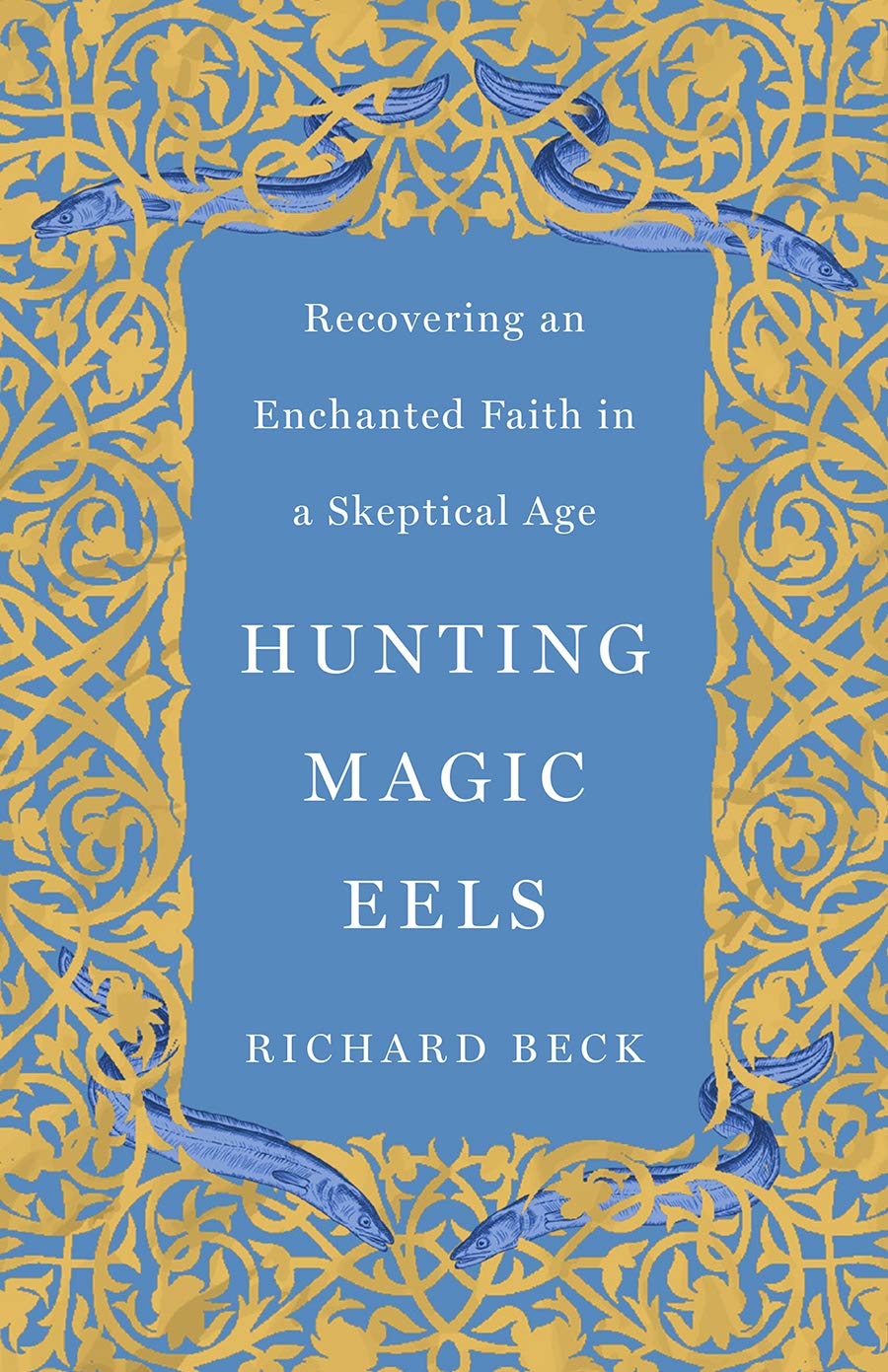
And yet, as a post-progressive Christian, I have become concerned about Trade-Off theory, my ending to The Authenticity of Faith. It is true that doubt is a moral good, but chronic doubt has other sorts of problems. For example, a lot of formerly progressive Christians are no longer Christians. This, it seems to me, is the logical outcome of Trade-Off theory, to deconstruct until you believe nothing at all, or to the point where your beliefs are so insipid it makes one wonder why anyone would bother with them at all. I find is outcome worrisome for reasons I talk about in Hunting Magic Eels

Which brings us back to the question of this series: 

If not deconstruction and Trade-Off theory, then how is a peaceable faith possible?

A Peaceable Faith: Part 1, The Dark Side of Outliving Your Life

My book The Authenticity of Faith, perhaps my least read book, is an attempt to face a significant concern that can be leveled against religious belief. Can we practice a peaceable faith? Or is faith intrinsically bound up with hostility and violence?

I first faced this issue when I encountered the work of Ernest Becker, his books The Denial of Death and Escape from Evil. I reencountered the issue when I discovered the empirical research of Terror Management Theory. 

Many people know about and have read Becker's The Denial of the Death. Fewer have read Escape from Evil. But the argument Becker makes across both books, and sharpened by Terror Management Theory, has devastating implications for the life of faith.  

Becker begins his argument by noting that humans face an intolerable existential predicament: We are the animal that knows it is going to die. This knowledge creates a crushing weight of existential anxiety. This anxiety would prove to be debilitating if it were not for cultural worldviews that provide us with pathways toward symbolic immortality, along with religious beliefs in literal immortality. Literal immortality, like going to heaven, is straightforward enough. By symbolic immortality Becker means human efforts to leave a mark on the world after your death. We want our lives to have made some positive difference, and that positive difference, the ripple effects of my life, is a form of symbolic immortality. At my school during May commencement we give an alumni award called the "Outlive Your Life Award." According to Becker, we're all trying to win some form of an outlive your life award. 

All this effort, along with religious beliefs in life after death, assuage and sublimate our death anxiety. "Sublimate" is a Freudian term that describes how we channel our anxieties into valued outlets. Our death anxiety becomes productive. Those alumni who win the Outlive Your Life Award have done some pretty amazing things. They have started businesses, engaged in philanthropy, impacted thousands of lives for the good. Anxiety becomes the engine of culture creation.

Which is good, and bad. Becker mostly focuses upon sublimation in The Denial of Death, how we try to outlive our lives through what Becker calls "cultural hero systems." But he turns to the dark side of these efforts in his follow-up book Escape from Evil. Few people have read this extension of Becker's argument. 

In Escape from Evil Becker asks the question: What is the source of the hostility and violence in the world? Shockingly and disturbingly, Becker points his finger at our outlive your life awards. Basically, the values and beliefs that imbue our lives with purpose, meaning, significance and existential security are being deployed to manage anxiety. Simply put, our cherished beliefs, our religious beliefs among them, are operating as psychological defense mechanisms. Consequently, when we face people who deny, challenge, or espouse alternative values and worldviews we engage in what Terror Management Theory calls "worldview defense." We lash out and demonize cultural outsiders, for their mere existence calls into the question the ultimacy of my cultural and religious worldview. Cultural outsiders challenge the truth and legitimacy of my beliefs simply by existing, simply by being different. This implicit (and explicit) challenge makes me very anxious, so I attack difference. Sometimes physically, but most often through hostility, stigmatization, marginalization, and other forms of social and political coercion. 

Summarizing, Becker brings us to a very depressing conclusion: The values and beliefs that give my life purpose and security are the primary source of evil in the world. This is the darkness that haunts the outlive your life award.

As you might guess, when I first encountered Becker's argument in graduate school I was stunned. Shaken. Ernest Becker was one of the most shattering religious experiences of my life. My encounter with Becker triggered many decades of my own peculiar sort of religious "deconstruction." While most people "deconstruct" to come out of religious fundamentalism, my quest was preoccupied with Ernest Becker: Can religious belief escape worldview defense? If it could, how? 

Is a peaceable faith possible?

Psalm 33

"he spoke, and it came into being"

This claim goes to the ontological heart of the Jewish imagination. What Judaism policed so vigilantly, and passed on to Christianity, is the Uncreated/Created divide. God creates ex nihilo, out of nothing. 

This belief is commonly asserted, and seems rudimentary, but it stands before us as an apophatic mystery. We have no idea what it means that God "exists," as the only existence we are familiar with is on our side of the Uncreated/Created divide. The only existence we know of is created-existence, being on this side of the ex nihilo divide. Paganism, in the Jewish mind, is forgetting this ontological contrast and coming to worship created things instead of the Creator.

Perplexingly, this seemingly rudimentary claim is often misunderstood. By Christians, by pagans, and by atheists. Perhaps the idea is not so rudimentary. Some capacity for abstract thought is required. Because it's so common to hear people say "I don't believe God exists" or "I have doubts that God exists" only to inquire into what they mean by "existence" to find them muddled and confused on the issue. They are imagining created-existence (reasonably enough, since this is the only sort of existence we can grasp) and failing to recognize or police the Uncreated/Created divide. Far too many people assume God is a Cosmic Loch Ness Monster, a fanciful creature rumored in legend that doesn't actually exist in the big lake of the cosmos. Such a view of God's existence fails to attend to the ontological asymmetry we need to police when speaking of God. 

The person who really got me to wrap my head around this concept was Pseudo-Dionysius and his treatise on the Divine Names. Lightly editing Pseudo-Dionysius here: God is the cause of everything, our origin, being, and life. God is transcendently beyond what is, the Source of every source. God is the Life of the living, the Being of beings, and the Goodness that commands all things to be and keeps them going.

Reclaiming Existential Theology: Part 6, Evocative Existential Descriptions

In this last post of this series I want to illustrate what I described in the most recent post, how descriptions of our existential restlessness can help point the way toward God in an increasingly post-Christian culture.

Again, the original goal of existential theology was to replace metaphysical beliefs with accounts of human experience. The goal was to demythologize. What I'm suggesting isn't a replacement like this but using human experience to name our Augustinian longing for God. Naming this existential restlessness brings God back into view in a world where God has gone missing.

So, what might this look like? Let me illustrate how an existential description can help us talk about God in a post-Christian world.

I'll use here, as an illustration, material from a series of posts I shared not too long ago about the soul.

To start, the soul can be hard to believe in for disenchanted, doubting, post-Christian people. From a materialistic perspective, the soul, as a spooky, ghostly thing, doesn't exist. Given that skepticism, we might, at this point, try the positivistic, lump it or leave it, horse pill approach, insisting that the soul exists and you must believe in its existence. You could try that positivistic approach, but I don't think shouting at doubters is all that effective.

A different approach, though, would be to borrow from existential theology to share with skeptics an existential description of the soul. That is, don't describe the soul as a spooky "thing" that exists, but describe the soul as a location of human experience and Augustinian restlessness. 

For example, as I recently shared, when we say "soul" one of the things we are describing is the arena where the moral drama of our lives plays out. We feel our "soul" to be at risk in this life. We can save our soul or lose our soul. Parents will describe trying to "save the soul" of a child who is struggling. We all feel this, the pathos of trying to become the best version of ourselves in light of the darkness always close at hand. Doing the next right thing isn't easy, and our struggles here aren't really about our brain. We're fighting to save our soul

We also feel that that our soul can be hurt and damaged in this struggle. Psychologists call this moral injury. Note that this injury isn't neurological or biological. The damage is moral and spiritual in nature. When we do things that scar or wound our conscience the soul, and not the brain, is what is damaged.

Finally, we all sense that at the end of life our souls will be weighed in the balance. Our lives will be judged. The content of our character will be evaluated. Perhaps by God at Judgment Day. Maybe by karma or reincarnation. Perhaps it will be the verdict of history or in the stories told about us by those we leave behind. Did we, in the end, do more harm than good? Was my life wasted? Did I make a positive difference?

Now notice what I'm doing here. I'm not trying to get you to believe in a spooky object called the soul, something you think may or may not exist. I'm sidestepping that conversation. I'm not forcing a belief upon you. I am, rather, using evocative existential descriptions of human experience that point toward what most of us think of when we think about the soul. And yes, if you're paying attention, I am demythologizing, replacing an ontological belief (i.e., the soul is a spooky thing that exists) with a description of human experience (i.e., the pathos of our moral lives). And yet, and this is the critical point, I'm not doing this to replace the one for the other. I am, rather, using an evocative existential description, leaning into existential theology, for evangelistic purposes. I'm making the soul plausible and believable in a post-Christian culture. 

To be sure, perhaps an existential description of the soul is as far as people bewitched by materialism can go. But that need not be the default expectation. Demythologization need not be the end, but can serve as a means, an evangelistic tool useful in talking about God in an unbelieving world. 

This is how we reclaim existential theology. Without God, our hearts are restless. And in the face of that restlessness we could start a conversation about God by opening up a Bible or fussing about the tradition and creeds. We could try that positivistic, lump it or leave it, approach, forcing metaphysical horse pills down the throat of a post-Christian world. Or, we could speak directly into our Augustinian restlessness to evoke a longing and desire for God

If that strikes you as a good idea, take a look at existential theology. 

Reclaiming Existential Theology: Part 5, More Than Swallowing Horse Pills

As I hinted in the last post, the reason I think we should revisit and recover existential theology is that I think existential theology can be a resource for evangelism in an increasingly post-Christian culture. But let me be clear about what I am saying and what I am not saying. 

Here's what I am not saying. I'm not saying we reclaim the original goals of existential theology, replacing ontological beliefs about God with experiential substitutes. For example, I don't want to replace the resurrection of Jesus with a warm glow in your heart. Nor do I want to replace the existence of God for our search for meaning in life. I don't want to demythologize all the supernatural stuff in the Bible.

And yet, as I shared in the last post, existential theology has done a good job of mapping the existential and experiential terrain of human experience as it relates to God. Again, existentialism points to our Augustinian restlessness. You can't live without God and not have that impact you in some existential way. We have a natural desire for a supernatural end, and that desire will always be left existentially unfulfilled until it finds rest in God. Existential theology does a great job at describing and evoking both this desire and its lack of fulfillment. 

What I'm suggesting here is this: Existential theology is a great tool, perhaps the best tool we have right now, to begin a conversation about God in an increasingly post-Christian culture. As doubt and disenchantment grow, direct talk about God will be a leap too far from many. Too religious. Consequently, from the perspective of the Wesleyan Quadrilateral, we need to start conversations about God with human experience. Bald appeals to Scripture or Tradition will be too much and too implausible for our post-Christian neighbors. But the goal here, in starting with Experience, isn't to replace Scripture with Experience, but to use Experience as a pathway toward Scripture.

This is the argument Bonhoeffer made about Barth in his letters and papers from prison. Recall, Barth rejected existential theology and eradicated any element of human experience from the conversation about God. Talk of God was 100% Scripture and Tradition, fiats from the Wholly Other God. And while Divine Fiats were helpful in speaking a prophetic word against Hitler, Bonhoeffer began to worry that this approach would struggle in a "world come of age," our increasingly post-Christian culture. As Bonhoeffer described it, when you only use Scripture and Tradition to talk about God evangelism becomes a "lump it or leave it" proposition. Here's "the Truth" and you have to force it down, swallowing it like a horse pill. Here's Creedal Orthodoxy, open and up and take your medicine. Bonhoeffer called Barth's "lump it or leave it," swallow-the-pill approach "positivistic," because the truths of Christianity were being stripped of any and all plausibility structures, any resonances with human experience, and thereby divorced from our Augustinian restlessness.

Reclaiming existential theology can help us here. By taking human experience seriously, existential theology helps us make connections between our existential experiences and the ontological claims of faith. We aren't forcing horse pills down people's throats like Barth. We are, rather, drawing attention to our fevers and ailments to prompt a visit to the doctor and the seeking of a prescription. 

Reclaiming Existential Theology: Part 4, The Wesleyan Quadrilateral

In the debates between existential theology and Karl Barth, the views are pitted as an either/or. God is either wholly reduced to human experience or God is Wholly Other. And yet, as should be obvious, these are really extreme and implausible views. Of course, if God is reduced to human experience then there is no real point in speaking about God at all. But it also doesn't make much sense to claim that God doesn't show up in human experience. As Augustine famously said, our hearts are restless until they rest in God. God shows up in the human heart. 

So, it's not an either/or, it can be a both/and. 

A really popular way of describing all this is called the Wesleyan Quadrilateral. According to Wesleyan Quadrilateral there are four resources we make appeals to to reach theological conclusions. These are Scripture, Tradition, Reason, and Experience. By Scripture we mean the Bible itself. By Tradition we mean things like the historical creeds which guide readings of Scripture, separating the orthodox from the heterodox. By Reason we mean logical and rational modes of thinking and arguing that monitor how our understandings of God "fit together" with each other, Biblical texts, and the greater tradition. Faith seeking understanding. And finally, there is human experience, how our understanding of God intersects with lived experience, with ourselves, each other, and the world. 

Depending upon your religious tradition, the four corners of the Wesleyan Quadrilateral get weighted differently. Painting with a very broad brush, more conservative churches emphasize Scripture and Tradition. More liberal and progressive traditions emphasize Reason and Experience. An example here would be the LGBT community, how literal readings of Scripture from more conservative churches are pitted against the experiences of LGBT persons in progressive churches. You also see this conflict play out in debates about gender roles, where Scriptural texts about female leadership are pitting against the experiences of women in leadership roles in modern society. My interest here isn't to adjudicate any of this for you, simply to draw attention to how Scripture and Experience push and pull against each other in determining how we think about God.

Stepping back and taking a look at the Wesleyan Quadrilateral, it seems odd to think that existential theology wouldn't be a huge resource for us in talking about God. Again, ponder our Augustinian restlessness without God. That restlessness is mostly existential. Without God we feel adrift and lost. Meaning feels fragile. We experience angst and anomie. In Hunting Magic Eels I call it the Ache. From an evangelistic perspective, why wouldn't we want to start a conversation about God with this existential restlessness? And if so, existential theology is a great roadmap of this terrain. 

For example, let's go back to Paul Tillich and his essay that appeared in the Saturday Evening Post. In that essay Tillich describes how modern life has become shallow and superficial. Life has lost, in the words of Tillich, the "dimension of depth." And by depth Tillich means existential weight and significance. How did we lose this dimension of depth? Tillich writes:

How did the dimension of depth become lost? ... The loss of the dimension of depth is caused by the relation of man to his world and to himself in our period, the period in which nature is being subjected scientifically and technically to the control of man. In this period, life in the dimension of depth is replaced by life in the horizontal dimension. The driving forces of the industrial society of which we are a part go ahead horizontally and not vertically...
Modern life is characterized by great technological and scientific power accompanied by an existential vacuum. Life feels devoid of any greater purpose or ultimate meaning. Human experience lacks depth. Here's how Charles Taylor describes it in A Secular Age
Almost every action of ours has a point; we're trying to get to work, or to find a place to buy a bottle of milk after hours. But we can stop and ask why we're doing these things, and that points us beyond to the significance of these significances. The issue may arise for us in a crisis, where we feel that what has been orienting our life up to now lacks real value, weight...A crucial feature of the malaise of immanence is the sense that all these answers are fragile, or uncertain; that a moment may come, where we no longer feel that our chosen path is compelling, or cannot justify it to ourselves or others. There is a fragility of meaning...[T]he quotidian is emptied of deeper resonance, is dry, flat; the things which surround us are dead, ugly, empty; and the way we organize them, shape them, in order to live has no meaning, beauty, depth, sense...[We now experience] a terrible flatness in the everyday.
All this is both deeply existential and deeply Augustinian. Taking a cue from the Wesleyan Quadrilateral, our existential restlessness provides a window upon the life of faith. Beyond the Bible and the creeds, spiritual truths are being communicated to us within our lived experience. And many of these experiences have been admirably mapped and described by existential theology.

Yes, we need to avoid the temptation to reduce God to these yearnings. But these existential experiences are wonderful places to begin a conversation about God. Especially in an increasing post-Christian culture where starting with the Bible is going to be, from an evangelistic perspective, very difficult to do.

Reclaiming Existential Theology: Part 3, Back From the Grave?

Having sketched the main idea of existential theology--replacing strong metaphysical beliefs with existential experiences and concerns--we should attend to the criticisms leveled against it before turning to a reclamation project. 

I've said that existential theology has, among many modern theologians, been rejected as a dead end. And the theologian who is primarily responsible for this widespread opinion is Karl Barth. 

Karl Barth is famous for many things, but one of those things was his attack upon his German theological professors when they en masse threw their support behind the war effort in WWI. Barth expressed this same criticism a few decades later when the German Christians threw their support behind Hitler. 

The theological tradition Barth turned against so vociferously was deeply existential. Following theologians like Friedrich Schleiermacher, German liberal theology attempted to ground religious belief in human experience, just like I described in the last post using Paul Tillich as an example. Rudolf Bultmann, for example, espoused the theological project called "demythologization," where the purportedly "mythological" aspects of the Bible, its metaphysical cosmology, should be stripped away to reveal the existential and moral kernel within the New Testament. For example, the resurrection of Jesus from the dead wasn't literal. Rather, the followers of Jesus experienced Jesus' continued presence in their midst. The resurrection was existential, a felt human experience, rather than historical. The resurrection of Jesus is a warm glow in your heart and not a physical body with nail scars in its hands and feet.

Barth's attack on all this, which started with his commentary on Romans, was devastating. When "God" becomes a cipher for "us," when faith is reduced to human experience, then nothing protects us when humanity goes dark. Which is exactly what happened to German theology in WWI and WWII. A wholly existential understanding of Christianity lacked the prophetic resources to reject war, Hitler and the Holocaust. God had become captured by the prevailing moral and political worldview of the German people, as it had to if the word "God" just pointed toward human conceptions of right and wrong. 

To protect God from this capture, Barth sought to eliminate the human element from our conceptions of God by declaring God to be "Wholly Other." Barth introduced a deep, uncrossable abyss between human experience and God. This was strong medicine, to be sure, and many think Barth went too far, but few dispute that this was precisely what the times demanded given what Barth saw going on in German Christianity. Hitler and God had to be on opposite sides of an abyss, so any bridge being built between them by the German Christians had to be burned. 

It took awhile for Barth's criticism of German liberal theology, which was deeply existential, to make its way into American seminaries. Barth visited America in 1962, when American theology was still steeped in existentialism. In 1966, Time magazine ran its famous "Is God Dead?" cover, which promoted the existential "death of God" theologies in vogue at the time. That Time cover was the high water mark of existential theology. Barth's visit to America was the beginning of the end of existential theology as an influential trend in American theology. Today in American seminaries, Barth is widely considered to the most influential theologian of the last century. Tillich, by contrast, is hardly mentioned, and when he's mentioned it is often scornful and dismissive. Trust me, I've seen the sneers.

So I have my work cut out for me. The title of this series "reclaiming existential theology" is provocative, given that existential theology has beed dead for quite some time. Everyone knows Barth killed it. Consequently, every fan of Barth reading this blog has their knives out. How dare I suggest that the weak and insipid theology that allowed Hitler to come to power see the light of day again? It's like a corpse, long dead and buried, has crawled back out of the grave.

This is my challenge. How to rehabilitate and reclaim existential theology given its well documented problems and demise? 

I'll turn to that question in the posts to follow.

Psalm 32

"when I kept silent"

It is noteworthy that the first sign of the Fall was hiding from God. Shame was the first symptom of our transgression.

Psalm 32 begins with this hiding, the fear of exposure:

When I kept silent, my bones became brittle
from my groaning all day long.
For day and night your hand was heavy on me;
my strength was drained
as in the summer’s heat.
The secret keeps takeing its toll. Eventually, confession is made: 
I said, “I will confess my transgressions to the Lord,”
and you forgave the guilt of my sin.
The confession brings relief and joy. The catharsis of coming clean before God:
How joyful is the one
whose transgression is forgiven,
whose sin is covered!
How joyful is a person whom
the Lord does not charge with iniquity
and in whose spirit is no deceit!
I think it's noteworthy how, in the Old Testament, there isn't a whole lot of metaphysical mechanics involved in God's forgiveness. No great theory of atonement is floated about how God needs to jump through some hoops to remit our sin. All that seems necessary is honesty and confession. "The sacrifices of God are a broken spirit; a broken and contrite heart, O God, you will not despise" (Ps. 51.17). Admitting our guilt. I think of David's response to Nathan's confrontation: "You are the man!" Once David owns his sin his relationship with God is restored. Yes, there are consequences, but honesty mends the relationship.

Perhaps it is that simple. The sin is easily dealt with, but it's the hiding, lying, avoidance, denial, silence and obfuscation that is killing us. 

Maybe all God wants from us is the truth.

Reclaiming Existential Theology: Part 2, Believing in God-Adjacent Things

Here at the start of this series I should illustrate what we mean by "existential theology." I'll use Paul Tillich as an example. 

A simple way to describe what Tillich was up to was that he attempted to replace metaphysics with human experience. The word "God," for example, could point to a Metaphysical Person or toward something within the human experience. Same with the word "salvation." "Salvation" could mean arriving at a Metaphysical Place (called heaven), or toward something within the human experience, like "the beloved community" or a place of spiritual, psychological, and relational wholeness. 

The idea here is that, in an increasingly secular and post-Christian world, belief in metaphysics is harder for us. Consequently, faith could be made easier if belief pointed toward things that were felt to be a little closer to home, closer to my lived experience. It might be hard to properly believe in God, but I can believe in some God-adjacent things. 

To illustrate this, here's a bit from Tillich, from his famous essay "The Lost Dimension in Religion" which appeared in the Saturday Evening Post in 1958:
The decisive element in the predicament of Western man in our period is his loss of the dimension of depth. Of course, "dimension of depth" is a metaphor. It is taken from the spatial realm and applied to man's spiritual life. What does it mean?

It means that man has lost an answer to the question: What is the meaning of life? Where do we come from, where do we go to? What shall we do, what should we become in the short stretch between birth and death? Such questions are not answered or even asked if the "dimension of depth" is lost. And this is precisely what has happened to man in our period of history. He has lost the courage to ask such questions with an infinite seriousness--as former generations did--and he has lost the courage to receive answers to these questions, wherever they may come from.

I suggest that we call the dimension of depth the religious dimension in man's nature. Being religious means asking passionately the question of the meaning of our existence and being willing to receive answers, even if the answers hurt. Such an idea of religion makes religion universally human, but it certainly differs from what is usually called religion. It does not describe religion as the belief in the existence of gods or one God, and as a set of activities and institutions for the sake of relating oneself to these beings in thought, devotion and obedience. No one can deny that the religions which have appeared in history are religions in this sense. Nevertheless, religion in its innermost nature is more than religion in this narrower sense. It is the state of being concerned about one's own being and being universally.
This passage illustrates what I mean by "existential theology." Notice, "being religious" here doesn't mean believing "in the existence of gods or one God." "Being religious" means, rather, "asking passionately the question of the meaning of our existence." 

In short, "being religious" means being existential. Tillich calls this existential interest in "one's own being and being universally" our "ultimate concern," a concern we engage with "infinite seriousness." 

I expect you can see here how this existential reframing of faith would be both attractive and controversial. The attraction is a very generous and inclusive vision of what we mean by "religion" and "faith." Since most people have at least some passing interest in the meaning of their lives, and seek answers to that meaning, pretty much everyone is religious. 

The controversial part should also be clear, at least for traditional and orthodox religious believers, as being interested in the meaning of life isn't quite the same as believing in, say, the divinity of Jesus, his resurrection from the dead, or the existence of God. Basically, while an existential faith might be very inclusive, it does so, in the eyes of many, by watering down faith to the degree that it is no longer recognizable. 

Because of these criticisms, as I said in the first post, many modern theologians have found Tillich and existential theology to be a dead end. And yet, I'd like to suggest going forward that what Tillich was doing is still very helpful, and often necessary. In an increasingly post-Christian world, where belief in God is harder and harder for many, sometimes God-adjacent experiences are precisely where we need to begin with people and ourselves. If so, theologians like Tillich are helpful in exploring God-adjacent experiences an increasingly post-Christian world.

Reclaiming Existential Theology: Part 1, The Guru of Death

When I encountered existentialism in college I was hooked. My first exposure was William Barrett's Irrational Man: A Study in Existential Philosophy. From there I began to read the original works, pioneers of existentialism like Kierkegaard and Nietzsche. Then thinkers like Sartre and Camus. Novelists like Kafka and Dostoevsky. 

In graduate school, when I turned to study psychology, I gravitated toward existential psychology. Viktor Frankl, Ernest Becker, Irvin Yalom. Much of my empirical research, summarized in my books Unclean and The Authenticity of Faith, has focused upon existential psychology and its relationship to religious belief.

Because of these deep resonances with existentialism, I was also attracted to, and am still attracted to, the existentialism in the theology of Paul Tillich. I vibed for a long time with the existential "death of God" theologies. There was a similar attraction for me in the theologies of William Stringfellow and Arthur McGill. I've always been interested in theologians who place death (rather than guilt) at the existential center of the human predicament. Death is also what drew me toward Orthodox theology as seen in my book The Slavery of Death

I often jokingly refer to Unclean, The Authenticity of Fatih and The Slavery of Death as my "death trilogy." I've been told that, in some theological circles, I'm described as "the guru of death." As funny as that description is, it does reveal my longstanding preoccupation with existentialism and how that preoccupation has affected my empirical research, faith journey, and early books.

The trouble, though, is that existentialism has largely been repudiated in theological circles. Theologians like Tillich are looked upon as a dead end. Personally, I've never understood this. I think existentialism is still a pretty generative take on theology. I find Tillich very helpful. That said, I get where the criticisms are coming from. 

And so, in this series I want to share why I think existential theology remains both fruitful and helpful, even in light of the criticisms leveled against it. Pull up a chair for the guru of death.

The New Edition of Hunting Magic Eels: Part 5, Hexing the Taliban

The last new chapter in the paperback edition of Hunting Magic Eels is entitled "Hexing the Taliban." 

Most of Hunting Magic Eels is concerned with the challenge of disenchantment and our need to re-enchant our faith. Thomas Merton describes this situation well in a quote I share early on in the book:

Life is this simple. We are living in a world that is absolutely transparent, and God is shining through it all the time. This is not just a fable or a nice story. It is true. If we abandon ourselves to God and forget ourselves, we see it sometimes, and we see it maybe frequently. God manifests Himself everywhere, in everything—in people and in things and in nature and in events. It becomes very obvious that He is everywhere and in everything and we cannot be without Him. You cannot be without God. It’s impossible. It’s simply impossible. The only thing is that we don’t see it.
God is everywhere, but we don't see it. Recovering this vision is the goal of re-enchantment.

And yet, disenchantment isn't our only problem in this post-Christian culture. Some have described this as "the myth of disenchantment." As Charles Taylor describes in A Secular Age, secularity doesn't produce widespread unbelief and atheism. Rather, secularity produces what Taylor calls "the nova effect," an explosion of beliefs and a proliferation of enchantments on offer in a "spiritual but not religious" culture. Atheism is just one option among many in this metaphysical marketplace. Most of us, though, remain very much enchanted. 

I describe all this in Part 4 of Hunting Magic Eels in the chapter "Enchantment Shifting." Following the work of Steven Smith in his book Pagans and Christians in the City, I describe how paganism is now on the rise as people are turning away from Christianity. Since the publication Hunting Magic Eels many others have been making this same observation. See, for instance, Louise Perry's essay "We are Repaganizing" in First Things

In light of this repaganization, we need more than re-enchantment. We also need to discern the spirits among the various enchantments on offer in the world. For example, how is the Christian enchantment different from a pagan enchantment and why might those differences matter?

To help with this work of discernment, in the new chapter of Hunting Magic Eels I take a closer look at witchcraft. The title "Hexing the Taliban" comes from a debate that broke out on WitchTok, which I recount at the start of the chapter:
In August of 2021, as American military forces were evacuating Afghanistan, a controversy broke out on WitchTok. WitchTok, if you didn’t know, is the witchcraft community on the social media platform TikTok. Over the last few years, social media has witnessed the rapid growth of spaces devoted to paganism, the occult, magic, and witchcraft. Documenting this rise, in 2020 The Atlantic ran an article “Why Witchcraft is on the Rise.” That same year Wired declared “TikTok Has Become the Home of Modern Witchcraft.” A year later, the The New York Times asked “When Did Everyone Become a Witch?”

Like I said, paganism is back.

The controversy on WitchTok the summer of 2021 concerned the movement “Hex the Taliban.” Concerns about the Taliban were understandable. As Taliban forces retook Afghanistan everyone in the world grew concerned about the plight of women in that country. Would women be forced into marriages with Taliban fighters? Would girls be able to go to school under Taliban rule?

Taking action, the witchcraft community on social media gathered forces for a mass hexing of the Taliban. That mass hexing caught a lot of attention, but controversies broke out when some “baby witches” (“baby witches” are new, novice, and inexperienced witches) attempted to escalate the confrontation. Some baby witches were skipping the Taliban, wanting to go right to the top. Some baby witches wanted to hex Allah.
As I go on to recount in the chapter, a debate broke out among the witchcraft community about the safety of hexing Allah. The concern was that Allah was too powerful for a baby witch to confront on her own. The debate was about dangerousness. But as I go on to discuss, this debate about safety within the witchcraft community revealed a metaphysical confusion, a confusion between transcendent and immanent enchantments. Stipulating that Christians, Muslims, and Jews are all describing the Creator God, the one who created the universe ex nihilo ("from nothing"), the debate within the witchcraft community shouldn't have been about the safety of hexing Allah but about its possibility. That the witchcraft community couldn't distinguish immanent from transcendent enchantments in their debate revealed that they didn't properly understand God. And as I describe in the chapter, this is also a common mistake among atheists.

But again, why would getting clear about all this make any difference? What are the problems with the immanent enchantments of paganism? The new chapter "Hexing the Taliban" answers those questions, recognizing some good things at work in paganism, but ultimately concluding that paganism fails to deliver the goods that only God can provide.

The New Edition of Hunting Magic Eels: Part 4, The Primacy of the Invisible

The third new chapter in the paperback edition of Hunting Magic Eels is entitled "The Primacy of the Invisible" and comes at the end of Part 3 "Enchanted Christianities." 

In "Enchanted Christianities" I devote chapters to four streams within Christianity where we encounter enchantment. Chapters are devoted to "Liturgical Enchantments," "Contemplative Enchantments," Charismatic Enchantments," and "Celtic Enchantments." I mine these traditions to describe practices that can help us re-enchant our faith. I talk about prayer beads, the liturgical calendar, contemplative prayer, the importance of emotions, poetry, nature and how all these, and more, help us overcome disenchantment.

The new chapter "The Primacy of the Invisible" comes as a coda at the end my tour of "enchanted Christianities" to describe what these assorted practices are up to. Specifically, all of these practices are helping us recover "the primacy of the invisible." That phrase comes from Joseph Ratzinger's book Introduction to Christianity

What do we mean by "the primacy of the invisible"? Simply put, the most important things about our lives are invisible. I demonstrate that this is true--and not just true, but obviously true--in the chapter. The point is important because the pervasive materialism of our post-Christian culture has caused, as I describe earlier in the book, "attention blindness." Obvious truths, staring us in the face, go unseen. Materialism and scientism have caused many of us to believe that visible things are primary and that invisible things are fictitious and imaginary. This widespread assumption needs to be debunked. 

This new chapter also allowed me to bring Hartmut Rosa's work on "resonance" into the book. What we describe as "enchantment" is, according to Rosa, a "resonant" relationship with the world. I also bring in Martin Buber's distinction between I/Thou and I/It relations with the world to describe both enchantment and resonance. Thanks to my friends Mark Sampson and Ron Wright who brought these connections to my attention right after the publication of Hunting Magic Eels. I was delighted I had the opportunity to bring both Rosa and Buber into the book with the paperback edition.

Finally, this new chapter, using some insights from Matthew Crawford and Iris Murdoch, underline the importance of attention in facilitating enchantment. Following Crawford and Murdoch, enchantment can't be conjured up with "a jump of the will." We can't make ourselves believe things we find unbelievable. But we can be pulled "into the world beyond our heads" (Crawford) by "acquiring new objects of attention" (Murdoch). The practices I describe in Part 4 "Enchanted Christianities" share a bunch of such practices, practices that bring "the primacy of the invisible" into view.

Psalm 31

"put your hope in the Lord"

Here at the start of a new year, and pondering the year ahead, I am thinking again of hope. Or the lack of it for many of us. 

For example, I'm really not looking forward to this being an election year. The anxiety, anger, freakouts, and despair are going to be through the roof. We are all about to come collectively unglued. Ladies and gentlemen, this is going to be a train wreck.

It seems like democracy itself is on the brink. On the right, there is growing outrage at Trump being preemptively disqualified from running for office. On the left, should a Trump victory look likely, there is fear about his pledge to become "dictator on day one." As Trump promised his followers, "I am your retribution."

Are we bearing witness to the unraveling of the American experiment? I don't want to be alarmist, but sometimes it seems so. My personal theory is that social media will eventually kill liberal democracy. As we know, the algorithms of social media funnel us into echo chambers of outrage. This funneling affects perceptions of reality. Given that the algorithms cause us to chase our anger, we come to increasingly feel that politics is a zerosum war between good and evil rather than a pragmatic process of compromise as we balance competing goods. Politics is now about defeating the forces of darkness. Human psychology and the algorithms of social media are locked in a spiraling feedback loop. The moral pressure created by this escalation, I fear, will eventually crack our democracy as a will to power will come to predominate, an ends justifying the means, win at any cost, approach. Social media and human fear will mix to create the perception that democratic norms and procedures cannot be counted on to defeat evil, so democracy will have to be suspended in order to eliminate these moral threats. Our tolerances for this will to power will slowly increase. Eventually, a tipping point will be reached. 

My youngest son is a graduate student in history, studying Germany in the modern period. He and I talk a lot about the rise of Hitler. And one of the scary things we discuss is how that very enlightened culture succumbed to the darkness. A culture that produced Mozart, Beethoven, Kant, Goethe and Einstein didn't have the intellectual and aesthetic resources to prevent the rise of Nazism. And given the current intellectual and aesthetic state of American culture, do we really think we have it within ourselves to prevent our own looming disaster?   

And yet, as a student of history, I also know each generation succumbs to narcissism, believing "things have never been worse" than they are today. I remember talking a very liberal friend off the ledge of her panic after the election of Donald Trump. In her estimation, the crisis of Donald Trump was the greatest crisis in all of American history. To help her gain some perspective I reminded her of chattel slavery, the Civil War, the Great Depression, and the Vietnam War. My friend had two college-age sons at the time, as did I, so I shared with her, "I know Donald Trump is bad, but I'd rather be living now, with President Donald Trump, than with our dead children coming home in flag-draped boxes from the Vietnam War." Sometimes it's good to step back to get a little historical perspective. Times have been worse.

Here's my gloomy question in sharing all this: Who knows where any of this is going? Maybe we are in the final days of a dying and decadent empire. It's happened before! I don't see why we should be particularly spared the vicissitudes of history. Being "America" doesn't make us bulletproof. The world goes sideways. It will again.

Having shared all that, here's my news: I'm not alarmed or concerned. To be sure, my heart breaks for the suffering of the world and I feel called to act in ethically responsible ways. Whatever power or agency I possess I will make those available to others within my sphere of influence. But my loving and righteous actions in the world will not motivated by panic or despair. Eschatologically speaking, I care very little about the fate of America. Which is why I've never understood Christian nationalism, its theological illiteracy, the panic and anger that exposes its spiritual immaturity, and its deep and abiding paganism and idolatry. No matter who wins or loses the coming election my deep reservoir of peace will not change. I have no real expectation that America should be anything other than a dumpster fire. All nations are. History is, as Tolkien said, a long defeat. 

And here's the wonderful thing: Christians know how to live through dumpster fires! The church has done this over and over again, as nation after nation has come unwound. We're experts in this work. Just read the book of Revelation. Not as a conspiracy theorist using it as a magical scrying glass to detect "signs of the end times," but as the apocalyptic vision that breathed peace, courage, and hope into seven churches living in the midst of imperial dumpster fire that was Nero's Rome.  

So here is my New Year's resolution, for all of us: "Do not put your trust in princes, in human beings who cannot save" (Ps. 143:3). Act with compassion and integrity, but do not put your hope in the outcome of 2024 election. Do not put your hope in "making America great again." Do not put your hope in defeating the Orange Dictator.

Resolve, rather, to put your hope in the Lord.

The New Edition of Hunting Magic Eels: Part 3, Live Your Beautiful Life

The second new chapter in the paperback edition of Hunting Magic Eels is entitled "Live Your Beautiful Life." 

One of the most discussed chapters in Hunting Magic Eels comes from Part 1 and is entitled "Welcome to the Ache." In that chapter, I make a connection between our mental health crisis and our loss of transcendence. In Part 2 of the book, in the chapter "The Good Catastrophe," I discuss the mental health benefits of transcendence, describing our need to adopt an "eccentric" posture toward life. For example, as I describe in the book, our mattering and existential significance have this eccentric shape. Self-transcendent emotions such as gratitude also display this eccentricity.

In the new chapter "Live Your Beautiful Life" I deepen these points, bringing teleology into the discussion about our mental health problems. I open the chapter with a story:

“Do you want to live a beautiful life?”

Many years ago, a student of mine, I’ll call him William, came to me in the midst of some faith struggles. The “New Atheists” were all the rage back then. You might remember them. Richard Dawkins, Christopher Hitchens, Sam Harris. Their book titles were dropping from the sky like metaphysical bombs: The God Delusion, The End of Faith, and God is Not Great. William had read these books and found their arguments persuasive and unsettling. So we met for coffee and talked about all the issues he had questions about: Evolution, the violence in the Old Testament, the problem of evil. It was a lovely conversation, and I tried to share the best of the Christian theological tradition in thinking about these questions.

Having tried my best to answer the many questions William had posed, toward the end of the conversation I asked William if I could ask him a question. “Of course,” William agreed. So, I asked, “William, do you want to live a beautiful life?”
From there, I go on to introduce a new ailment afflicting the modern world: Hope sickness:
We live in a hope sick world. We see this hope sickness everywhere. Hope is hard to come by, rare and diminishing. And has hope wanes, human flourishing wanes. Personally and collectively. Our emotional, social, and political lives are visibly sick, and much of our suffering is due to a loss of hope.
As I go on to describe in the chapter, these two issues--living a beautiful life and hope sickness--each involve teleology. That is to say, living your life with a purpose, goal, or end in view. Beyond the self-transcendence involved in eccentricity, a teleological posture toward life, given its intimate connection with meaning in life, is another critical factor in achieving mental health. Sadly, however, pervasive disenchantment has robbed us of teleology, replacing it with causality. And while this shift has been good for science it has proved disastrous for our mental health. 

How, then, to recover our lost teleology? How to recover hope and live a beautiful life? In the new chapter I turn to psychological research concerning what is called "sanctification theory" to illustrate how daily life goals and activities can be "sanctified" by connecting them toward transcendent purposes and ends. Teleology can be practiced. Hope sickness doesn't have to be our lot. Welcome to a beautiful life.