
I recently exchanged e-mails with one of my former students about the perennial question concerning human nature:
Are humans good or bad?
This question continues to fascinate us. When I lecture about human nature to my students I like to frame the debate by pitting Thomas Hobbes against Jean-Jacques Rousseau. (I should note that much of this analysis was inspired by Steven Pinker's book The Blank Slate).
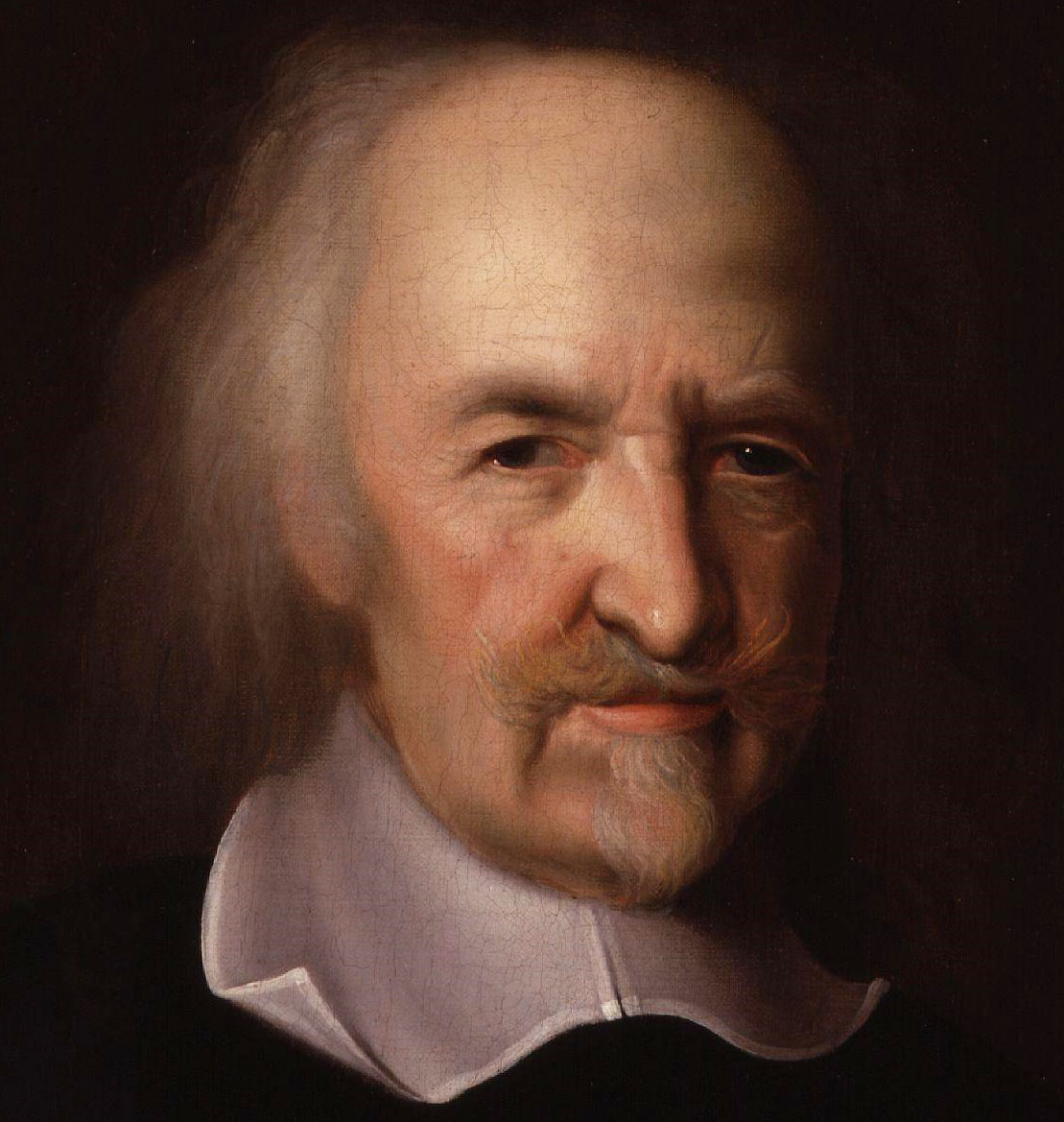 Thomas Hobbes (1588–1679) was an English philosopher and the author of the famous book Leviathan.
Famously, Hobbes declared that primitive human life was "solitary, poor, nasty, brutish, and short."
I use Hobbes to illustrate a pessimistic view of "natural man." That is, as illustrated by his famous summation, Hobbes felt that the "natural" state of man was bestial. According to Hobbes, therefore, it is civilization that steps in and rescues humanity from our primal depravity. In this view, human nature is a nasty thing that human culture rescues.
In Hobbes' view, being "civilized" is good and being a "savage" is bad.
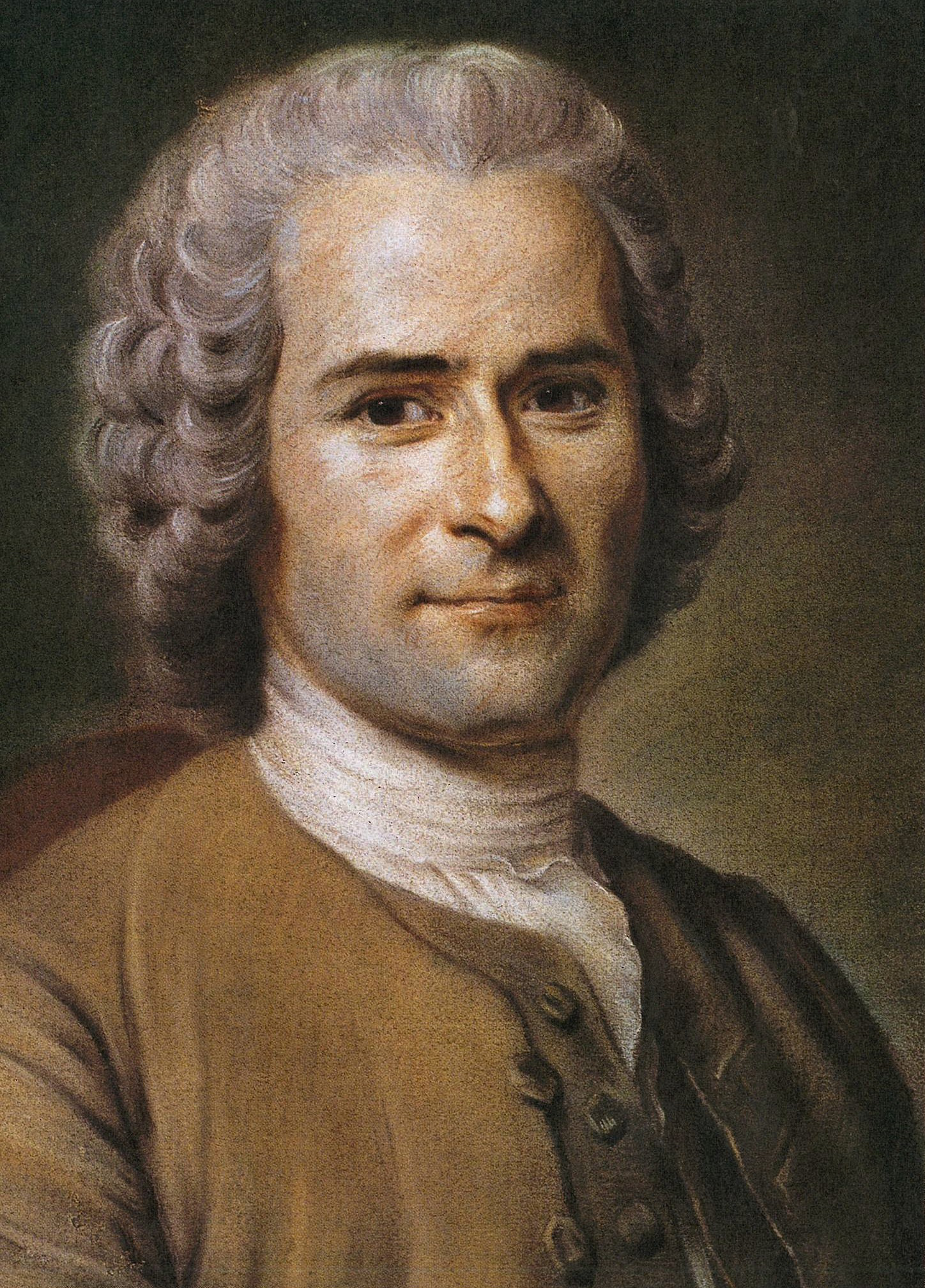 Contrast that view with the view of Jean-Jacques Rousseau (1712–1778) the Enlightenment philosopher whose book The Social Contract influenced the French Revolution: "Man is born free, and everywhere he is in chains."
In contrast to Hobbes' view that primitive life was "solitary, poor, nasty, brutish, and short," Rousseau declared that humans in earlier times were "noble savages." According to Rousseau humans are naturally and innately good and it is "civilization" that turns man into a "beast." Consequently, Rousseau argued that modern man should seek to restore the conditions of our lost Eden and live a more "natural" rather than "technological" life.
To summarize, we can create a quick schematic contrast of Hobbes and Rousseau:
Hobbes:For Hobbes civilization saves us from ourselves. Without it we would regress to a beast-like state. For Rousseau, civilization is killing us. For Rousseau the goal is to reclaim a more natural existence.
Human Nature = Bad
Civilization = Good
Rousseau:
Human Nature = Good
Civilization = Bad
So, who is right? Hobbes or Rousseau?
Unfortunately, by this point in my lecture only about two students are awake. So, to show them that this question is actually of practical and not just academic interest I like to ask the following question: Are you planning to breast-feed your baby?
(This question gets the girls awake, for obvious reasons. It gets the boys awake because the word "breast" was used. Human nature, good or bad, can, at times, be remarkably predictable...)
I bring up parenting in the conversation about Hobbes and Rousseau because it is in parenting where we tend to reveal if we vote with Hobbes or Rousseau.
For example, Hobbesian parents tend to think that a child's nature is unruly, undisciplined, and selfish. Not in an evil sort of way. More of a benign "they don't know any better." Thus, these parents tend to emphasize training and structure.
Rousseauian parents tend to think that a child's nature is innocence and goodness. These parents tend to deemphazie structure in the child's environment.
Here are some more possible locations of contrast:
Painkillers during delivery:Now I'm not suggesting this as some kind of rigorous, diagnostic classification. I'm mostly trying to illustrate a point: Whether we like discussing human nature or not we are all working with a theory of human nature and that theory of human nature has practical consequences.
Hobbesian parents more likely to use painkillers
Rousseauian parents more likely not to use painkillers
Feeding:
Hobbesian parents more likely to bottle-feed
Rousseauian parents more likely to breast-feed
Feeding Times:
Hobbesian parents more likely to feed on a schedule
Rousseauian parents more likely to feed on demand
Discipline:
Hobbesian parents more likely to spank
Rousseauian parents more likely not to spank
Sleeping:
Hobbesian parents more likely to allow child to cry in crib until asleep
Rousseauian parents more likely to hold child until asleep
For example, when parenting, some of us go "natural." Others are more "technological" (e.g., painkillers, formula, behavioral parenting strategies).
And parenting is hardly the only place where we see these differences. We see Hobbesian and Rousseauian contrasts in how we choose to eat, how we choose to use medicine, and how we feel about city life. To name a few things.
Hobbes and Rousseau are still with us. And we, in the choices we make, help keep their debate alive.
I think you haven't properly asked the question, or examined what the term "civilization" means or implies... or if there lies an "intermediate" stage between the "savage" and the "civilized" man... the "cultured" man with "degree's" of aculturation and civilization. Nietzsche and Freud have both described the process of "civilization", Nietzsche in his "Genealogy of Morals", Essays 1&2, and Freud in his "Totem and Taboo" and "Civilization and its' Discontents".
The second error which seems rather obvious to me lies in your concentration on parent-infant relations. Where about the employer-employee relationship? The American vs Russian relationship? or points representative of the entire life-cycle of a man/woman, from infancy through old age?
For I suspect the real answer to your question depends upon the environment and moral definition of "the good". In 5,000 BC I doubt there were many "civilized" men. Does this mean that humanity was "bad"? In 2,000 AD, there are many more civilized men. Does that make humanity "good"? Or has mankind "progressed" (if you can call it that) to a point in which they can be understood as being, as Nietzsche wished them, "Beyond Good & Evil"?
-anon.
I love this post! If someone were to ask me randomly if I was more Hobbesian or Rousseauian, I'd tell them I was torn, but when you talk about parenting, I've got to admit that I fall on the Rousseau side every time. I should add that I think that your parenting questions are a damn good way to get a quick feel for what you think about the state of nature. Wow.
Also, who's the jack-ass who left the weird anonymous comment before mine? "Um, I think you made a serious mistake in not writing a completely different essay. I mean, if you're going to use the word 'civilization', you should have to contend with everything that's ever been said about the subject in today's blog post'". Whatever.
I don't dare to imagine that the purpose of discussion should be so limited. I feel that the anonymous user above was creatively expressing counterarguments and greater expanses for productive thought when we regard such questions as "Is humanity intrinsically good or evil?"
Anonymous, if you do come back to read my comment, I suggest you go pick up Leviathan and The Social Contract and probably the Second Discourse on Inequality. Read your Hobbes and your Rousseau and all of your questions will be answered. The argument discussed above is very short and not detailed at all. It is more for fun a general understanding rather than an academic understanding. So if you want to go beyond the discussion on the board then go read their books, they are quite interesting. I also thought this page was well done and pretty accurate.
Life before civilization/domestication was one of health, freedom, ecological balance and leisure, free from organized violence and chronic diseases, anthropology since the 70s shows this.
Because Hobbes and Rousseau wrote their theories in the late 70's right?
...
I believe that humans are naturally neutral; it is society which later determines what makes something bad or good, views differ from cultures, civilizations, and people, so it is impossible to conclude whether humans are good or bad. Good and bad are relative terms.
I go with Hobbes civilazition is intended to change man for the good by making them introduced to newer technology, well-mannered, and educated. No civilization means human chaos.
Jean Jacues Roussseau was kind of an optimistic historian as he argues that humans are by nature of the good will and only needs a government for guidance,protective raosons and not for total control as greatly argued by Rousseau.He also believed that there is no need for civilisation because it tends out to change people into wild humans,however this view has been greatly criticized by mordern day scholars as they asserts that technology is a result of the development in any country...On the other side,Thomas Hobes contrary believes that humans are by nature selfish,greedy and war like beings who are only for the altimate seizure of power.As a result,they need to be controled by a government and as a result he supported civilisation.This view is greatly supported by the theories in International Relations,mainly the realistic theory which asserts that man is naturaly born evil and hungry for power..however since the government is in total control,people are allowed to revolt and vote for any other candidate,who is likely to protect and secure their property and human rights..In conclusion,relating their theories to the mordern day,men are everywhere in chains.
Has civilization really changed the way people act? i say people are still greedy and egoistic and self centered. not that everyone is, but i think a lot of people can be and it all depends on what you know and how you're raised. so i agree with Rousseau in saying that people are naturally good. where does good come from otherwise? ....
Was there a philosopher who believed in both Hobbes' and Rousseaus' ideas? (Trying to write an essay about this, but I can't seem to find any information)
This is an equally good conversation to have over a beer with some smart folks. The question that started my friend and I down this path is -- "Are people inherently good or inherently bad?" I would offer that these are not discrete choices. I think of it more as a continumum of choices from Rousseau's optimism ("inherently good") to Hobbes' pessimism ("inherently bad"). Its funny that you equated this to parenting. Because as I reflect on my own parenting, there are times in which we have taken a Hobbesian approach and at times more of a "Rousseau-ian" approach. I wonder if the question of human nature is prickly more because of the challenge associated with defining good and bad than on the over generalization based on the inherent quality. Regardless, this was a very informative post ... look forward to reading more of your posts.
hobbes just seems more logic
i outta beat cha azz - jeremiah mutha fukking yao
Nooooo, read mate.
I gotta saai. I agree wth hobbes.
Interesting post! I am looking for clear, concise information for my homeschooled teen, who is reading Lord of the Flies, and I appreciate the way you laid this out. In terms of your parenting theory, I am definitely a "Rousseauian" parent all the way except on the issue of painkillers. Going through unmedicated childbirth held absolutely no appeal to me.
thx
When i think of human nature i think of hypocrisy. Its interesting as a human myself, I see constant controversy. We say things and do the other. We have our morals, yet we break them. All in all its the imperfection that makes us have unfortunate events, but the most interesting part is that those unfortunate events is what makes us stronger, well some us. The fact is, in a way we achieve enlightenment. Its like nirvana. Some how some way nature finds balance. Well that is my opinion anyway.
This does not prove one theory is better than the other but what i appreciated most, how logically define them the differences clearly and given examples that is easy to understand. Thanks for this :D
Nice to see its arguments and use a little of critical thinking