Experimental Theology: Years in Review 2007-2012

Happy New Year's Eve!

Since starting Experimental Theology in the middle of 2006, I've collected highlights from the blog at the end of the year. Tomorrow I'll be posting the 2013 Year in Review.

The blog has evolved a lot over the years. Much of the evolution because of my ongoing faith journey. And old readers have left and new readers have come. And many of you have been with me for years. Thank you.

Since 2006 the layout of the blog has changed at least four times. Over time I've settled into a standard way of setting up a page and citing Scriptures. I'm sort of OCD in making sure the page and fonts look clean and standard from post to post.  Some things I've worked to keep the same since 2006. I've tried to keep the blog free of clutter. I've never moved from blogspot. Which has sort of become a badge of honor for me. I still don't tag posts but gather them topically on the sidebar under headings. And I still write long posts and do multi-part series.

And finally, over the years I've settled into a regular blogging rhythm, posting Monday through Friday with posts appearing at 5:00 am CST.

And so, per tradition, for your browsing pleasure if you are killing time over the holidays, links to the Years in Review from 2007-2012:
The 2007 Year in Review
The 2008 Year in Review
The 2009 Year in Review
The 2010 Year in Review
The 2011 Year in Review
The 2012 Year in Review
Tomorrow on New Year's Day we'll take a look back at the year that was 2013.

When All Our Strategies of Acquisition Have Dropped a Deeper Truth Presents Itself

Growing up as a Protestant I'm a naif when it comes to the contemplative Christian tradition. However, I've become increasingly convinced that being a Christian involves a deep, deep reconfiguration of our identity. This is a conclusion I reach in my book The Slavery of Death (appearing soon, more details in two days).

And as is generally the case in these situations, I'm great at pointing out a direction--we need a deep, deep reconfiguration of our identity--but struggle with the follow-up questions of practical implementation. How is one to go about working on this deep, deep reconfiguration of our identities?

I think the Christian contemplative tradition is a great resource here, so I've started reading a bit in this direction, starting with Michael Laird's highly-recommended Into the Silent Land. A passage from Chapter 1 that caught my attention over coffee this morning:
Union with God is not something we acquire by technique but the grounding truth of our lives that engenders the very search for God. Because God is the ground of our being, the relationship between creature and Creator is such that, by sheer grace, separation is not possible. God does not know how to be absent. The fact that most of us experience throughout most of our lives a sense of separation is the great illusion that we are caught up in; it is the human condition. The sense of separation from God is real, but the meeting of stillness reveals that this perceived separation does not have the last word. This illusion of separation is generated by the mind and is sustained by the riveting of our attention to the interior soap opera, the constant chatter of the cocktail party going on in our heads. For most of us this is what normal is, and we are good at coming up with ways of coping with this perceived separation (our consumer-driven entertainment culture takes care of much of it). But some of us are not so good at coping, so we drink ourselves into oblivion or cut or burn ourselves [like the prison inmate who shared with me] "so that the pain will be in a different place and on the outside."

The grace of salvation, the grace of Christian wholeness that flowers in silence, dispels this illusion of separation. For when the mind is brought to stillness, and all our strategies of acquisition have dropped, a deeper truth presents itself: we are and have always been one with God and we are all one in God...

Fridays with Benedict: Chapter 73, Only a Beginning

Here we are, on the last Friday of the year, in the final chapter of The Rule of St. Benedict.

We are ending this series almost a year to the day when we started it. We began Fridays with Benedict on December 28, 2012. We end today on December 27, 2013.

So what's in the last chapter of The Rule of St. Benedict?

Chapter 73 is entitled "This Rule Only a Beginning of Perfection."

Having come to the end of The Rule Benedict states that there are many other spiritual resources, outside of The Rule, that should be consulted for those seeking moral and spiritual transformation. Taking pride of place here is the bible itself. As Benedict writes, "What page, what passage of the inspired books of the Old and New Testaments is not the truest guides for human life?" All these resources--from the bible, to the The Rule to the writings of the church fathers--Benedict describes as "tools for the cultivation of virtues." Recall how Benedict described The Rule at the very start in Chapter 1. The Rule establishes a "school for the Lord's service."

And learning is a developmental process. We start in kindergarten and then move through elementary school, middle school and high school. We graduate and go to college. From there we can go to graduate school and get Masters or doctorate degrees.

Similarly, Benedict concludes The Rule by pointing out that our spiritual education also keeps on going, advancing and advancing. The Rule, thus, is just a start, just a beginning:
8Are you hastening toward your heavenly home? Then with Christ's help, keep this little rule that we have written for beginners. 9After that, you can set out for the loftier summits of the teaching and virtues we mentioned above, and under God's protection you will reach them. Amen.
Those are the final words of The Rule of St. Benedict.

The semester is over.

Class dismissed.

He Asked for Help

We know the story well:
John 4.4-7
Now Jesus and his disciples had to go through Samaria. So he came to a town in Samaria called Sychar, near the plot of ground Jacob had given to his son Joseph.

Jacob’s well was there, and Jesus, tired as he was from the journey, sat down by the well. It was about noon.

When a Samaritan woman came to draw water, Jesus said to her, “Will you give me a drink?”
We all know how low this woman was in the social and religious hierarchy. She's a woman. That's low. She's a Samaritan. That's lower still. She's been married five times. Still lower. She is currently living, in an unmarried state, with another man. Lower.

If the Samaritan woman isn't at the absolute bottom, she's got it pretty well in sight.

But here's the amazing thing. Jesus finds a way to place himself lower, to lift her up to the superior position.

"Will you give me a drink?"

Jesus doesn't come to her with answers or gifts or power or miracles or a sermon or a program or an invitation to come to church.

Jesus approaches this woman and simply asks for help.  

He asks her for help. And it blows her heart wide open.

And I wonder if the church will ever learn that lesson as we approach the world.

A Child is Born


The people who walked in darkness have seen a great light;
those who dwelt in a land of deep darkness,
upon them the light has dawned.

You have increased their joy and given them great gladness;
they rejoiced before you as with joy at the harvest.
For you have shattered the yoke that burdened them;
the collar that lay heavy on their shoulders.

For unto us a child is born, unto us a son is given,
and the government will be upon his shoulders.
And his name will be called:

Wonderful Counselor;
the Mighty God;
the Everlasting Father;
the Prince of Peace.

Of the increase of his government and of peace there will be no end,
Upon the throne of David and over his kingdom,
to establish and uphold it with justice and righteousness.
From this time forth and for evermore;
the zeal of the Lord of hosts will do this.

--Isaiah 9.2,3b,4a,6,7

Remember the Prisoners

Since these reflections are seasonal, I thought I'd point you to them one more time here on Christmas Eve.

If you missed them, these are two Advent and Christmas themed reflections related to the bible study I lead out at the prison. They are, in my estimation, two of the more powerful things I've shared on the blog. The two posts:
Advent: A Prison Story

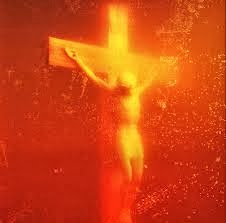
Piss Christ in Prison: An Unlikely Advent Meditation
Thanks to all of you who have Tweeted or linked to these posts on blogs or on Facebook. I can't tell you how much it pleases me to see the men in prison, given where they are, having an impact upon the outside world.

And during your prayers this Christmas season please lift up those who are imprisoned.

It is a very, very hard time of year for them.

A prayer I use a lot from The Book of Common Prayer:
Lord Jesus, for our sake you were condemned as a criminal: Visit our jails and prisons with your pity and judgment. Remember all prisoners, and bring the guilty to repentance and amendment of life according to your will, and give them hope for their future. When any are held unjustly, bring them release; forgive us, and teach us to improve our justice. Remember those who work in these institutions; keep them humane and compassionate; and save them from becoming brutal or callous. And since what we do for those in prison, O Lord, we do for you, constrain us to improve their lot. All this we ask for your mercy's sake. Amen.

Incarnation


Christmas Eve!

A poem of mine--"Incarnation"--from two years ago:
This is the emptying.
The release of heaven.
The descent
into the warmth
of a young girl's womb.
Vitally yoked
to her heartbeat and life.
Sharing the scandal
and embarrassment of flesh.
A covenant of love
sealed in ligament and bone.
Glory
to God in the Highest.
Glory
here in straw and blood.

In His Name All Oppression Shall Cease

Lots of Christmas carols being sung over the weekend and in these days leading up to Christmas.

Some of the most popular posts I've written about Christmas have to do with the justice and peace themes of Christmas carols. Christmas carols--like O Holy Night and It Came Upon a Midnight Clear--as "resistance literature":

O Holy Night--Cantique de Noƫl in the original French--was composed in 1847 by Adolphe Adam. The text of the song came from a poem--Minuit, chrƩtiens--written by Placide Cappeau who had been asked by a parish priest to write a Christmas poem. Later, in 1855, Unitarian minister John Sullivan Dwight created a singing English edition based on Cappeau's French text.

As you sing O Holy Night you might notice the themes of emancipation from the third verse and chorus of the song:

Truly He taught us to love one another;
His law is love and His gospel is peace.
Chains shall He break for the slave is our brother;
And in His name all oppression shall cease.
Sweet hymns of joy in grateful chorus raise we,
Let all within us praise His holy name.

Christ is the Lord! O praise His Name forever,
His power and glory evermore proclaim.
When you look the original French poem the themes of emancipation are even stronger. A more literal rendering of the third verse and chorus:
The Redeemer has overcome every obstacle:
The Earth is free, and Heaven is open.
He sees a brother where there was only a slave,
Love unites those that iron had chained.
Who will tell Him of our gratitude,
For all of us He is born, He suffers and dies.

People stand up! Sing of your deliverance,
Christmas, Christmas, sing of the Redeemer,
Christmas, Christmas, sing of the Redeemer!
Those are some pretty powerful lyrics. More, these were political and prophetic lyrics.

Recall that the song and the French poem were written in 1847. The English version was written in 1855, six years before the American Civil War and eight years before the Emancipation Proclamation. O Holy Night, it turns out, was a song of political resistance and protest. Imagine Americans singing in the years leading up to the Civil War the lyrics Chains shall He break for the slave is our brother; And in His name all oppression shall cease.

O Holy Night as political protest. A Christmas carol as resistance literature.

This is as it should be. Consider the words of Mary's Song, the Magnificat:
"My soul magnifies the Lord,
and my spirit rejoices in God my Savior...

he has scattered the proud in the thoughts of their hearts;
he has brought down the mighty from their thrones
and exalted those of humble estate;
he has filled the hungry with good things,
and the rich he has sent away empty."
If O Holy Night speaks of liberation and emancipation, consider also the powerful lyrics of It Came Upon the Midnight Clear on the themes of violence, war and peace:
Yet with the woes of sin and strife
The world has suffered long;
Beneath the angel-strain have rolled
Two thousand years of wrong;
And man, at war with man, hears not
The love-song which they bring;
O hush the noise, ye men of strife,
And hear the angels sing.
This is a stunning image. The angels appear above the shepherds and declare the birth of the Christ child with this refrain of peace on earth:
Luke 2:13-14
And suddenly there was with the angel a multitude of the heavenly host praising God, and saying,

"Glory to God in the highest, and on earth peace, good will toward men."
Peace on earth.

And yet, as It Came Upon a Midnight Clear recounts, since that angelic declaration of peace there has been "two thousand years of wrong." Why? Because "man, at war with man, hears not the love-song which they bring."

There is no peace on earth because we don't hear the love song.

And so the call continues to go out:

"O hush the noise, ye men of strife, and hear the angels sing."

Piss Christ in Prison: An Unlikely Advent Meditation

The fourth Sunday of Advent.

This last week out at the prison bible study I led the inmates through an unlikely advent meditation. Our focus was on Piss Christ, the controversial photograph by Andres Serrano.

As I describe in my book Unclean, in 1987 the photographer Andres Serrano unveiled his controversial work Piss Christ. Piss Christ was a photograph of a crucifix submerged in a mixture of blood and urine. The work broke into public consciousness in 1989 when members of the US Senate expressed outrage that Serrano had received $15,000 from the American National Endowment for the Arts. Senators called the work “filth,” “blasphemous,” and “abhorrent.” One Senator said, “In naming it, [Serrano] was taunting the American people. He was seeking to create indignation. That is all right for him to be a jerk but let him be a jerk on his own time and with his own resources. Do not dishonor our Lord.” Later, in 1997, the National Gallery in Melbourne, Australia was closed when members of a Christian group attacked and damaged Piss Christ.

Beyond the content of the photograph what really offends is the name, the juxtaposition of the word "piss" with "Christ." What is blasphemous is the contact between something holy and something defiling.

Piss contaminates the Christ.

This is an example of the attribution called negativity dominance in judgments of contamination. That is, when the pure comes in contact with the contaminant the pure becomes polluted. The negative dominates over the positive. The power is not with the pure but sits with the pollutant. 

This is why the Pharisees see Jesus becoming defiled when he eats with tax collectors and sinners. The pollutant--the tax collectors and sinners--defiles Jesus, the pure. The negative dominates over the positive. The pollutant is the stronger force. Thus it never occurs to the Pharisees, because it is psychologically counter-intuitive, that Jesus's presence might sanctify or purify those sinners he is eating with. Because pollution doesn't work that way.

Thus, in the contact between urine and Jesus in Piss Christ we instinctively judge the negative to be stronger than the positive. Thus the shock. Thus the blasphemy.

But the real blasphemy just might be this: That we think urine is stronger than Christ. That we instinctively--and blasphemously--believe that the defilement of our lives is the strongest force in the universe. Stronger even than the grace of God.

It never occurs to us that Christ is stronger than the "piss" of our lives.

I looked at the men in the study and said, This is the scandal of the Incarnation. This is the scandal of Christmas. That God descended into the piss, shit and darkness of your life. And the piss, shit and darkness did not overcome it.

I know, I told the men, that this is so very hard to believe. That Jesus goes into the darkest. most disgusting, most defiling corners of our lives. This, all by itself, is hard to believe. But even harder to believe is that Jesus is stronger than that polluting, shameful, defiling darkness.

That is the scandal of Christmas.
John 1.14a, 5
The Word became flesh and made his dwelling among us.

The light shines in the darkness, and the darkness has not overcome it.
I have no idea what Serrano was trying to do with Piss Christ. He was, most likely, trying to piss off Christians. If so, he succeeded in that.

But the story of the incarnation is more subversive than the most subversive art. It's hard to be more transgressive than Christmas. Consider Beth Williamson's analysis of Piss Christ:
What are we to make of this work: what are we to understand by it, and how can we interpret it?

Most obviously were enraged by the combination of the most iconic image of Christianity—the Crucified Christ—with human bodily fluid, and felt that this work set out deliberately to provoke viewers to outrage. The artist almost certainly aimed to provoke a reaction, but what reaction?

The fact that urine is involved is crucial here. But was the use of urine simply intended, as some of Serrano’s detractors have claimed, to cause offense? Had the artist deliberately set out to show disrespect to this religious image, by placing it in urine? Some felt this was tantamount to urinating on the crucifix.

I would suggest that, even if some viewers and commentators feel that it was the artist’s intention, or part of his intention, to be offensive, there are also other ways to interpret this work...

The process of viewing the Crucified Christ through the filter of human bodily fluids requires the observer to consider all the ways in which Christ, as both fully divine and full human, really shared in the base physicality of human beings. As a real human being Christ took on all the characteristics of the human body, including its fluids and secretions. The use of urine here can therefore force the viewer to rethink what it meant for Christ to be really and fully human. 
God had a body. That is about as transgressive as you can get. So transgressive that many Christians, now and throughout history, have passionately resisted and banished the thought. It's the same impulse that will cause many to denounce this post.

Christmas is so hard to believe that most Christians don't believe it.

But the Word became flesh. God dwelt among us. And still does. Even in the piss. Especially in the piss.

Immanuel.

I looked at the men in the prison and paused. I wanted them to hear this. Because there is some real darkness in their lives. Darkness we rarely speak about.

I looked at them and said:

The meaning of the Incarnation is that God has descended into the piss and shit of your lives. And that God is stronger than that darkness.

Do you believe this? Because I know it is so very, very hard to believe.

You want to believe that your foulness, all the shit in your life, is the strongest thing there is. The greatest and final truth about your life.

It's so hard to believe what I'm telling you because it feels like blasphemy.

But it's not. It is not blasphemy.

It is the story of the Incarnation. It is the Word becoming flesh. It is the story of God's love for you.

It is Christmas.

Fridays with Benedict: Chapter 72, The Good Zeal

We are close to the end of The Rule of St. Benedict. We are in Chapter 72, the next to last chapter of The Rule. So Benedict is in summing up mode, giving his last admonitions. In this chapter he points to a "good zeal"--a righteous and holy passion--that leads us to God:
1Just as there is a wicked zeal of bitterness which separates from God and leads to hell, 2so there is a good zeal which separates from evil and leads to God and everlasting life.
So what is this "good zeal" that leads to God and eternal life? Benedict gives his answer:
3This, then, is the good zeal which monks must foster with fervent love: 4They should each try to be the first to show respect to the other (Rom. 12:10), 5supporting with the greatest patience one another's weaknesses of body and behavior, 6and earnestly competing in obedience to one another.7No one is to pursue what he judges better for himself, but instead, what he judges better for someone else.
This is one of my favorite passages from The Rule. So many great things packed together.
This is the holy passion we must nurture with love:

Be the first to show respect.

Support each other with great patience.

Patience for the weaknesses of our bodies. And patience for the psychological and moral weaknesses that manifest in our behaviors.

Compete in obedience to see who is quicker to respond to the needs of others.

Do not pursue what is best for yourself but what is best for others.
Goodness gracious, what would the church look like if we put everything else aside and worked on "the good zeal"?

Preacher of Love

I grew up in a small congregation of 100 people. We met for church three times a week. Sunday morning (bible class and worship service), Sunday evening (brief worship service, short sermon), and Wednesday night (bible study followed by a short devotional).

So beyond the Sunday morning sermon there were two other "sermon" slots. A short 20-or-so minute sermon on Sunday nights. And a 5-10 minute devotional talk after the bible study on Wednesday night.

These were the slots--Sunday evening and Wednesday night--where some of us could try our hand at preaching. You'd start off on a Wednesday night, and if you did good at that, you'd be offered to do a Sunday evening service. And if you were really, really good then you might get a Sunday morning sermon if the preacher was out of town.

As young person in junior-high and high-school I started working my way up through these slots. People in my church enjoyed listening to me and I felt I had a knack for preaching.

There weren't many Churches of Christ in our area. And the ones that did exist were smaller than our church, 20 to 40 people, and, given their size, they didn't have a preacher. So these smaller congregations were always eager to have someone guest preach. Word got out in the area that there was a high-school kid who was a pretty good preacher. So on some Sundays during my senior year of high-school my parents would drive me an hour or two to a small church and I'd preach for them.

Then I went off to college. And the college I attended, as a part of their recruiting efforts, would bus a bunch of us students to an area church on Sunday mornings. We brought a singing group and an acting troop. The students would lead the worship service and there would be a potluck afterward. And then the singing and acting groups would provide some entertainment. It was a win/win. The church had a special event Sunday and the college students, craving some home-cooking, would get a church potluck dinner.

Obviously, given that the school wanted to make a good impression upon the church and the families of prospective students, the admissions department wanted to have good speakers lined up to do the sermons for these churches. When I got to the school I let them know I'd done a lot of preaching in high-school. They tried me out and I eventually became one of the more heavily used preachers on these trips. So I ended up preaching a lot in college as well.

One day on campus Liz--who was a regular on these trips and, thus, had heard me preach a great deal--came up to me and said, "You know what I'm going to call you?"

"What?" I asked.

"The Preacher of Love."

At some point during my senior year in high-school my preaching had started focusing on a singular subject: God is love. I began preaching on that theme almost exclusively. Whenever or wherever I preached that was my topic. The love of God.

It wasn't the same sermon. But each sermon--with new texts, new stories, and new jokes--always had one point in view. The love of God.

I didn't think any other subject was worth talking about in comparison. If I was going to guest preach at a church, if this was going to be my first and last sermon for you, then I wanted to say the most important thing I could think of.

God is love.

So that's what I preached about. Over and over.

Liz noticed it, so that's what she called me. The Preacher of Love.

Sort of an embarrassing moniker, but you often don't get a chance to pick your own nickname.

But looking back on it now, I can see how something crystallized within me then that I've never let go of. Theologically, I'm still that kid in the pulpit. I don't think I've ever stopped preaching that sermon.

I think I really only believe one thing about God. I believe that God is love. That's what I believe. And I believe it passionately.

So everything is filtered through that lens. It is my creed. It is my hermeneutic. It is the heart and substance of my faith.

God is love.

That is the only sermon I've ever wanted to preach.

Theodicy Without God

December 14 marked the one-year anniversary of the Sandy Hook shooting where Adam Lanza fatally shot twenty school children and six adult staff members at Sandy Hook Elementary School in Newtown, CT.

In the aftermath of that horrible day, and this year as we collectively remembered and revisited those tragic events, I noticed how much of the media conversation was engaged in the task of theodicy.

But this was a theodicy without God. It was a secular theodicy, but a theodicy nonetheless.

It swirls around the questions:

"How could this have happened?"

"Why did this happen?"

And a host of answers come, each attempting to answer those questions. It was mental illness. Parental failure. Gun ownership. Childhood trauma or abuse. Violent video games. Pure evil.

And then we move on to all the ways society at large is implicated in those causes. Not caring for the mentally ill. Too many broken homes. Not enough gun control. A media that valorizes violence.

We even want answers to acts of nature. Loss of life in storms and tsunamis is due to global warming, lack of advance notification and systemic poverty putting people at risk.

We all, passionately, want an explanation. An answer.

Why? How?

More, we want a single answer. What we'd really like is a scapegoat. Someone or something to blame.

Because if we had someone to blame we'd have ourselves an answer--a nice and tidy explanation. The reason.

And then the world would make sense again. Moral sense.

Watch the media in the aftermath of tragedy.

We ache for a theodicy.

Everyone is a theologian.

Even if we don't believe in God.

Everything I Learned About Christmas I Learned From TV

In 2007 I wrote a series entitled "Everything I Learned about Christmas I Learned from TV." That series has been one of the most popular things I've written and it's been my tradition to post it again every Christmas season. The original series was comprised of three different posts. This year I've pulled them together into a single post. One link and you have the whole thing.

As a child I loved all the children's Christmas shows. Rudolf the Red Nosed Reindeer, Merry Christmas Charlie Brown, Santa Claus is Coming to Town, and How the Grinch Stole Christmas, to name a few. With no videos, cable, NetFlix or DVR these shows were once a year opportunities. If you missed a show, you wouldn't see it again for an entire year.

So, these were BIG events in my childhood.

I was so addicted to these shows that, looking back, I can now discern that everything I know about Christmas I learned from TV. Specifically, I learned from TV three big lessons about Christmas.

Lesson #1: There is Something Special About Christmas
How the Grinch Stole Christmas

The first lesson I learned was from How the Grinch Stole Christmas. The lesson was this: There is something special about Christmas. Something that transcended the presents, Christmas trees, meals, or decorations. Christmas, to quote from How the Grinch Stole Christmas, was "a little bit more" than all these things.

If you don't recall the show, here's the basic plot. The Grinch, who lives in the mountains high above Whoville, hates the noise associated with Christmas. So, he dresses up like Santa Claus and ties a horn on the head of his dog Max to make him look like a reindeer. In these disguises they set off for Whoville.

Once in Whoville the Grinch proceeds to steal all the Christmas presents, trees, decorations, and food. He packs all this up and heads back up the mountain just as Christmas day is dawning.

The Grinch's plan is simple. He figures that if he takes away all the Christmas "stuff" the Whos won't be able to celebrate Christmas.

But the Grinch is wrong. In the climactic scene the Who's come out of their homes and, without a single piece of Christmas paraphernalia or presents, begin to sing their Christmas song Welcome Christmas:
Fah who for-aze!
Dah who dor-aze!
Welcome Christmas,
Come this way!

Fah who for-aze!
Dah who dor-aze!
Welcome Christmas,
Christmas Day.

Welcome, Welcome
Fah who rah-moose
Welcome, Welcome
Dah who dah-moose
Christmas day is in our grasp
So long as we have hands to clasp

Fah who for-aze!
Dah who dor-aze!
Welcome, welcome Christmas
Welcome, welcome Christmas Day
Upon hearing the song the Grinch has this realization, and I quote:
So he paused. And the Grinch put a hand to his ear.
And he did hear a sound rising over the snow.
It started in low. Then it started to grow...

But the sound wasn't sad!
Why, this sound sounded merry!
It couldn't be so!
But it WAS merry! VERY!

He stared down at Who-ville!
The Grinch popped his eyes!
Then he shook!
What he saw was a shocking surprise!

Every Who down in Who-ville, the tall and the small,
Was singing! Without any presents at all!
He HADN'T stopped Christmas from coming!
IT CAME!
Somehow or other, it came just the same!

And the Grinch, with his grinch-feet ice-cold in the snow,
Stood puzzling and puzzling: "How could it be so?
It came without ribbons! It came without tags!
"It came without packages, boxes or bags!"
And he puzzled three hours, `till his puzzler was sore.
Then the Grinch thought of something he hadn't before!
"Maybe Christmas," he thought, "doesn't come from a store.
"Maybe Christmas...perhaps...means a little bit more!"
And this realization has such a profound effect upon the Grinch that his heart, previously two sizes too small, grew three sizes that day.

So, I learned from How the Grinch Stole Christmas that Christmas was more than ribbons or tags. More than packages, boxes, or bags. Christmas was MORE.

But here was the deeply puzzling thing about How the Grinch Stole Christmas. Watch it as many times as you want and it will never be revealed just what Christmas was truly about. How the Grinch Stole Christmas is a negative tale. It tells you what Christmas isn't. But it fails, in a quite puzzling way, to tell you what Christmas is.

So as child I was left in quite a quandary. Christmas was clearly very special, but it was still a mystery. Luckily, there was more TV to watch! And a part of the mystery of Christmas would be revealed to me in that quirky tale of a mutant reindeer and his friend, the elf, who wanted to be a dentist...

Lesson #2: Christmas Means Misfits Have a Place
Rudolph the Red-Nosed Reindeer

After watching How the Grinch Stole Christmas l knew there was something special about Christmas. But How the Grinch Stole Christmas never says exactly why Christmas is special. I got a clue to answering this question by watching that classic Christmas program Rudolph the Red-Nosed Reindeer.

The entire plot of Rudolph centers around misfits. The central misfits are Rudolph and the elf Hermey.

Rudolph, obviously, has some kind of genetic mutation. He's got a red nose and that, well, just isn't natural. So he is shunned, mocked, and excluded from the reindeer games.

Hermey has a different problem. He's terrible at making toys. And he also doesn't enjoy singing in Santa's elf choir. What Hermey really wants to be is a dentist. But for this curious interest Hermey is, like Rudolph, ostracized and made fun of. They are both, clearly, misfits. This is captured in the mournful little song they sing We're a couple of misfits:
We're a couple of misfits
What's the matter with misfits
That's where we fit in!

We're not daffy and dilly
Don't go 'round willy nilly
Seems to us kinda silly
That we don't fit in.

We may be different from the rest
Who decides the test
Of what is really best?
 
So Hermey and Rudolph leave Christmas Town and set out on their own.

The misfit theme is continued when Hermey, Rudolph, and Yukon Cornelius, after being chased by The Abominable Snowman, find the Island of Misfit Toys. This is an island where rejected, unwanted, and unloved toys find sanctuary. Rudolph, sympathetic to the plight of the Misfit Toys, because Rudolph knows what it's like to be a misfit, promises to take their plight to Santa. This is the lament of the misfit toys:
We're on the Island of Misfit Toys
Here we don't want to stay
We want to travel with Santa Claus
In his magic sleigh!

A pack full of toys
Means a sack full of joys
For millions of girls
And for millions of boys
When Christmas Day is here
The most wonderful day of the year.

A jack-in-the-box waits for children to shout
"Wake up! Don't you know that it's time to come out!"
When Christmas Day is here
The most wonderful day of the year.

Toys galore, scattered on the floor
There's no room for more
And it's all because of Santa Claus.

A skooter for Jimmy
A dolly for Sue
The kind that will even say, "How do you do?"
When Christmas Day is here
The most wonderful day of the year.

How would you like to be a Spotted Elephant?
Or a Choo-Choo with square wheels on your caboose?
Or a water pistol that shoots -- jelly?
We're all misfits!
How would you like to be a bird that doesn't fly? I swim!
Or a cowboy who rides an ostrich?
Or a boat that can't stay afloat?
We're all misfits.

If we're on the Island of Unwanted Toys
We'll miss all the fun with the girls and the boys
When Christmas Day is here
The most wonderful, wonderful, wonderful, wonderful, wonderful day of the year!
At this point in the show all the misfit themes are coming to a climax. We see misfits seeking community, we see empathy as one misfit identifies with another, and, finally, we see one misfit seeking to act as savior. A misfit to save the misfits. A misfit Messiah.

But the theology of Rudolph takes its most radical, surprising, and extreme turn when the personification of evil, The Abominable Snowman, comes back from death in a quirky resurrection event--Bumble's Bounce!--as a peaceable creature who is also in need of loving community. Apparently, this "evil" creature is also a misfit. And the hint is that he's "abominable" because he's been marginalized and without community.

So, summarizing all this, I learned from Rudolph this important lesson about Christmas: Something about Christmas means misfits have a place, a community, a home. Or, rephrased, Christmas means that there are no more misfits.

But I was still puzzled as a child. From How the Grinch Stole Christmas I learned that Christmas was more than presents and Christmas trees. And from Rudolph the Red-Nosed Reindeer I learned that Christmas had something to do with misfits finding a place of love. But in both shows the reason behind it all remained elusive. Why do misfits have a home? And what does being a misfit have to do with Christmas? Rudolph the Red-Nosed Reindeer never says.

So I was quite puzzled. But luckily, there was more TV to watch! And I finally got my answers in a speech delivered by a boy who loved to carry a blue blanket...

Lesson #3: The True Meaning of Christmas
A Charlie Brown Christmas

After the hints about Christmas from the Grinch and Rudolph I finally turned to that trusted friend Charlie Brown.

In A Charlie Brown Christmas Charlie Brown is struggling to find out why Christmas is so depressing. He seeks advice from this local psychiatrist, Lucy, who gets him to direct the school Christmas play.

Well, this doesn't go very well. Eventually, Charlie Brown is rejected as director and asked instead to go buy a Christmas tree for the play.

Most of the symbolism in A Charlie Brown Christmas focuses on the tree he picks out. Out of all the shiny, bright artificial trees Charlie Brown picks a real but forlorn little tree that isn't much more than a branch.

Charlie Brown takes this tree/branch back to the cast and they laugh at both him and the tree. This ridicule pushes Charlie Brown over the edge and he finally screams, "Would someone please tell me the true meaning of Christmas!!!!!" At which point Linus steps forward.

But before we hear Linus's answer, let's reflect on the symbol of the forlorn little Christmas tree. It's a humble little tree, not much to look at. And it's rejected and despised by men. And yet, it is real. All those flashy other trees are dead, cold, and fake. They are empty and hollow. But this fragile little tree is REAL. It's fragile, but real.

And all this taught me that whatever Christmas is about, it is about something that is humble, about something fragile and weak, about something that is despised, marginalized, and overlooked. It is life, it's real, but it's so humble that it is easily overlooked and passed over. Further, its humility makes it a stone of stumbling, a scandal, and a reason for offense.

So, to recap, these are all the lessons I learned about Christmas from watching TV:
I learned that Christmas was MORE and that it had something to do with finding community.
I learned that, because of Christmas, there were no more misfits, no more outsiders or marginalized ones.
I learned about empathy, compassion, and that Messiahs might be misfits.
I learned about how community can be the route for the redemption of evil.
And here with Charlie Brown, I learned that the humility of Christmas makes it oft overlooked and despised.
But to this point in all this TV viewing no one ever connected the dots among all these things. No one had spoken the word that explained just what all this stuff had to do with Christmas. So I perfectly understood why Charlie Brown screamed "Would someone please tell me the true meaning of Christmas!!!!!"

Well, Charile Brown and I finally got our answer. Linus steps forward and explains it all:


May there be peace on earth and good will toward all. Merry Christmas.

Watching Their Flocks By Night: An Advent Meditation on Vigilance and Violence

The third Sunday of Advent.

Three years ago I wrote this Advent meditation about cultures of honor and violence, about why the shepherds were "watching their flocks at night" and about why it was such a scandal for shepherds to be the first to hear about the birth of Jesus.

I also explain why it's not a good idea to insult people south of the Mason-Dixon line:

And there were shepherds living out in the fields nearby, keeping watch over their flocks at night. An angel of the Lord appeared to them, and the glory of the Lord shone around them, and they were terrified. But the angel said to them, “Do not be afraid. I bring you good news that will cause great joy for all the people. Today in the town of David a Savior has been born to you; he is the Messiah, the Lord. This will be a sign to you: You will find a baby wrapped in cloths and lying in a manger.”

Suddenly a great company of the heavenly host appeared with the angel, praising God and saying,

“Glory to God in the highest heaven, and on earth peace to those on whom his favor rests.”

When the angels had left them and gone into heaven, the shepherds said to one another, “Let’s go to Bethlehem and see this thing that has happened, which the Lord has told us about.”

They hurried to the village and found Mary and Joseph. And there was the baby, lying in the manger.
One of my most favorite psychological studies was published in 1996 by Dov Cohen, Richard Nisbett, Brian Bowdle and Norbert Schwarz in the Journal of Personality and Social Psychology. Titled Insult, aggression, and the southern culture of honor: An 'experimental ethnography' the study attempted to see how Southerners and Northerners in America responded to insult. The authors argued that a "culture of honor" had been, historically, more robust in the Southern United States (due to immigration patterns) making Southerners more sensitive to perceived affronts to their personal honor (e.g., being insulted or disrespected).

To test this theory the researchers asked Northern and Southern college students to come to a building where they were asked to fill out some surveys. After filling out the surveys the subjects were asked to drop them off at the end of a hallway and then return to the room. But the hall was blocked by a filing cabinet, open, and with a person looking through it. To get past this person the subject had to ask this person to close the drawer to make room to pass. The person at the filing cabinet was in on the study and he complies with the subject's request with some annoyance. The subject passes the filing cabinet, drops the surveys off, and then returns back toward the filing cabinet. The person at the filing cabinet has reopened the drawer and is again blocking the hallway. As the subject approaches for a second time this is what happens, quoting directly from the study:
As the participant returned seconds later and walked back down the hall toward the experimental room, the confederate (who had reopened the file drawer) slammed it shut on seeing the participant approach and bumped into the participant with his shoulder, calling the participant an “asshole.”
Sitting in the hallway nearby were raters who looked, ostensibly, like students reading or studying. But what the raters actually did was to look at the face of the subject at the moment the insult occured. They then rated how angry versus amused the subject looked. Because we can expect a wide variety of reactions to the insult. Some of us would smile or laugh it off. Some of us would get angry and seek to aggressively confront the person who just called us an asshole.

The research question was simple: How did the Southerners and Northerners compare when responding to the insult? Was one group more angered or amused?

The findings, consistent with the Southern culture of honor hypothesis, showed that Southerners were more likely to become angered by the insult while Northerners were more likely to become amused. This finding was reconfirmed in a variety of different follow up studies (for example, Southerners had significantly more stress hormones in their body relative to the Northerners after the insult).

All in all, then, it seemed that Southerners were working with, and defending, a more robust "honor code" than Northerners.

But where does a "culture of honor" come from?

One explanation that has gained a lot of attention is a theory posited by Richard Nisbett and Dov Cohen, two of the authors of the insult study, in their book Culture of honor: The psychology of violence in the South. Specifically, Nisbett and Cohen argue that different ethics of honor and retaliation have evolved in herding versus farming cultures.

The argument goes like this. It's hard to steal from farmers. If I have acres and acres of wheat or corn it's pretty hard for a couple of thieves to make off overnight with the fruits of my labor. More, for large parts of year there really is nothing to steal. There is no crop during the winter, spring and early summer. In short, for most of the year there is nothing the farmer has to guard or protect. And even when there is a crop to steal you can't make off with it overnight. Harvesting is time consuming and labor intensive.

All in all, then, farming cultures, it is argued, have evolved a fairly pacific and non-retaliatory social ethic.

Herding cultures face a very different problem. Imagine a cattle rancher. You can steal cattle much more quickly and efficiently relative to trying to steal a corn harvest. A handful of cattle rustlers can quickly make off with hundreds of cattle, with devastating economic impact upon the rancher. More, the cattle are always around. Unlike the farmer, the rancher's livelihood is exposed 24/7 for 365 days a year. While the farmer sleeps peacefully during the winter months there is no respite for the rancher.

Given these challenges, it is argued that herding cultures have developed a very strong ethic of retaliation. The only way to survive, economically, in a herding culture is to protect your livelihood and honor with lethal vigilance. Farmers, by contrast, are spared all this. And, given these contrasting demands, there has been a lot of data to suggest that herding cultures (or places settled by herding cultures like the American South) are, indeed, more violent than farming cultures.

(For full disclosure, this trend is disputed in the literature with data on both sides of the argument. Studies are still ongoing.)

Even if you don't find this argument compelling you likely will recognize the stereotypes from American film. In Western films farmers are rarely violent. They tend to be peaceable. By contrast, ranchers and cowboys tend to be violent. And when someone in Western films has become respectable it's often associated with settling down and taking up the farming life. Conversely, leaving the farm is the resumption of violence. Think of William Munny in Unforgiven.

Why am I going into all this? Well, during this Advent season we are exposed to many portrayals of the shepherds in Luke 2 as they keep watch over their flocks at night. And these images often look like Hallmark cards. It's sweet and idyllic. Peaceable.

Well, there was a reason these guys were up at night watching their flocks. They are examples of a herding culture. The point being, these shepherds were pretty tough, even violent, men. They aren't into sheep because they are sweet looking props for our Nativity sets. When you see those sheep you should see dollar signs, stock portfolios, walking retirement plans. That's why the shepherds were up at night. If I put your paycheck, in 10 dollar bill increments, in a pile in your front yard I bet you'd be up a night keeping a watch on your flock. Gun in hand.

The point in all this is that these shepherds were likely rough and violent men. They had to be. So it's a bit shocking and strange to find the angels appearing to these men, of all people. Thugs might be standing around in our Nativity sets. That scene around the manger might be a bit more scandalous than we had ever imagined.

But here's the truly amazing part of the story. The angels proclaim to these violent men a message of "peace on earth." And, upon hearing this message, the shepherds leave their flocks and go searching for the baby! Can you now see how shocking that behavior is?

Leaving their flocks? Risk economic ruin? This is something you don't do in a herding culture.

Is there something out there more important than money? What are those shepherds looking for?

Think about how all this might apply to us. For most of our lives we stand around protecting what is ours. Our neighborhoods, borders, homes, 401Ks, income, jobs, status, reputation. And on and on and on. We're like those shepherds, keeping watch over our flocks, even at night. We're tensed, anxious, fearful, paranoid, suspicious, watchful, and ready to pounce. And all this makes us violent people, in small ways and large.

That's the ethic of this world. It's a herding ethic. Protect what is yours because someone is coming to take it away from you.

It's a culture of fear and violence.

And so the angels come to us and proclaim "peace on earth and good will to men." But how is that going to happen? Well, the story in Luke 2 shows us the way:

We follow the example of the shepherds.

We leave behind our flocks and our lifestyles of violent vigilance.

We go in search of the baby.

Fridays with Benedict: Chapter 71, A Blessing To Be Shown By All

Chapter 71 of The Rule of St. Benedict is about mutual obedience. The chapter starts:
1Obedience is a blessing to be shown by all, not only to the abbot but also to one another as brothers, 2since we know that it is by this way of obedience that we go to God.
I think this emphasis on and praise of obedience in The Rule is the toughest thing for us to get our heads around. When it comes to issues of obedience and submission we are very worried about the potential for abuse.

So I think it's important here to remember that obedience is a "blessing" when it is "shown by all."

It's also good to keep in mind some of the things Benedict has been saying over the last few chapters. For example, in this chapter Benedict is keen to point out how the younger monks should be quick to obey the requests of the older monks. By contrast, in the chapter we covered last week the younger monks were told to not misuse their power over the older monks. Compare:
Chapter 70.6
If a brother, without the abbot's command, assumes power over those older...flares up and treats them unreasonably, he is to be subjected to the discipline of the rule.

Chapter 71.4
...younger monks should obey their seniors with all love and concern.
The point here is that the younger monks had some power--via their youth--over the older monks and they are asked to use it in a non-abusive way. In fact, the younger monks are to be responsive to the older monks with "all love and concern." The potential for abuse in Chapter 70 is dealt with by mutual obedience in Chapter 71.

Obedience is a two-edged sword. Obedience is both a problem and the solution. Obedience is a problem when it's asymmetrical, when one person "assumes power" over another. Obedience is the solution when it's symmetrical, when each person submits to the other.

Obedience is only a blessing when it is shown by all.

More On the Gaze: Some Thoughts Prompted By Dianna Anderson

Yesterday I wrote a post Can a Jesus Feminist Wear High Heels?: Evolutionary and Incarnational Reflections on the Male Gaze. In the comments Dianna Anderson gave some helpful and constructive pushback to the post. Dianna also followed up with a post on her blog: Cruciform Incarnation: In Which All Bodies Must Matter. I encourage you to read her thoughtful reflections.

Given the blinders I have on in light of my social location I'm always deeply appreciative about getting feedback--even strong feedback--about the ways I might be intentionally or unintentionally excluding others.

So this isn't a "response" or "rebuttal" to Dianna, just a string of thoughts I had yesterday thinking about Dianna's comments and the post she wrote in response to mine.

I want to start with the conclusion of my post. A part of the problem, as Dianna saw it (and I'm sure others as well), was that my analysis in the post focused to heterosexual relationships. A part of that was simply due to the fact that I was responding to a concrete situation in how the male gaze might play out (or not) in a heterosexual marriage. And while that case study might have been limiting (and, thus, exclusionary), I think the theological conclusion of the post generalizes to every person in any sort of romantic arrangement.

Specifically, the theological conclusion of the post doesn't depend upon anything that Dianna finds objectionable to the post. For example, and I'll discuss this in more detail in a minute, Dianna finds gender essentialism in my stating that males are, statistically speaking, more visually stimulated than females. For the sake of argument, that's a point easily conceded. It doesn't really matter which partner of whatever relationship is or is not more visually stimulated. The theological point of the post is that, if this preference exists, for whatever reason, Christians aren't going to force that preference on their partners. The visual aspects of sex are to be free of power and coercion. The visual aspects of sex should be engaged in playfully and joyously. Your partner might want you to wear a teddy or high heels or leather chaps or a clown suit. Such visually-based kinks are all part of the fun if there is mutualism and cruciform love.

So it doesn't matter all that much if there is or is not a statistical trend showing that males, on average, are more visually stimulated than females.

The point being, I think the theological vision of the post is very inclusive.

Now the controversial parts of the post are due to the fact that I do make some claims and arguments about male arousal being more visually-based. I want to talk more about about those claims and arguments. But before doing that we need to disentangle two things that I think Dianna mixes up a little bit.

In my post there are two scientific claims/arguments being made. The first is descriptive and the second is explanatory. And they need to be keep distinct from each other.

The descriptive claim is that, statistically speaking, the male arousal system is more visual than females (which is more relational/emotional).

The explanatory part is a speculative argument proposed by some evolutionary psychologists about why this difference came about.

Let's start with the descriptive claim. Are males more visual in their arousal system? The answer to this question has nothing to do with evolutionary psychology. It's a simple empirical claim that we can gather evidence for or against. And as I pointed out to Dianna, I think the evidence is clear that the difference exists. For my part, given that I'm convinced by the psychological and brain imaging data, I think it's best to, tentatively, assume this data point in theological reflections about embodiment.

But Dianna's point is well taken, we should never reduce incarnational theology to this (or any other) data point. But mentioning the data point and reflecting on it isn't the same as being reductionistic. It's not inappropriate to theologically reflect on a data point regarding human biology (if it exists). That's a place where I think Dianna misjudges a bit. To reflect on something is not to reduce. To say something is not to be taken as saying everything.

Now, three points about this descriptive issue.

First, if there is a "difference" between the genders in this regard the difference is statistical, not essentialistic. In trying to explain why men are "different" from women in this regard what we are trying to account for isn't an essential difference between Platonic types. We're trying to explain a statistical trend, why more men, statistically, are visually stimulated relative to women.

Because, to be clear, any given person can be however they are. Conforming or breaking with the trend. Which brings me back to the theological point of the post: it doesn't really matter if this trend does or does not apply to you, but if it does you need to not lord it over your partner. Same goes for any sexual preference or inclination.

Second, Dianna pointed out in her post that most (perhaps all) of the studies on vision and sexual arousal have mainly looked at heterosexual men, heterosexual women and gay men. There hasn't been a lot of work regarding visual arousal with other groups (e.g., transgender persons or lesbians). And that's a point worth making.

Still, I don't think it changes the conclusions I reach. If we, for the sake of argument, grant that any particular LGBTQ group is just as visually simulated as heterosexual and gay men then I'd simply say that, in those particular relationships, the sexual gaze should not be privileged or lorded over the partner. Again, most everything I'm saying generalizes.

And finally, let me just make a simple logical observation. We're talking about the male gaze. Which seems to presuppose that there's something going on with the male visual psychology in regards to women. If there were no differences between the genders in this regard we wouldn't be having conversation about a gaze. We'd surely be talking about something else, but not a gaze. This whole conversation seems to assume the trend being denied. If there are no visual biases at work then this conversation doesn't happen. We'd be talking about men doing something else to women rather than gazing at them.

And this brings us to the more controversial part of the post, the explanatory account based on an argument from evolutionary psychology.

First, to be clear, this explanatory account can be wholly wrong and the descriptive differences between the genders (the statistical trends) still be true. Again, there is a distinction here between description and explanation.

Regarding Dianna's concerns, in her post she says that I'm using the evolutionary account to "baptize" the male gaze. I'd like to disagree with that. I'm not trying to baptize the male gaze. I am trying to naturalize it and, thus, root it in an incarnational theological account. And by naturalize I mean, as I said clearly in the post, to render the gaze morally neutral, akin, like I said, to why sugar tastes sweet. Naturalizing is a far cry from baptizing, as I also clearly say that these natural responses can be used for good or ill. Like eating sugar can be good or bad.

As I mentioned in a comment to Dianna, we have to remember Hume's Dictum: You can't get an ought from an is. Just because something is natural doesn't make it good.

So my attempt to naturalize the male gaze wasn't an attempt baptize it. For example, in the post I describe a relational context where the gaze is good. Like there are times when eating sugar is okay. But I also described where the gaze is evil. Like when eating too much sugar isn't a good idea. In short, the gaze in neutral, dependent upon context. And like I said above, that can be a LGBTQ context or a hetero context.

In a related criticism, Dianna felt that the appeal to an adaptive history was "foreclosing on a framework for how power and historical sexism even enter the picture." As I mentioned in my comment to her, I actually felt that I was doing the exact opposite. Again, in pointing to the adaptive aspects of the male gaze I'm not justifying it on ethical grounds (again, Hume's dictum). This leaves the field wide open to explore how this particular adaptive quirk has became a locus of oppression. Consider a parallel example: skin color. There is an adaptive history behind skin pigmentation. But noting that adaptive history doesn't justify oppressing people based upon skin color. The same reasoning holds for the male gaze. Just because males have a visual bias doesn't mean women must submit or be subjected to it. So the framework Dianna is asking for to explore how men have exploited the gaze to oppress women is as wide open as it is for those wanting to explore how whites have exploited skin color to oppress people of color. The adaptive backstory doesn't foreclose on any investigation that Dianna might want to do in analyzing how the male gaze is oppressive to women.

All I'm suggesting, and I could be totally wrong about this, is that a when a male looks at a female and feels sexual arousal this isn't intrinsically a symptom of patriarchy. Some of the time it might just be biology. But that arousal, no matter its source, doesn't justify any actions toward a woman that are oppressive, dehumanizing or exploitative. And that will most likely mean that a man must restrict, redirect or resist his gaze. And personally, I think that's an interesting area for theological reflection. When does fleeting and spontaneous sexual arousal become objectification? Is that even a legitimate or helpful distinction? I think it is, but when and how to make that distinction is an open question.

That said, the evolutionary account I gave is very speculative. But happily, it's the most expendable and severable part of the post. You can take it or leave it. As I've noted, it doesn't affect the descriptive issues noted above or the theological implications, for all persons, hetero and LGBTQ.

One issue to kick around, however, is how any appeal to evolution is inherently biased toward heterosexuality given the central role of biological reproduction in both natural and sexual selection. To be honest, I'm not sure how that should be handled. I'm assuming, of course, that anyone working in queer theology believes in evolution. So we admit that evolution happened, and generally agree that it works as Darwin said it works, through differential reproductive success. We grant all that but agree to never use it as theological data? Is that the way we are to proceed? Or are there times when an incarnational approach can legitimately invoke evolutionary history, despite its bias toward reproductive success?

My point is that evolution looks biased, given its mechanisms. So it's hard to talk about what happened during evolution, which we all agree happened, without looking biased. But it's also strange to talk about embodiment and never candidly talk about the forces that shaped our bodies over millions of years. And again, to return to Dianna's point, theological reflections regarding embodiment shouldn't be reduced to evolutionary accounts. That's a given. What I'm asking about if evolution can ever provide theological data.

And finally, what I found very helpful in Dianna's post is how I may have been misusing labels and, thus, causing confusion. As Dianna defines it, "the male gaze" is intrinsically oppressive. Thus it makes sense to resist any attempt of mine to extract oppression from that label. If that's the case then I was misusing the label "male gaze" in equating it almost synonymously with "visual bias in male sexual arousal." That was a mistake on my part, a sloppy use of terms. The purpose of my post was to extract a psychological feature from an analysis of power, to make a distinction between sexual psychologies and how those sexual psychologies become loci of oppression.

If that distinction is coherent--visual bias in sexual arousal is distinct from power--then I think the incarnational theology I sketched in the last post holds, for everyone. We might debate the descriptive issue about if men show this bias, statistically speaking, more often than women. We might debate how this bias is distributed across the LGBTQ spectrum. And we can keep or discard the adaptive framework. But overall, the theological thrust of the post holds for everyone in every relationship.

Can a Jesus Feminist Wear High Heels?: Evolutionary and Incarnational Reflections on the Male Gaze

This post is inspired by a recent post--Mama's Rules for Dressing Well--by one of my favorite bloggers and theologians Jeanine Thweatt-Bates. JTB doesn't blog a ton, but when she does I read it.

In her post JTB reflects on, from a feminist perspective, how she is teaching her daughters to dress and how to model those injunctions herself. She mentions some learning she is having to unlearn in this regard, the temptations to wear clothing that is "attractive" or "sexy" but is uncomfortable. The issue in play here, from a feminist perspective, is the degree to which female notions of beauty and attractiveness are being driven by the "male gaze."

Can a feminist wear high heels?

I'm a feminist. And I'm also a Christian. And, following the lead of Sarah Bessey's new book Jesus Feminist, I'm a feminist precisely because I'm a Christian.

So that's the framework I'm trying to write from, a Christian feminist perspective, albeit in an error-prone and faltering way given that I'm a man.

The issue of female attractiveness, beauty and sexiness is a bit ticklish for Christian feminists. Which is why I'm interested in JTB's reflections about wearing heels.

Again, the problem is rooted in how female beauty is being defined by men, female bodies placed under and judged by the eyes of men. Because of this a woman's sense of self worth, in our culture, is obtained by appearing or looking in ways that men find acceptable. And because the male gaze is often lustful this creates an additional pressure for female appearance to become increasingly sexualized, all across the age spectrum. Overall, then, the demand for women to look "sexy" becomes a form of patriarchal oppression. And it's an insidious form of oppression because young girls and women internalize these male-driven standards of beauty and judge themselves, often harshly.

So when I'm speaking of "high heels" I'm gesturing toward that whole phenomenon, women wearing things (like shoes) and suffering (because the shoes are uncomfortable, but that's a small thing in the face of all the psychic suffering) into order to satisfy the judgments and appetites of men.

Now, statistically speaking the male arousal system has a visual bias. More on that in a minute. For now we simply note that male sexual arousal tends toward the opticical. Consequently, there is this tension. The male gaze is oppressive, yet women--even Christian feminist women--want to appear sexy and attractive to the men they love. Thus JTB ends her post by saying this:
My anniversary comes up in a few days and you can bet I'll be rocking some #feministheels and showing my daughter that Mama can be fancy as well as sensible, sexy as well as grubby, fun as well as hardworking. And that when it comes to Dressing Well, it's about feeling good in your body, and accomplishing what you set out to accomplish--be that dazzling your students with a philosophy lecture or dazzling your spouse at an anniversary dinner. 
Now, if you're a feminist you might not agree with her conclusion. It might be argued that female notions of beauty should be completely extracted from the male gaze. Male notions of attractiveness should never contaminate or influence how a woman wants to dress.

That's one side of the equation. But that's a hard line to take if you want to be sexually desired by your spouse.

And yet, we don't want to go too far in this direction. Because on the other end of the spectrum is the benevolent sexism you see in many conservative Christian circles: since males have visual "needs" a Christian wife should try to "satisfy" those "needs." Being sexy is, thus, being godly. The job of a good, Christian wife is to look, at all times, sexually "captivating." All this is just a baptized version of the oppressive male gaze.

So a Christian feminist is trying to thread the needle between these two poles. JTB's post, as I read it, is one personal story about how to thread that needle, for herself in her own marriage and as a mother raising girls.

And all that brings me to the reflections I had reading JTB's post.

What struck me in JTB's post is how she grounded her decision to look sexy in some locations of her life--to wear heels for her anniversary dinner--in an incarnational theology. Before her conclusion she writes:
But most often, I wear heels for a couple hours at a time in a context where there's more sitting than walking, and when the point is to be extravagantly, flagrantly fabulous. Maybe even (gasp!) sexy…which for me, like a lot of women brought up in the kind of purity/modesty culture of American conservative Christianity, is a reclamation of our bodies and their goodness.
Rocking some high heels and looking sexy for your husband as "a reclamation of our bodies and their goodness." That's the theological bit that got me thinking.

It got me thinking about the male gaze, particularly from an evolutionary standpoint.

Why is the male arousal system visually biased?

And to be clear, this is a statistical trend that exists between the genders. Not something that holds for all men and women. Still, we wonder why the trend exists.

Some evolutionary psychologists have argued that the answer to the question is rooted in a biological asymmetry between the genders in their respective investments in producing offspring. Biologically speaking, pregnancy and having a child is high stakes for women. She is, and we need to think of the hunting/gathering contexts where most of human brain evolution occurred, quite literally putting her life on the line whenever she has sex. By contrast, sex is low stakes for males. Males risk little, biologically, from casual sexual encounters. If anything, from a Darwinian perspective, males benefit from casual sexual encounters (more sex = more offspring).

The upshot, so the argument goes, is that males and females developed very different sexual psychologies to maximize their reproductive success given these asymmetries. Females, given the biological burdens they are carrying, would attempt to identify and select a "high investment mate." A partner who would invest--materially, relationally and emotionally--in her and her offspring. Thus females attend to emotional and behavioral cues that signal love/investment and fidelity.

Now, what this creates is a demand that women place upon men. In evolutionary theory this is called "sexual selection" (as opposed to "natural selection"). Sexual selection is driven by mate selection, often female mate selection. The traits the female selects become selected for. Sexual selection is what explains the extravagant colors and forms--from the color of a male cardinal to the peacock's tail--that seem maladaptive in light of natural selection. (For example, bright coloration, while very sexy, makes you more visible to predators.)

In short, there is a female gaze in sexual selection. The things that women are looking for, the things they find attractive and sexy.

But if the female gaze is seeking high investment--that is, if the female gaze is inherently an adaptive preference for monogamy--then the male will have to forgo all other extra-marital sexual opportunities, opportunities that, strictly form a Darwinian perspective, would have promoted his reproductive success. So if a male makes this sacrifice, if he submits to the female gaze and settles down with her, does he have any reciprocal demands?

According to evolutionary theory he does. The male's counter-demand is reproductive potential. If he is to pass on extra-martial opportunistic sex to create additional offspring then his demand is that he have as many children as possible with the woman he settles down with in marriage.

What does that have to do with the male gaze? Well, so the theory goes, the only way to judge fertility in hunting/gathering cultures was the eyeball test--visual cues of health, youthfulness and vigor. Consequently, females developed a sexual psychology that attended to behavioral/emotional cues and males developed a sexual psychology that attended to visual cues.

And that, according to some theories in evolutionary psychology, is the origin of the visual bias in male sexual arousal.

Now, maybe none of this theory is true. But if it is (at least partly) then I'd like to make some points about Jesus feminists wearing high heels.

First, if the evolutionary scenarios described above are true then the male and female gazes are intertwined. They grew up together, pushed each other, shaped each other. These gazes have been tangled up over a long evolutionary history.

And this explains, I think, why it's hard to wholly extract a woman's feelings of attractiveness from the gaze of the man she loves. The conflation of female conceptions of beauty with the visual sexual psychology of males is not rooted in patriarchy but in a long evolutionary past. The genders have been gazing at each other for millions of years, gazes that have, quite literally, shaped and selected the minds and bodies of both genders. So it's very, very hard to extract and sever conceptions of "attractiveness" from the gaze of the other gender. Attractiveness and the gaze of the other gender, historically speaking, are inextricably and biologically linked.

Now, let me rush to say this. This evolutionary frame is not given as a justification for the patriarchal oppression of the male gaze. Nor should it be taken as a normative description for anyone outside the heterosexual experience. We're talking about evolutionary history, not your personal history. This isn't about your sexual psychology or the bodies you find attractive. Nor should the adaptive account be taken as an argument for gender absolutes as, again, what we are trying to account for here is a statistical trend between the genders. And most important, even if there is a visual bias in male sexual arousal everything I said at the start of the post about the exploitation of women under the male gaze still holds.

But what I'd like to tentatively suggest is this. The visual bias in male sexual arousal isn't inherently patriarchal. It's just an adaptive feature of the brain. A feature adaptively intertwined with the female gaze. I'm tentatively suggesting that the gazes, being adaptive features of the brain, are morally neutral, adaptations that are similar to why we find sugar sweet.

The problem, I'm suggesting, comes when the visual bias is conflated with power. That's where the oppression comes in, when the male gaze is conflated with power and women are asked to submit to the male gaze. Simplistically,
Visual Bias in Sexual Arousal + Power = Oppression
This is the mix that makes for the patriarchal oppression of women and the benevolent sexism in Christian circles.

And if this is so, then I'd like to return to JTB's incarnational reflections about being sexy.

We generally think of incarnational theology as being about embodiment. And when we think of embodiment we tend to focus on individual bodies. But those bodies--and their sexual psychologies--didn't drop out of the sky. Those bodies were products of other bodies, both male and females bodies. And those bodies from still other bodies. In short, and here's my theological proposal, should not an incarnational view of sex take into consideration the long evolutionary history of our bodies? Theological discussions about embodiment, it seems to me, need to wrestle with our adaptive past and how that past has shaped our bodies and minds.

Incarnational theology has to be evolutionary theology if it wants to fully respect our biology and bodies.

If so, an incarnational approach to being "sexy" will recognize and enjoy the evolutionary and biological aspects influencing both the male and female gaze. Males and females have been gazing at each other and finding each other sexy for millions of years. And there is a creational goodness in how these erotic feelings spontaneously emerge within us. How you catch my eye. How that gesture melts my heart. And, being humans, we've reveled in all the ways we can creatively and artistically enhance those feelings. From love songs to diamond rings to, well, to high heels. We become chefs to enhance the pleasures of taste. We do the similar things to enhance the pleasures of sexual attraction and arousal.

But like anything, when conflated with power (and in our time and place this power is mainly being exerted through media and market forces, the buying and selling of the female body) this creational goodness becomes oppressive and exploitative. For most of human history that has been the story with the male gaze. But I think the problem is with the power, and not the gaze.

As a heterosexual man--the product of a long, long evolutionary history--I don't know how to look at Jana and not find her sexy. And I love how she, joyously, creatively, and artistically, surprises my gaze. I love the way Jana dresses. Does her hair. The whole thing.

And yet, if I start to demand that Jana dresses a certain way. If I start to privilege my gaze--if anyone, in any sort of romantic context, heterosexual or otherwise, starts to privilege their gaze--we begin in that instance to conflate our gaze with power. When we begin to lord over our partners to indulge our visual appetites we are back to oppression.

Which means that the gaze--of both genders--needs to be cruciform. The gaze is never primary for Christian feminists. Never the demand: You must meet my needs! More, and perhaps most Christian of all, we are willing to sacrifice the gaze in the face of age, injury, deformity or debility.

You know, scratch that. Let's throw some Eastern Orthodox theology at this. The object of love isn't the sacrifice of the gaze but the divinization of the gaze. No doubt, mortification may be a part of this process. But the goal isn't to repress and sacrifice the biological and erotic aspects of love but to have our bodies taken up and transformed by the love of God. 

The gaze is, simply, a creational, incarnational given. One of many bodily goods that both genders enjoy, from the taste of good coffee to the pleasure of a symphony. The male and female gaze is embodied pleasure. Which can be used, as all pleasures, for good or ill.

Which brings us back to the question, can a Jesus feminist wear high heels?

My personal opinion?

I think where there is mutualism and cruciform love, yes, for the joy and play of it, yes.

Rock those heels.