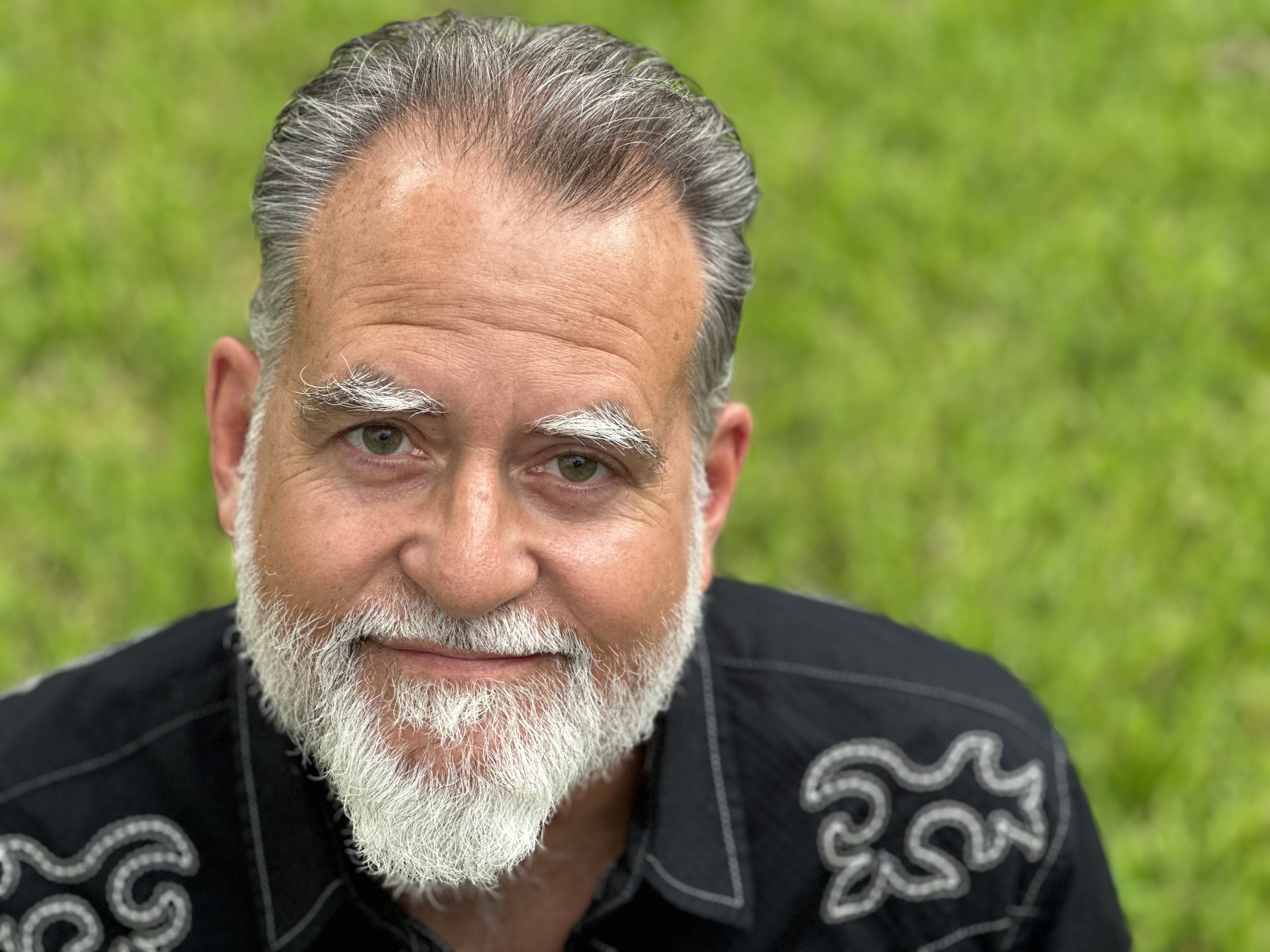
Personal Days: End of the Year

Last Friday of 2016!

Through 2016 I used Fridays for more personal posts. I used "Personal Days" to share moments of my life, using this blog like people use Facebook.

On Fridays you knew it was a Senior year for Brenden, the first year on the golf team for Aidan and a 25th Anniversary for Jana and I. You saw my prison Bible and my prayer books. You've peeked into my office, looked into my classroom, and got a look at the bike I ride to work each day. We've lamenting our favorite Mexican restaurant burning down and I announced the first time I ever played guitar on a praise band. We've attended another Roller Derby together, stood on the stage of Jana's production of Little Women and you know what my iPhone screen looks like. You saw my Rublev icon tattoo touched up and walked with me around Walden Pond. You found out that I write Jana lots of poems, that I love walks in the snow and that I voted for Hilary.

And here, with this picture, you finally get to see behind the screen, where all the blog magic happens.

I hope you enjoyed Fridays on the blog. But it's a new year and time to do something different. Next Friday, the first in 2017, I'll be starting something new. See you on the other side.

Experimental Theology Years in Review 2006-2015

Since starting Experimental Theology in the middle of 2006 I've collected highlights from the blog at the end of the year. On Sunday, New Year's Day, I'll be posting the 2016 Year in Review.

If you're new to the blog and want to trace its evolution, and my faith journey, over the years, you can dip into the Years in Review from 2007-2015:
The 2007 Year in Review
The 2008 Year in Review
The 2009 Year in Review
The 2010 Year in Review
The 2011 Year in Review
The 2012 Year in Review
The 2013 Year in Review
The 2014 Year in Review
The 2015 Year in Review
On Sunday, New Year's Day, we'll take a look back at the year that was 2016. 

The Slaughter of the Innocents: Did Herod Make a Mistake?

Today is the Feast of the Holy Innocents.

A while back in my prison Bible study we were studying through the gospel of Matthew.

Early on we were in Chapter 2. Matthew 2 is all about a clash between two kings. The clash is right there in the opening three verses:
Matthew 2.1-3
After Jesus was born in Bethlehem in Judea, during the time of King Herod, Magi from the east came to Jerusalem and asked, “Where is the one who has been born king of the Jews? We saw his star when it rose and have come to worship him.”

When King Herod heard this he was disturbed, and all Jerusalem with him.
Two kings. King Herod--ostensibly the king of the Jews--hearing about "the one who has been born king of the Jews." No wonder he was disturbed.

We know the rest of the story. Upon hearing about this other king Herod orders the death of all young boys in the town of Bethlehem. The Slaughter of the Innocents.
When Herod realized that he had been outwitted by the Magi, he was furious, and he gave orders to kill all the boys in Bethlehem and its vicinity who were two years old and under, in accordance with the time he had learned from the Magi.

Then what was said through the prophet Jeremiah was fulfilled:

“A voice is heard in Ramah,
weeping and great mourning,
Rachel weeping for her children
and refusing to be comforted,
because they are no more.”
Alerted by an angel Mary, Joseph and the baby escape to Egypt until they get word of Herod's death. Even then Joseph is still wary of the new king, causing him to move north, far away from Jerusalem:
But when Joseph heard that Archelaus was reigning in Judea in place of his father Herod, he was afraid to go there. Having been warned in a dream, he withdrew to the district of Galilee, and he went and lived in a town called Nazareth. 
So from beginning to end in Matthew 2 there is this violent and bloody clash between kings. King Herod on the one hand and King Jesus on the other.

Having noted all this, I asked the men out at the prison a question.

I asked, "Did King Herod make a mistake?"

The men looked puzzled, so I elaborated.

"Well," I continued, "we always say that Jesus' Kingdom is 'not of this world.' Jesus didn't want to take Herod's throne. So it doesn't seem that Jesus was a political threat to Herod. So it was all a big misunderstanding on Herod's part. The Slaughter of the Innocents all a big mistake. Right?"

Some of the men begin to nod, seeing my point.

So I continue, "So Jesus was no threat to Herod?"

Now the men are unsure and some reverse their answers. "Wait," they say, "Jesus was a threat to Herod."

I agree. I point out that all the blood in Matthew 2 seems to make that point. Jesus was a huge threat. We pause to read Psalms 2:
Why do the nations conspire
and the peoples plot in vain?

The kings of the earth rise up
and the rulers band together
against the Lord and against his anointed.
I go on to bring out the tensions in Matthew 2.

"I asked the question 'Did King Herod make a mistake?' because I think we tend to over-spiritualize Jesus and his Kingdom.

"That is, we think that Jesus' Kingdom has no political implications for the world, for the allegiances we offer to the world, to the state in particular. To be sure, in one sense Jesus isn't interested in Herod's throne. And in that sense Herod horrifically misunderstood Jesus' mission and wickedly shed innocent blood. So, yes, Herod made a evil mistake.

"But Jesus was a threat to Herod in a deeper sense. In this sense Herod rightly discerns a threat to his power and acts accordingly. In this sense the Slaughter of the Innocents was no misunderstanding. The birth of the true King of Jews was a climactic and disruptive event. King Jesus was dangerous.

"How so, if Jesus wasn't going to try to overthrow and take Herod's throne? How was Jesus a legitimate political threat to Herod?

"I think it has to do with how political power is built upon our allegiances, how we swear ultimate loyalty. At root, patriotism is an act of worship. Consequently, while Jesus may not have attempted to seize Herod's power he did radically undermine his power, dissolving it and reducing it to nothing.

"And when the state sees its allegiances weakened, changed, called into question or vacated it will respond. Violently.

"In that sense, Herod didn't make a mistake."

Hateful

We were once foolish, disobedient and misled.
We then lived in malice and envy.
Hateful ourselves, we hated one another.

--from the Liturgy of the Hours (Titus 3.3)

It's a simple text, but I love the image of seeing salvation as being emancipated from the cycles and dynamics of hatred.

Being lost is being in that place where we all hate each other, even ourselves.

The Love of Stephen

Today is the feast day of St. Stephen, the first Christian martyr.

Which makes this a very good day to be mindful of our brothers and sisters throughout the world who are facing persecution, violence and death for their faith.

What strikes me about the story of Stephen's death in the book of Acts is the strong Christological overtones, the early Christians loving their enemies the way Jesus did:

While they were stoning him, Stephen prayed, “Lord Jesus, receive my spirit.” 

Then he fell on his knees and cried out, “Lord, do not hold this sin against them.” 

When he had said this, he fell asleep.

Light a candle and say a prayer today. May we all aspire to the love St. Stephen displayed with his final, dying words.

For Unto Us a Child is Born


The people who walked in darkness have seen a great light;
those who dwelt in a land of deep darkness,
upon them the light has dawned.

You have increased their joy and given them great gladness;
they rejoiced before you as with joy at the harvest.
For you have shattered the yoke that burdened them;
the collar that lay heavy on their shoulders.

For unto us a child is born, unto us a son is given,
and the government will be upon his shoulders.
And his name will be called:

Wonderful Counselor;
the Mighty God;
the Everlasting Father;
the Prince of Peace.

Of the increase of his government and of peace there will be no end,
Upon the throne of David and over his kingdom,
to establish and uphold it with justice and righteousness.
From this time forth and for evermore;
the zeal of the Lord of hosts will do this.

--Isaiah 9.2,3b,4a,6,7

Our Spirit Should Be Quick to Reach Out Toward God

Prayer and converse with God is a supreme good: it is a partnership and union with God. As the eyes of the body are enlightened when they see light, so our spirit, when it is intent on God, is illumined by his infinite light. I do not mean the prayer of outward observance but prayer from the heart, not confined to fixed times or periods but continuous throughout the day and night.

Our spirit should be quick to reach out toward God, not only when it is engaged in meditation; at other times also, when it is carrying out its duties, caring for the needy, performing works of charity, giving generously in the service of others, our spirit should long for God and call him to mind, so that these works may be seasoned with the salt of God’s love, and so make a palatable offering to the Lord of the universe. Throughout the whole of our lives we may enjoy the benefit that comes from prayer if we devote a great deal of time to it...

Practice prayer from the beginning. Paint your house with the colors of modesty and humility. Make it radiant with the light of justice. Decorate it with the finest gold leaf of good deeds. Adorn it with the walls and stones of faith and generosity. Crown it with the pinnacle of prayer. In this way you will make it a perfect dwelling place for the Lord. You will be able to receive him as in a splendid palace, and through his grace you will already possess him, his image enthroned in the temple of your spirit.

--Saint John Chrysostom

Be a Living Mystery

To be a witness does not consist in engaging in propaganda, nor even in stirring people up, but in being a living mystery. It means to live in such a way that one's life would not make sense if God did not exist.

--Cardinal Suhard

Favorite Advent and Christmas Reflections

It has been my habit over the years to repost each year popular Advent and Christmas reflections from the blog.

Maybe seeing those posts every Advent season is a tradition regular readers enjoy, like watching It's A Wonderful Life every year. Or maybe it gets old seeing the same posts appear every year. Who knows?

So how about a compromise? One post this year with links to the four most popular Advent and Christmas posts I've written.

Everything I Learned about Christmas I Learned from TV
Perhaps my most viral Christmas post, a playful meditation using the Christmas TV classics How the Grinch Stole ChristmasRudolph the Red Nosed Reindeer and A Charlie Brown Christmas to sneak up on "the true meaning of Christmas."

"Watching Their Flocks By Night": An Advent Meditation
Another hugely popular post using research about cultures of honor and violence in herding cultures to recover the scandal of having shepherds standing around the manger.

Christmas Carols as Resistance Literature
Christmas carols as subversive? In this post I talk about two Christmas carols--O Holy Night and It Came Upon a Midnight Clear--to highlight the political commentary in the lyrics. Beyond being shared a lot on social media, this post has been used by churches for sermons and Bible classes during the Advent season.

Piss Christ in Prison: An Unlikely Advent Meditation
An edgy post from the prison Bible study I lead using Andres Serrano's controversial artwork Piss Christ to recover the shock of the Incarnation its message of scandalous, unbelievable grace.

The Day the Revolution Began: Atonement Theology Needs Old Scratch

I just finished N.T. Wright's new book about the atonement, The Day the Revolution Began.

A couple of weeks ago Wright was at SMU speaking on the subject of his book, and readers of the blog who attended the talk alerted me to the fact that Wright gave Reviving Old Scratch and myself a nice shout out, along with Scott Peck (People of the Lie), and Walter Wink (his work on the Powers), as writers helping modern Christians recover a robust theology of the Devil and "spiritual warfare."

The video of Wright's talk is below and you can pick up these remarks at the 21:02 mark.

If you read The Day the Revolution Began you see why Wright made this comment.

Jesus' victory over evil--Sin, Death and the Devil--plays a huge, central part in Wright's treatment of what Jesus accomplished on the cross. By focusing on the Passover themes of Jesus' death Wright's atonement theology emphasizes victory and emancipation. Jesus' death is the New Exodus liberating us from dark, enslaving forces.

To be clear, there is so much more in The Day the Revolution Began than these Christus Victor themes. One of the noteworthy things Wright does in the book is build a bridge, by focusing upon the story of Israel, between Christus Victor and penal substitutionary views of the atonement. These two views of the atonement are often pitted against each other, but Wright shows how they supplement and complement each other.

But the point I want to make here is that, according to N.T. Wright, you just can't make sense of the Gospels, the cross and the kingdom of God if you don't have a theology of the devil. And it makes we wonder if the reason we struggle so much with the cross and atonement theology is because we've drifted so far from the biblical imagination.

That insight was a huge part of why I wrote Reviving Old Scratch.

Fourth Sunday of Advent


"Mary"

Racing the owls and the gloaming
darkening the dusty
path home.
She leans to balance
the burden of water
gathered once more
for the cooking and washing,
chores and duties
finally put to rest.
The sharp-edged moon
rises on the cobalt sky,
fading predictably to blackness.
The murmuring house quiets,
and soon she is gathered among
still, resting bodies.
She is awake and surrounded
by the silence
of her thoughts.
And then,
the interruption of Light.
Announcements of blessing, favor
and impossibility.
She bows her head.
Alone,
poised
on the edge of the world,
unseen, unknown,
small,
far beyond the machinations of empires and armies
and men.
The softest of whispers.
"Yes."

"Annunciation" (Oil on Canvas, 1898) by Henry Ossawa Tanner

Personal Days: Divine Office, Vol. 1

The aesthetics of the spiritual life are important to me. Little things, like colors, matter.

This is one of the reasons I enjoy using the four-volume Divine Hours to pray, how each of the volumes is a different color. As Advent nears you anticipate putting down the brown Volume 4 for the last part of Ordinary Time to pick up the blue Volume 1, the Advent and Christmas prayers.

One of my favorite things to do with the blue prayer book is to say the prayers next to our nativity set. I'll light a candle, watching the flickering light dance over the Holy family, the shepherds, the wise men, the angel and the animals.

I'll move the colored ribbons around, getting all the prayers for the day marked. And then begin.

The Day I Started Believing in the Devil

My recent posts about showing the Lord of the Rings movies out at the prison reminded me of some stories and insights I share in Reviving Old Scratch.

Specifically, thinking about the hobbits as the heroes of the story in the Lord of the Rings, and how their weapons where the Fruits of the Spirit rather than the Ring of Power, reminded me of the story I share at the start of Chapter 10 in Reviving Old Scratch, about my first attempt to teach the Beatitudes inside a maximum security prison:

From Reviving Old Scratch, Chapter 10: The War of the Lamb
I vividly remember the day I started taking the Devil seriously.

I was teaching class out at the prison. We were at the start of Matthew 5, the start of the Sermon on the Mount. The Beatitudes.

I was reading through them. “Blessed are the poor in spirit…Blessed are those that mourn…Blessed are the meek.”

But then I stopped.

Stopped because I’d noticed something on the faces of the men. Skepticism. Growing skepticism that culminated when I hit the word “meek.”

I put my Bible down and looked around. “Looking at your faces,” I said, “it doesn’t seem like you’re buying this.”

There was an awkward pause, a lot of staring at the ground and uncomfortable shifting in the seats. Finally one of the men spoke up.

“It’s not that we disagree, but you just can’t do that stuff in here. In here meekness is mistaken for weakness.”

And the implication was clear. If you are weak you’ll get hurt. Inside a maximum security prison weakness is dangerous...

To this day, I vividly recall that Monday night out at the prison. That night was a turning point for me. A conversion experience. That was the night I witnessed a head on spiritual collision. At close range saw the Beatitudes crash into the world. And it wasn’t pretty.

Later, after I had sorted through the wreckage of my well-prepared Bible study, I realized that was the night I started believing in the Devil.

From the beginning of this book I’ve been describing “the satan” as the force or forces which are adversarial to love and the Kingdom of God. And that night out at the prison I stood face to face with the Devil.

“You can’t do that stuff in here.”

There were forces that were adversarial to meekness in the world of the prison, and to all of the Beatitudes, making the Way of Jesus risky, costly and dangerous. The Men in White wanted to follow Jesus, they wanted to obey, but they had their worries, fears even. To follow Jesus was to swim upstream against a dark and satanic current.

Behind Bars With The Lord of the Rings: Part 5, Samwise Gamgee

Who is the main hero in The Lord of the Rings?

In the prison bible study we talked a lot about Gandalf. But we decided that, while Gandalf is a critical player, his main job is to clear the ground so that men and hobbits have space to operate.

We concluded that Gandalf is sort of like Michael the Archangel. Gandalf fends off higher demonic powers, like the Balrog, so that men and hobbits are able to carry out the decisive action on the ground. Gandalf doesn't confront the Dark Lord directly, but he makes room for others to defeat him.

Frodo seems to be the main hero. And I'd not argue with anyone who believed that. But the men in the study had a different opinion. In their estimation the main hero of the story is Sam.

At multiple junctures Sam is the one who saves the day. And the story ends with Sam.

Critically, when Frodo can no longer climb Mt. Doom, Sam picks him up and carries him.

Again, this goes to the deeply Christian heart of The Lord of the Rings. The main hero is a servant. We defeat evil by carrying each other.

Yes, Frodo is the dramatic focus. But if The Lord of the Rings is anything it is a prolonged meditation on the fidelity of Samwise Gamgee.

Which is to say that The Lord of the Rings is a prolonged meditation upon sacrifice, selflessness and servanthood. Sam never thinks of himself, never puts himself first.

And at the end of the movie all our attention is on Sam. The hero of the story.

The servant.

Behind Bars With The Lord of the Rings: Part 4, The Weapons of the Battle

As we continued to talk about the hobbits in the prison bible study, noting how they are the unlikely heroes of the story, the inmates made a comment about their weapons.

Everyone has amazing weapons in The Lord of the Rings. Gandalf has his magical staff. Legolas is pretty handy with his bow and arrow. Gimli swings an axe. And Aragorn has the legendary sword AndĆŗril.

But what weapons do the hobbits weld?

True, they do have little swords. Froto has Sting. But by and large, the weapons of the hobbits aren't really traditional weapons.

"What are the weapons of the hobbits?" I asked the men in the study.

John shouted out, "The Fruits of the Spirit."

It was a great answer. And I agreed. The most potent weapon of the hobbits is their virtue. Humility. Perseverance. Compassion. Courage. Kindness. Goodness. Gentleness.

Faith, hope and love.

The hobbits become the heroes of the story because they are virtuous.

It's their goodness, humility and love for each other that make them the most formidable enemies of the Dark Lord.

Behind Bars With The Lord of the Rings: Part 3, The Heroes of the Story

In the prison bible study, after we talked about the ring and the temptations of power, we turned to the issue of heroism.

"Who are the heroes of this story?" I asked.

Well, there are lots of heroes in The Lord of the Rings. There's Gandalf, Aragorn, Legolos, Gimli, Faramir, Elrond, Ɖowyn, Treebeard. To name a few.

But the men in the study knew the right answer to the question.

"The hobbits," they answered, "the hobbits are the heroes."

"Correct!" I said, "But consider this: Think about how strange the hobbits are as heroes."

"Think about all the superhero movies that are being made," I continued. "All those superheros have some super power or ability. Superman, the X-men, Spiderman, Captain America, Flash, Iron Man, Thor, the Hulk. These superheros are, well, super. These superheros are above us, better than us. They can even fly.

"Now consider the hobbits. The hobbits are the weakest characters in the movie. They are small. They have no superpowers like Gandalf. They can't fight like the men, elves and dwarves. And yet, the hobbits are the heroes.

"Think about that," I said to the men, "think about how in The Lord of the Rings the weak become the heroes, how the weakest ones in the story overcome the strongest ones. Think about how of all the people in Middle Earth that it's the hobbits--the hobbits!--who defeat the Dark Lord.

"Can you see how very Christian this movie is? If you ever doubt it, just look at the heroes in the Marvel and DC movies and compare them with the hobbits of The Lord of the Rings.

"As it says in 1 Corinthians:
Remember, dear brothers and sisters, that few of you were wise in the world’s eyes or powerful or wealthy when God called you. Instead, God chose things the world considers foolish in order to shame those who think they are wise. And he chose things that are powerless to shame those who are powerful. God chose things despised by the world, things counted as nothing at all, and used them to bring to nothing what the world considers important"

Third Sunday of Advent


"Shepherds"

Like black spiderwebs
the branches of the ceder trees
thatch the moon-warmed sky,
doused with icy flecks,
steady or winking,
as the old ewe pulls grass
on the edge of the firelight.
We, lying separate and silent now,
our hearts still racing
mixed with jumbled private thoughts
of visions and visitations
too outsized and brilliant for accounting.
We did not speak
anymore of what we saw
once returned to our darkened fields.
The tracings of our thoughts
too broken to build
easy bridges between us.
This announcement
has shattered our night
and we inventory the pieces
of the world we once knew
and no longer recognize.

Personal Days: First Snow

We had our first snow of the year yesterday!

Even though we live in West Texas it still snows here. It never gets very deep. Usually just a dusting. Our winter precipitation tends to be freezing rain. We don't get snow days in West Texas, the snow never accumulates to any depth, but we do get ice days.

If you've never seen freezing rain it's quite something, meteorologically speaking. Two main ingredients cause freezing rain. First, the surface temperature has to be below freezing. Next, you have to have layers of different temperature air above. Frozen precipitation high above in a cold layer has to fall through a warmer layer, which leads to melting and returning the water back to a liquid state. That rain then falls through layers of cold air at the surface, supercooling the water. So the water reaches you as liquid rain. But that supercooled rain, upon hitting a surface below freezing, immediately turns to ice. Everything becomes encased and encrusted with a layer of ice, sometimes quite thick. Roads turn into massive ice skating rinks. And school gets canceled.

I much prefer snow. I grew up in Pennsylvania on the shore of Lake Erie. So I was raised in the land of lake effect snow. I have memories of massive snow drifts. Job #1 in the morning growing up was shoveling out to Mom's car, cleaning the snow and scraping the ice off the car, shoveling out the driveway (the snow plows passing in the night push huge mounds of snow into the end of the driveway), and then starting up the car to get it warm.

I don't miss that part of snow, but what I do miss is walking in snow. One of my most favorite things to do in the world is to take a walk in a softly falling snow.

So that's what I did yesterday morning. Snow doesn't fall here very often. So I grabbed my coat and took a walk. One of the few Texans, I suspect, who head outside for walk on a snowy morning.

Behind Bars With The Lord of the Rings: Part 2, The Ring of Power

After the guys in the prison watched The Lord of the Rings with a Christian lens, something they had never done before, we had a great conversation afterward.

Before they watched the movie I told them that I thought The Lord of the Rings would be a very good movie to watch in a maximum security prison.

And if they doubted me, I said, pay attention to the ring, pay attention to the ring.

In The Lord of the Rings evil, wickedness, temptation and sin is symbolized by the ring. "And what," I asked the inmates, "is that source of ring's allure?"

"Power," they replied.

"Exactly. Can you see now," I asked, "why this is the perfect Christian move to watch in a maximum security prison?"

They all nodded. They saw my point.

The men in the prison bible study live in a world that is ruled by power. The relationship between the men and the officers is all about power. And the relationships between the inmates themselves is all about power. Physical power, yes, but economic power as well.

Power rules their entire world.

And so the men are tempted to play by the devil's rules, tempted to grab power and use it. Even the good guys want the power so that they make the world come out right.

It's just like the ring in The Lord of the Rings. Everyone is being tempted by power, even the good guys who want to use the ring for good.

And it's that thirst for power that corrupts us. If it is anything The Lord of the Rings is a prolonged meditation upon the allure of power and its corrosive influence.

Which makes The Lord of the Rings the perfect movie for a maximum secure prison.

And, I suspect, for the entire world.

Behind Bars With The Lord of the Rings: Part 1, The Perfect Movie for a Maximum Security Prison

During the month of July when I'm out of town visiting my family in PA Herb and I like to line up some movies for the guys in our prison bible study at the French Robertson Unit. "Movie Month" in July is a nice break for everyone when I'm out of town.

The movies should have a religious theme. The administration won't let us show just any movie in the chapel. But what counts as a "religious theme" is a bit open to interpretation. The movies we tend to show are explicitly religious, but this July I suggested that we watch The Lord of the Rings trilogy.

That raised a few eyebrows among the men. Readers of this blog, I'm sure, know all about the Inklings, that J.R.R. Tolkien was a devout Catholic and that he weaved Christian themes through The Lord of the Rings. But the guys in the prison know none of this. They've never heard of C.S. Lewis, J.R.R. Tolkien or the Inklings. When they hear "The Lord of the Rings" they don't think theology, they think action movies.

So when I suggested we watch The Lord of the Rings as a Christian movie that sounded very strange to them, as if I suggested we look for Jesus in the Fast & Furious movies. It didn't compute.

So before we watched the movies I took some time to set it all up. I told them about Tolkien and his faith and how he wove Christian themes through the book.

And some of those themes, I said, make The Lord of the Rings the perfect Christian movie to show in a maximum security prison.

The Last Day

The Last Day

When the last day comes
A ploughman in Europe will look over his shoulder
And see the hard furrows of earth
Finally behind him, he will watch his shadow
Run back into his spine.

It will be morning
For the first time, and the long night
Will be seen for what it is,
A black flag trembling in the sunlight.
On the last day

Our stories will be rewritten
Each from the end,
And each will hear the fields and rivers clap
And under the trees

Old bones
Will cover themselves with flesh;
Spears, bullets, will pluck themselves
From wounds already healed,
Women will clasp their sons as men

And men will look
Into their palms and find them empty;
There will be time
For us to say the right things at last,
To look into our enemy’s face

And see ourselves,
Forgiven now, before the books flower in flames,
The mirrors return our faces,
And everything is stripped from us,
Even our names.

--Kevin Hart, from Flame Tree: Selected Poems

Resurrect Our Holy Fools

You might have heard of the protest movement Buy Nothing Day (BND).

BND is an international protest against consumerism and it's held the Friday after Thanksgiving, what is commonly known as Black Friday, the biggest shopping day of the year.

The basic thing to do on BND is just opt out, don't shop on Black Friday. But BND protests can take on all sorts of forms.

A strange and public form of BND protest is the Zombie Walk. Here's a video link to a 2012 Zombie Walk in a Portland mall. During a Zombie Walk you dress like a zombie and go shuffling through a mall, making a comment about how consumerism has robbed us of life, personality and moral agency. We're just dead, obedient zombies when we rush to the malls on Black Friday.

I expect that people might find the Zombie Walk ridiculous. But there's huge biblical precedent for prophetic rebuke taking the form of performance art. The biblical prophets did things like the Zombie Walk.

Consider this example, one of many, from Ezekiel:
Ezekiel 4.1-6
“And now, son of man, take a large clay brick and set it down in front of you. Then draw a map of the city of Jerusalem on it. Show the city under siege. Build a wall around it so no one can escape. Set up the enemy camp, and surround the city with siege ramps and battering rams. Then take an iron griddle and place it between you and the city. Turn toward the city and demonstrate how harsh the siege will be against Jerusalem. This will be a warning to the people of Israel.

“Now lie on your left side and place the sins of Israel on yourself. You are to bear their sins for the number of days you lie there on your side. I am requiring you to bear Israel’s sins for 390 days—one day for each year of their sin. After that, turn over and lie on your right side for 40 days—one day for each year of Judah’s sin."
The Zombie Walk seems tame by comparison. But some prophets did extreme things like this.

This sort of performance art-as-protest is not limited to the biblical prophets, it has a long history in the Christian tradition. The "holy fools" in the Orthodox tradition routinely used performance art to rebuke a wayward or spiritually dead populace. In the Western tradition St. Francis is the most famous example of a holy fool.

And given what time of year it is, remember how it was St. Francis who created our modern Nativity sets by inviting the town of Greccio to come out and see a living Nativity he created in a cave. Performance art.

I bring all this up because I wonder if performance art is what evangelism should look like in the year 2016. I think churches are struggling with evangelism, how to proclaim the good news to a society that is increasingly disinterested in church and faith.

Maybe we should preform the admonition in 1 Corinthians 4: We are fools for Christ!

Maybe churches should, in fun and creative ways, take to public spaces the way the biblical prophets did, to create a message and spectacle that speaks to, pricks and fascinates our culture. I think street performers and minstrels are the sorts of evangelists we need today.

Maybe it's time to resurrect our holy fools.

Second Sunday of Advent


"Anna"

The doves beat their wings rhythmically
on the cages
as coins clinked, sheep bleated
and the men shouted.
The burnt smells coming on the smoke
washing over holy stones
worn smooth by generations
waiting.
The old woman
willow thin, knees calloused
rubbed rough
by daily petitions,
traces with arthritic hand
the contours of the consolation
in the soft curve of the infant's face.
His small hand grasps her bent finger
in an answer
to all her prayers.

Personal Days: The Beck Christmas Trees

I love the way our house looks during Christmas.

Our family tradition has always been to go get a live Christmas tree on the Friday after Thanksgiving. We usually go at night before or after dinner. The four of us drive to Lowe's and pick out a six-foot Noble fir. I pull the trees out of the stalls and then spin them around for Jana, Brenden and Aidan to inspect.

We then get a few inches cut off the stump so the tree can drink. We buy some tree food. Then we head on home. Once at home I get out the stand and we all work to get the tree standing upright and vertical. And then we let the tree rest for a day so the branches can relax.

Then on Saturday we put the lights and decorations on. All in time for the first Sunday of Advent.

We actually have two trees. The natural tree goes in our living room and it's Jana's tree to decorate. She's sort of a Christmas tree artist in this regard. All through the day on Saturday she'll look at the tree, like a painter staring at a blank canvas. She's pondering color schemes and ornament themes. Inspiration hits and then she starts to decorate once I put on the lights.

So our tree looks different every year, which is one of the things I love, how each year and each tree is unique. This year Jana said, "I want to make a fun tree." So a big red bow went on top, accented by a peppermint candy striped ribbon.

Our second tree is an artificial tree and it's in the family room. Brenden and Aidan are in charge of decorating this tree. This is the tree that has all their special ornaments. Ornaments we've given them--a fish ornament for Brenden because he likes to fish, a Dr. Who ornament for Aidan when he was really into the show--along with the ornaments they made as children over the years.

Ornaments special to family and marital trips go on the natural tree. There we have ornaments from England and Jersey--Hello, friends! An ornament from the White House when we toured it in 2008 after Obama won his historic election. An Elvis ornament from a trip to Graceland. An ornament from Hawaii.

And a very special ornament: a ribbon flower from our wedding.

Both trees are filled with memories.

The Fractured Republic: Part 4, The Scale of Christian Social Action

Last post pondering Yuval Levin's book The Fractured Republic.

Here's why I'm thinking this book. As I have written about many different times on this blog, I'm concerned about the scale of Christian social action, especially among my progressive Christian tribe.

As we've described it in these posts, the scale Christian social action today is either too small or too large.

With the middle, mediating institutions in America weakened or gone, only two scales remain: the individual or the state.

On the one hand, the scale of the individual is too small. This is why it seems like so much of our social justice activism takes place online. An individual can use a Twitter account. But Twitter, as good a tool as it can be, especially for marginalized voices, is no substitute for being out on the streets working alongside others to improve your city and neighborhood.

On the other hand, the scale of the state is too large. The state can help, and it most definitely can stop doing harm, but many of our problems are best faced as local problems requiring local solutions.

The scale of Christian social action seems to be in the middle layers of American society--face to face, eye to eye, neighbor to neighbor--the exact layers that increasingly require attention in America.

And what's interesting to me is how both liberals and conservatives seem to agree on this point. To be sure, we might not agree on what we think the state should or should not do. But when it comes to investing in local organizations working to address needs and problems liberals and conservatives tend to work side by side. That's my experience--from work in the prison to dealing with systemic homelessness in our town to churches working toward racial reconciliation--the liberal/conservative divide drops away in our shared work.

When we work in the middle layers of society we find common ground.

After I read The Fractured Republic I read Tattoos on the Heart, the story of Father Gregory Boyle and Homeboy Industries. You likely know Fr. Boyle's story, how he started Homeboy Industries to help give jobs to gang members in LA.

Homeboy Industries is in the middle layers of society. Homeboy Industries isn't a lone individual, and it's not the sate, but Homeboy Industries does connect with both individuals and the state. It's a mediating institution.

So if you read Tattoos on the Heart in light of The Fractured Republic a couple of things jump out at you.

First, the state can't immediately fix what a gang member faces in the home and on the street. For example, as you read Tattoos on the Heart you are overwhelmed by the stories of familial chaos and abuse. True enough, there are systemic forces behind those broken families. But what can Congress do today for the kid being beaten with a metal pipe? That kid needs a mentor, guide and friend in their life today.

How's the state going to provide that mentor? And how's your Twitter feed going to help that kid?

Further, as you know if you've read Tattoos on the Heart, what the gang member has internalized is crippling self-loathing, guilt and shame. Again, there are systemic reasons why that shame exists, but today, for that kid right now, what law speaks heart to heart into that shame in credible and intimate ways?

The only thing that can speak into that shame is someone like a Father Boyle. Someone who loves you through the years as you make the unsteady journey toward the light. And that journey is unsteady. As anyone who has worked at the interface of law and human tragedy knows, rigid federal regulations lack the nuance, sensitivity and mercy required to address the particular case by case needs that human beings present. Laws are crude, one size fits all, cudgels. Yes, federal assistance is needed, but federal programs lack the flexibility, perspective, wisdom, and grace that local organizations possess.

Only people, looking at each other eye to eye, on a first name basis, can offer that flexibility, grace and wisdom. Only people like Father Boyle can do this sort of work. Yes, the state can help Father Boyle, but the state can't replace Father Boyle.

Homeboy Industries represents the scale of Christian social action.

This is not to say social action can't exist on the scale of the individual or the state. By all means, use your Twitter account and use your vote. But let both liberals and conservatives agree that the scale of Christian social action is at the human scale, the local, community scale.

Fire off your Tweet. Head to the polls every two years for the midterm and the general elections. But more than anything, if you're a Christian, let's walk into a local organization like a Homeboy Industries and get to work.

In our neighborhoods and towns, standing shoulder to shoulder, looking eye to eye. That is the scale of Christian social action.