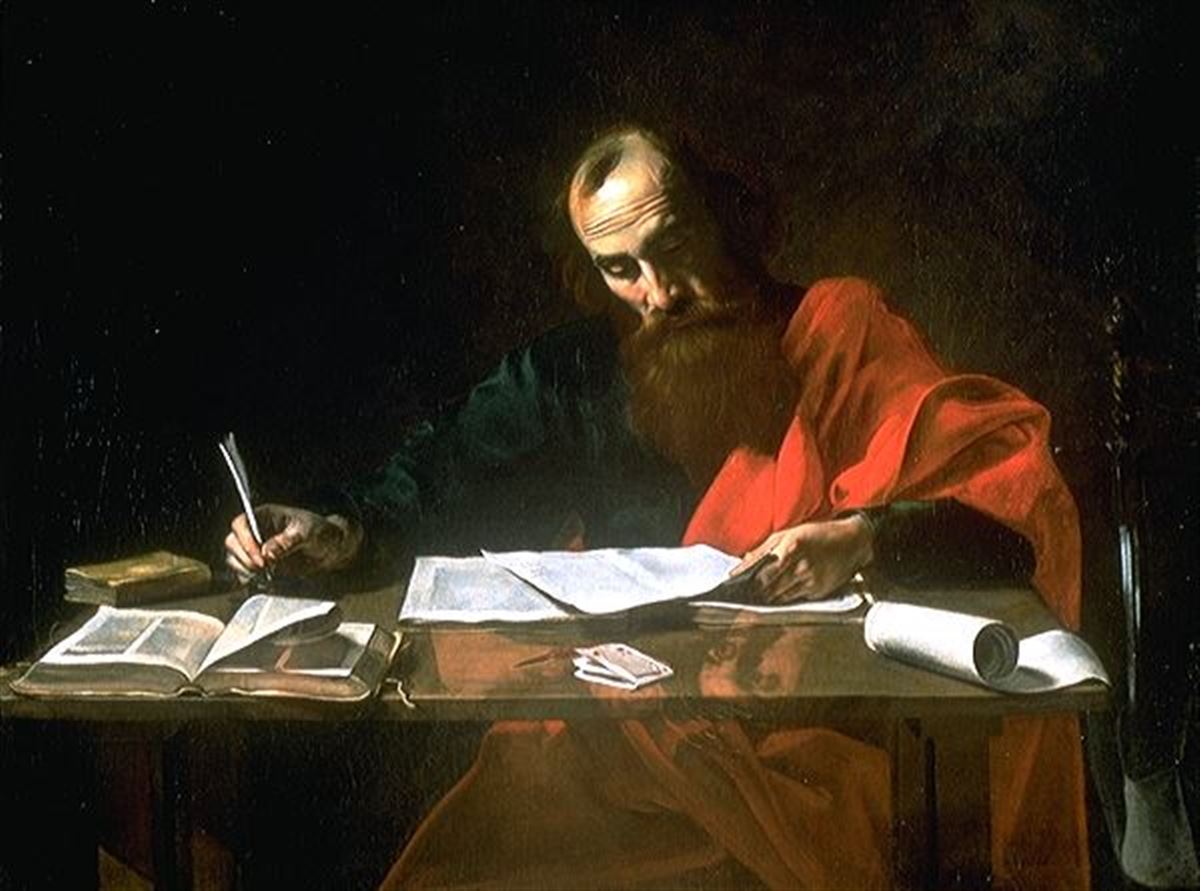
...trudging into the distance in the bleeding stinking mad shadow of Jesus...the Lord out of dust had created him, had made him blood and nerve and mind, had made him to bleed and weep and think, and set him in a world of loss and fire... --Flannery O'Connor
We interrupt this series walking through Jordan Peterson's book Maps of Meaning to say a few things about his recently released video "Message to the Christian Churches." Many readers reached out to me when the video landed, wondering about my reaction.
First, if you missed it, here's the video:
In tone, presentation, and style, the video is very "Jordan Peterson." Frankly, I felt the whole thing was comically overwrought. Still, the video has over a million views and has been praised by many, along with attracting the predictable criticism.
Regarding the content of the video, a few thoughts.
First, over half the video, the first half, is culture war stuff. This is the lamentable part of the message, and of Jordan Peterson as a whole. This is the part of Jordan Peterson that causes many of you to skip these Friday posts and question the amount of time I've devoted to walking through Peterson's Maps of Meaning.
Here's why that first half of the video is lamentable. Peterson is arguing that young men are not attracted to the church because of wokeism, critical race theory, social justice activism, political correctness, etc., etc., etc. Let me set aside for the moment any comment regarding the good, the bad, and the ugly of progressive, leftist politics. I mainly want to focus in on Peterson's claim that wokeism is keeping young men from going to church.
To start, Peterson is simply wrong about his diagnosis. The "crisis" of young men going to church isn't due to wokeism. This "crisis" is a longstanding historical trend. "Where have all the men gone?" was a common concern throughout the Protestant Reformation. And the early church was criticized by pagan critics as being too popular among women. In short, Christianity has had a two-thousand year long "issue" regarding male involvement. Contemporary concerns about young men and the church are not new but reflect a longstanding challenge.
Okay, so if wokeism isn't to blame why might this trend exist?
I'll confess that a proper answer would require a deep sociological analysis that I just haven't done. And I doubt any monocausal "explanation" will prove adequate. But let me dare to share a hunch.
My suspicion is that a religion that makes kenotic love the preeminent virtue is always going to struggle with highly agentic types (i.e, those prone toward aggression, competition, and dominance). And as Jordan Peterson never tires of reminding us, on Big 5 tests men are, statistically speaking, more agentic than women. (In the “Big Two” personality model of agency/communion, women are higher on communion, traits associated with interpersonal connection.) Simply, I think cruciformity is just a hard message for highly agentic men. Always has been, always will.
To be clear, I don't think being highly agentic means being "toxic." I'm just saying the Christian ethic of kenotic love is going to experience chronic friction with those who score higher on traits associated with aggression, competition, and dominance. And these people tend to be men.
A related issue concerns church life itself. Historically, church life has been both highly relational and patriarchal. This is a double whammy for highly agentic men. First, all the relational stuff at church holds little appeal to men who want to be off doing something active and competitive. Golfing or fishing will always be more appealing than singing "Oceans" for the millionth time. Plus, standing around on a Sunday doing a lot of small talk seems pointless and makes a lot of highly agentic men feel stupid and awkward. Second, churches have historically been patriarchal and hierarchical. Men have traditionally led churches. Which is great if you're one of the leaders. But if you're an agentic man, wired to chaff at being low on a dominance hierarchy, why would you give two flips about what Pastor Rick has to say? If you're wired to be an "alpha" submitting to authority is just no fun way to spend your time. You avoid it whenever you can. Highly agentic men aren't attracted to "being in submission" to other men.
Feel free to disagree with me about any of this. I'm just suggesting that there are some deeper and longstanding issues regarding men and Christianity that have nothing to do with Jordan Peterson's handwringing about wokeism.
Second, all that said, there is a challenge here. And Peterson is to be commended for drawing attention to the plight of young men. You might have not have a lot of sympathy for the "crisis of masculinity" in the modern world, but many do. Young men are struggling to figure out where they "fit" in the modern world. Many young men are lost.
So, how to respond to this situation?
Well, one way is to create an agentic version of Christianity. This was the vision of Mark Driscoll, who wanted to create a "masculine" version of Christianity. Jordan Peterson's message to the Christian churches is Mark Driscoll 2.0, suggesting that churches should offer young men an agentically-inflected Christianity. As Peterson says in the video:
“The Christian Church is there to remind people — young men included and perhaps even first and foremost — that they have a woman to find, a garden to walk in, a family to nurture, an ark to build, a land to conquer, a ladder to heaven to build, and the utter, terrible catastrophe of life to face stalwartly in truth, devoted to love and without fear.”
Regular readers of this Friday series will know what I think of this passage, especially in light of what I shared above. I appreciate what Peterson is trying to do. I love his compassion for young men. And yet, what Peterson describes above just isn't Christianity. A "ladder to heaven to build" is the Tower of Babel, and the line "a land to conquer" is just evil. Also, as I've shared recently in this series, given Peterson's metaphysics, he preaches stoicism, not Christ. You see that in the line "the utter, terrible catastrophe of life to face stalwartly." To be clear, I'm a huge fan of both existentialism and stoicism. I agree that facing "the utter, terrible catastrophe of life" is a hero quest. It's Viktor Frankl's Man's Search for Meaning. Amen to all that. It's just not the Good News of Christianity.
Lastly, Peterson ends the video on a poignant false dichotomy. Shall the church care about social justice or attend to the souls of young men? To which I ask: And why is this a choice? I don't understand why fighting racism or having a concern about global warming involves turning your back on young men. I think it possible to care about all these things. I think you can care about something like sex trafficking and the crisis of young men at the same time. This seems easy to me, but it appears to have flummoxed Jordan Peterson.
But does Peterson have a point that the church, by and large, has neglected to attend to the souls of young men? We can debate that. The church is a mixed bag. But it does seem to me that too many young men are lost in video games, porn, gun culture and drug use. And I think the church should care about this just as much as Jordan Peterson does.
Let's talk about something uncontroversial, like white fragility!
I expect many readers will have a ton of reactions to the term "white fragility" given how that term, along with "woke," "critical race theory," and "antiracism," have become a part of the culture wars. But in keeping true to myself and this space, I could care less about the culture wars. And I think the vast majority of my readers follow me for just that reason.
To start, for the few who haven't heard of the term, "white fragility" describes how white people can become upset and defensive when talking about issues of race and racial privilege.
That white fragility exists I'm taking as a given. For three reasons: 1) I've seen it in myself, 2) I've seen it among my students when we talk about race in class, and 3) I've seen it in my church when the church has tried to talk about race. Trust me, ask any pastor of a majority white church how relaxed and open-hearted their congregation is when they have tried to bring up issues of racial justice. By and large, when it comes to race, white churches can be pretty defensive. This should not be news to anyone.
Which brings me to our first chicken and egg problem.
First, the chicken. To have a productive conversation about race certain virtues have to be in place, virtues like emotional self-control, empathy, perspective-taking tolerance for conflict, and a capacity for moral self-criticism. A certain degree of maturity is required to have a productive conversation about difficult subjects such as race.
Next, the egg. To create capacities and virtues for difficult conversations you need to have some difficult conversations. As I said in my last post, virtues require practice.
So you see the problem: We need to have difficult conversation to acquire capacities for difficult conversations. But if we lack those capacities for difficult conversations we never have the difficult conversations. And so the capacities are never developed.
Again, just ask any pastor who has ever tried or wants to try to have a difficult conversation about race, or any controversial issue, with their church. The pastors want to have the conversation, but their people lack the virtues necessary to have the conversation. At least a productive conversation. And so, the conversation never happens. And the church never changes.
In my trainings and consultations with churches I've come to describe what I call "the imperative to virtue gap." That description might be new, but the idea is old.
Specifically, we can't expect performance where we lack capacity. This is a point with a rich history in the spiritual formation literature. Spiritual formation concerns practices that form habits. These habits create virtue, holy capacities of thought, heart, and action.
Think about moral performance as akin to musical or athletic performance. We can't expect performance where there has been no practice. We can't tell a new pianist to play a Bach concerto. Or a new golfer to hit a driver straight and long.
And yet, we regularly expect moral performance to emerge at the sharp end of a command. We traffic in imperatives, "Do this, do that." Yet we lack the capacities for the performance. We've never practiced. Spiritual formation has to bridge this imperative to virtue gap.
There is a related problem here, which this series is about. In my work with churches we regularly face what I call "the chicken and egg problem." The chicken and egg problem concerns how we often require a virtue in order to submit to or learn from a season of training and habit formation. Think about the virtue that athletic people call "coachability." Coachability refers to your willingness to accept feedback and criticism and to make adjustments accordingly. That is to say, practice is only effective for an athlete if they are coachable. There is a virtue necessary to make practice effective.
So what happens if an athlete isn't coachable? Practice is much less effective. So we're in a chicken and egg problem. Virtues are acquired through practice, but you can also lack virtues that makes practice effective. Or lack virtues that allow you to submit to practice. Laziness and busyness, for example, interfere with practice. So what comes first? The virtue or the practice? What sort of practice cultivates the virtue of coachability when the people engaged in the practice are uncoachable?
Chicken, meet egg. Egg, meet chicken.
When you work with churches this chicken and egg problem shows up over and over again. In the posts to come I'll share some chicken and egg problems that churches regularly face.
In our adult faith Bible class at church a few months ago we were in Acts 5, the story of Ananias and Sapphira.
This story is a pretty triggering text for modern, progressive Christians. The idea that God would strike someone dead for lying about holding some money back from the church seems, well, very Old Testament. In the scariest sense.
But here's a thought I'd like to share about this story.
Before that, though, a couple of observations.
First, it's clear that Acts 5 needs to be read in contrast to Acts 4. At the end of Acts 4 we get this vision of the economy of the kingdom:
All the believers were one in heart and mind. No one claimed that any of their possessions was their own, but they shared everything they had. With great power the apostles continued to testify to the resurrection of the Lord Jesus. And God’s grace was so powerfully at work in them all that there were no needy persons among them. For from time to time those who owned land or houses sold them, brought the money from the sales and put it at the apostles’ feet, and it was distributed to anyone who had need. Joseph, a Levite from Cyprus, whom the apostles called Barnabas (which means “son of encouragement”), sold a field he owned and brought the money and put it at the apostles’ feet.
It's a radical vision. No one claimed any of their possessions to be their own. They shared everything they had, even selling off property. And the outcome was that there was no needy person among them.
From that picture we immediately step into the story of Ananias and Sapphira, a couple who also sells their property but lies about keeping back a part of the profits for themselves.
Clearly, the story of Ananias and Sapphira is a strong and stiff warning that the economy and community of Acts 4 is only sustainable through transparency and fidelity to the community. In game theoretic terms, the story of Ananias and Sapphira is expressing a deep concern about free riders in the early Christian communities. Given the communal sharing within the early church, free riders seem to have been a pressing concern. Free riders always are in communitarian communities. The economics of Acts 4, throughout history, and across all sorts of communal experiments, Christian and non-Christian, have proven to be about as stable as a soap bubble. And the problem that always kills such communities is free riding.
Given that threat, it's logical that a stern warning is laid down in the story of Ananias and Sapphira.
A second point here concerns collectivistic versus individualistic cultures. Living as we do in an individualistic and libertarian culture, we find the punishment of Ananias and Sapphira to be over the top. Loyalty to the group just isn't a moral priority for us Westerners. But in collectivistic cultures, like the culture of the early church, fidelity to the group is of paramount importance. To sin against the group would, in their eyes, merit the harshest of punishments.
Third, while it is logical to assume God struck down Ananias and Sapphira, the text is ambiguous on this point. Peter confronts both Ananias and Sapphira about their deception and they both simply die:
"When Ananias heard this, he fell down and died...At that moment she fell down at his feet and died." This gives us some theological wiggle room in interpreting what happened. Did they die from shock? Did God actively kill them or simply withdraw life from them? We just don't know. My preferred way of looking at this is to frame what happened in strongly theological terms: The story doesn't say Ananias and Sapphira were killed, simply that Ananias and Sapphira stepped out of life and into death.
Those observations made, here's the main point I'd like to share about this story.
Specifically, lots of progressive Christians have no problem criticizing capitalistic economies as being economies of death. That is, capitalism works for most of us, but if you can't keep up you're thrown to the wolves. On the edges of capitalistic economies people live in very precarious situations, lives of hunger, homelessness, privation, and limited access to health care. People die because they do not have access to wealth.
In Acts 5 we also see people die. But in this case the people who die are not the needy. In Acts 5 the people who die are those who refuse to share with the needy, those who hoard their wealth.
So, given that contrast, which economy of death should we choose? People are dying either way. Should the needy die? Or those who refuse to share with the needy?
I get why progressive Christians recoil at Acts 5. They see something that looks wrathful and judgmental in the Bible and they freak out. Progressive Christians can be a pretty fragile bunch when it comes to reading Scripture. They see something in the Bible that doesn't fit into their preferred hermeneutical framework and just stop thinking. But if we took two seconds to think about this story, my hope would be that progressive Christians would come to see something pretty remarkable in the text: the church is putting the responsibility of taking care of the needy upon itself. That's what this story is doing. Pondering that, compare Acts 4 and 5 with how we treat the needy in capitalistic economies. Are the wealthy in capitalistic economies shouldering the burden of making sure there is no needy person among us? And if not, wouldn't we like to see a world where an Acts 5 imagination was the norm?
There is some angst in pondering the the noetic effects of sin. In some traditions it can create a two-tiered epistemological world. On the top are the Christians, the spiritually wise and enlightened. On the bottom are the non-believers, whose minds have been "darkened":
So I tell you this, and insist on it in the Lord, that you must no longer live as the Gentiles do, in the futility of their thinking. They are darkened in their understanding and separated from the life of God because of the ignorance that is in them due to the hardening of their hearts. (Eph 4.17-18)
I've seen texts like these used to advocate for Christian nationalism and a very worrisome movement called Christian dominionism. You can see how the dots are easily connected: the enlightened people need to be in charge.
Given these temptations, we should quickly turn to consider the epistemological contents of "the mind of Christ," what clear, undamaged perception might help us see.
Let's go back to 1 Corinthians 3, the passage we looked at in the last post.
Recall, Paul puts before us a contrast between the "spiritual" and the "unspiritual," and how the unspiritual cannot know, discern, or understand the things of God. But what might these things be?
Right before the passage in question, Paul describe how the message of God came to the Corinthians. He writes,
And so it was with me, brothers and sisters. When I came to you, I did not come with eloquence or human wisdom as I proclaimed to you the testimony about God. For I resolved to know nothing while I was with you except Jesus Christ and him crucified. I came to you in weakness with great fear and trembling. My message and my preaching were not with wise and persuasive words, but with a demonstration of the Spirit’s power, so that your faith might not rest on human wisdom, but on God’s power.
Notice the perceptual damage! The message of God did not come to the Corinthians with "eloquence or human wisdom." Paul did not use "wise and persuasive words." The message came in weakness, great fear, and trembling. And what was that message? "I resolved to know nothing while I was with you except Jesus Christ and him crucified." Note the word "know."
The noetic effects of sin made the Corinthians unable to see the power of God in the crucified Christ. This perceptual damage was causing them to elevate human wisdom, eloquence, and persuasive speech.
This theme continues in Chapter 4. Right after Paul says "we have the mind of Christ," he writes,
Brothers and sisters, I could not address you as people who live by the Spirit but as people who are still worldly—mere infants in Christ. I gave you milk, not solid food, for you were not yet ready for it. Indeed, you are still not ready. You are still worldly. For since there is jealousy and quarreling among you, are you not worldly? Are you not acting like mere humans? For when one says, “I follow Paul,” and another, “I follow Apollos,” are you not mere human beings?
We see again the references to perceptual damage. Paul could not address the church as "people who live by the Spirit but as people who are still worldly." They are acting "like mere humans." But what's the problem? The problem is that they are quarreling, jealous and factious. These are the effects of perceptual damage.
All that to say, when we talk about the noetic effects of sin, the relative enlightenment between spiritual and unspiritual people, we have to immediately talk about the contents of "the mind of Christ." The mind of Christ draws us to the power of God that shows up in weakness, great fear, and trembling. The mind of Christ doesn't draw us to the top, but to the bottom. We know nothing except Christ and him crucified. That knowledge marks you as "spiritual."
By contrast, ambition and pride mark you as unspiritual, immature, lost and blind. And whenever you see Christians flying flags of support for various leaders--"I follow [insert name of leader]."--we are seeing "mere humans," immature and worldly Christians, not the spiritually enlightened.
Having discussed both Satan and Christ--the "hostile brothers"--Peterson turns to talk about Carl Jung's work on alchemy.
Late in this life, Carl Jung spent a lot of time studying the mysteries of alchemy. Many have considered this bit of Jung's work esoteric. Woo woo quackery. You, yourself, might find it hard to believe you are about to read something about alchemy. Consequently, Peterson begins this part of the book on a defensive note, defending Jung's interest in alchemy along with alchemy itself.
For my part, in reading this part of the book, it seemed like a lot of heavy lifting to make points Peterson has already made. Let me illustrate by sharing the core idea.
As Peterson recounts, and as you likely already know, the goal of alchemy was to discover "the Philosopher's Stone." The Philosopher's Stone would enable the transformation of base metals into gold. The Stone was also believed to heal and prolong life, even conferring immortality.
Even in this brief sketch it's not hard to see why Peterson would groove to alchemy. Recall how, for Peterson, life involves transforming Chaos into Order. This is the "make your bed" and "slay the dragon" idea. That hero journey maps easily onto the alchemical quest: the transformation of something worthless in my life into something valuable. As Peterson succinctly says, "Jung essentially discovered, in the course of his analysis of alchemy, the nature of the general human pattern of adaptation..." Coping is alchemy.
So you see my point about how this is really just a rehashing. Slaying the dragon is the Philosopher's Stone. Ordering the chaos becomes the transformation of the raw materials of life into something precious and valuable. Instead of stealing the gold from the dragon, we make the gold. The challenge of life is alchemy, the continual process of taking the raw material of experience and consciousness and transforming it into gold. Given this convergence, Peterson spends time in this chapter recasting the Hero archetype as an alchemical transformation. The Hero becomes the Philosopher's Stone.
Does all this rehabilitation of alchemy add any value to the overall point? Not really, but there is value in shifting metaphors. Recall how, early in this series, I worried about the agentic call to "slay the dragon," how that call might appeal to young men and cause problems when Chaos is gendered as feminine. The Philosopher's Stone frame, by contrast, is less violent. The central metaphor moves away from "slaying" to "transformation."
Which makes me wonder if other metaphors might step in to do the same work, and even provide advantages. Why not, for example, describe all this as gardening? In gardening you face Chaos, the entropic tendency toward disorder and decay. The call of life is to make beautiful things grow where there is only thorns and weeds. Isn't that the same idea behind "make your bed"? Don't let the weeds grow in your life? Isn't gardening a lovely, nurturing vision of what an "antidote to chaos" might look like? And if the garden is gendered (e.g., Mother Earth) doesn't the metaphor of cultivating put us in a more cooperative and humble posture in contrast to seeking to "slay" the disorder that is in front of us?
In recent posts I've shared that we've been studying through 1 Corinthians out at the prison.
In 1 Corinthians 3, Paul says some things about the noetic effects of sin:
And we speak of these things in words not taught by human wisdom but taught by the Spirit, interpreting spiritual things to those who are spiritual.
Those who are unspiritual do not receive the gifts of God’s Spirit, for they are foolishness to them, and they are unable to understand them because they are spiritually discerned. Those who are spiritual discern all things, and they are themselves subject to no one else’s scrutiny.
“For who has known the mind of the Lord
so as to instruct him?”
But we have the mind of Christ.
This is one of the strongest passages in the New Testament about the noetic effects of sin. Paul speaks of "spiritual things" that can only be known or interpreted by "spiritual" persons. "Unspiritual" persons, by contrast, "are unable to understand" such things "because they are spiritually discerned." Critical to this discernment is having "the mind of Christ." To have the mind of Christ is to be able to know, discern, understand, and interpret "spiritual things."
In the next post I'll share a bit more about what the "mind of Christ" enables us to see. Today I'm just drawing attention to how, for Paul, sin has noetic and epistemological effects. Unspiritual people, according to Paul, are unable to discern, know, or understand the gifts of God's Spirit.
As regular readers and readers of Hunting Magic Eels know, I've been writing and thinking a lot about the perceptual aspects of faith. Faith as vision, faith as seeing, faith as attention.
These explorations have led me to places within the Christian tradition concerning what is called "the noetic effects of sin."
The word "noetic" comes from the Greek word noein, "to perceive." The noetic effects of sin concern how sin affects our perception.
Most of us think of sin in moral terms. Sin is a moral failure, missing the moral mark, disobeying God's law. But the Bible and the Christian tradition also describes sin as having perceptual consequences. Sin affects our vision. Phrased differently, sin has epistemological consequences, affecting our ability to know and how we envision the truth.
Simply, the noetic effect of sin is perceptual damage. Blurred vision. A wounded mind.
This changes how we might think about being "lost." Growing up in a conservative Christian tradition, "lost" has generally meant for me "damned," heading to hellfire. But from a noetic perspective, lost can simply mean lost. As in, you have no idea where you are or where you are going. Maybe because it is dark and you can't see. Maybe because you lost your compass and map. The issue is perceptual and epistemological.
This is a helpful shift of focus. When I describe the world as being "lost," I don't have to think of people as being particularly depraved or going to hell. I can, rather, simply see people as lost, noetically lost--rudderless, confused, wandering, and directionless.
I mentioned recently that we've been going through the book of 1 Corinthians out at the prison.
1 Corinthians is a tough book to teach. It's a walk through issue after issue, problem after problem, as Paul fires off advice. And a lot of that advice is strange, confusing or hard to swallow. A chapter by chapter approach just takes you down one rabbit hole after another.
To avoid this, one of the things I've tried to do is trace a theme through the entire letter. A theme that runs through all of Paul's letters. Specifically, whenever he can, Paul points to yielding as the way of Jesus. We look not to our own interests, but to the interest of others. To be sure, many of the issues in 1 Corinthians cannot be addressed by yielding. Issues like sexual immorality or beliefs concerning the resurrection of Jesus can't be handled through yielding. But many of the conflicts in the Corinthian church can. A sampling:
To have lawsuits at all with one another is already a defeat for you. Why not rather suffer wrong? Why not rather be defrauded? (6.7)
The husband should give to his wife her conjugal rights, and likewise the wife to her husband. For the wife does not have authority over her own body, but the husband does. Likewise the husband does not have authority over his own body, but the wife does. (7.3-4)
This "knowledge" puffs up, but love builds up. If anyone imagines that he knows something, he does not yet know as he ought to know. (8.1-3)
But take care that this right of yours does not somehow become a stumbling block to the weak...Therefore, if food makes my brother stumble, I will never eat meat, lest I make my brother stumble. (8.9,13)
Nevertheless, we have not made use of this right, but we endure anything rather than put an obstacle in the way of the gospel of Christ. (9.12)
For though I am free from all, I have made myself a servant to all, that I might win more of them. (9.19)
Not all things build up. Let no one seek his own good, but the good of his neighbor. (10.23-24)
Just as I try to please everyone in everything I do, not seeking my own advantage, but that of many, that they may be saved. (10.33)
So then, my brothers, when you come together to eat, wait for one another. (11.33)
But God has so composed the body, giving greater honor to the part that lacked it, that there may be no division in the body, but that the members may have the same care for one another. If one member suffers, all suffer together; if one member is honored, all rejoice together. (12.24-26)
Love is patient and kind; love does not envy or boast; it is not arrogant or rude. It does not insist on its own way; it is not irritable or resentful; it does not rejoice at wrongdoing, but rejoices with the truth. Love bears all things, believes all things, hopes all things, endures all things. (12.4-7)
So with yourselves, since you are eager for manifestations of the Spirit, strive to excel in building up the church. (14.12)
Let all things be done for building up. (14.26)
Again, not every problem in Corinth can be handled through yielding. But Paul's advice about yielding shows up as the solution for dealing with a wide variety of problems:
Lawsuits among believers
Sex in marriages
Food offered to idols
Paul's defense of his ministry
Divisions in the Lord's Supper
The use of spiritual gifts in the assembly
The call to yield is the answer to a great many of the difficulties in the church. And not just in Corinth, we find this call throughout all of Paul's letters. Yielding sits at the heart of Paul's vision of kingdom living and Christ-shaped character.
I was poking around the gift ship of a small Catholic church and came across a bracelet I'd never seen before. This is one of the things I enjoy about the Catholic tradition, its quirky vastness. You're always bumping into something you've never seen before, some obscure saint or local shrine or bit of history.
The bracelet caught my attention because it had representations of "the seven archangels."
If you're a Protestant, you've heard of two archangels: Michael and Gabriel. You might also know the archangel Raphael from the book of Tobit in the Apocrypha.
The other four archangels are much more obscure: Uriel, Camael, Jophiel, and Zadkiel.
Do note that, if you go down this rabbit hole, that the spelling of the names vary.
The idea that there are seven archangels comes from Tobit 12.15, where Raphael says, "I am Raphael, one of the seven holy angels who present the prayers of the saints and enter into the presence of the glory of the Holy One." The names of some of these archangels comes from Jewish angelology. For example, some of these archangels are named in the book of 1 Enoch, which influenced the New Testament writers.
In the Christian tradition, the seven archangels are named by Pseudo-Dionysius, the influential Christian theologian and mystic who wrote around the 5th and 6th centuries.
Anyway, I bought the bracelet. Too fascinating to pass up.
Following on from last week, Peterson continues further in describing Christ as a hero archetype. Last week we discussed how, for Peterson, Christ represents moral progress and evolution as we move from rigid adherence to rules and social norms to stand as free individuals of principled heroic conscience.
Having made that contrast, Peterson goes further and links this heroic moral advancement to Christ's passion and crucifixion. He writes:
[Christ's teaching] "Sufficient unto the day is the evil thereof" does not mean "live the life of the grasshopper instead of the ant, sing in the summer and starve in the winter," but concentrate on the task at hand. Respond to error, when committed. Pay attention, and when your behavior produces a consequence you find intolerable, modify it--no matter what it takes to produce such modification. Allow consciousness of your present insufficiency to maintain a constant presence, so that you do not commit the error of pride, and become unbending, rigid, and dead in spirit. Live in full recognition of your capacity for error--and your capacity to rectify such error. Advance in confidence and faith; do no shrink back, avoiding the inevitable contact with the terrible unknown, to live in a hole that grows smaller and darker.
The significance of the Christian passion is the transformation of the process by which the goal is to be attained into the goal itself: the making of the "imitation of Christ"--the duty of every Christian citizen--into the embodiment of courageous, truthful, individually unique existence...
Christ said, put truth and regard for the divine in humanity above all else, and everything you need will follow--not everything you think you need, as such thought is fallible, and cannot serve as an accurate guide, but everything actually necessary to render acutely (self)conscious life bearable, without protection of delusion and necessary recourse to deceit, avoidance or suppression, and violence...
As you know by now, I'm in two minds about passages like these in Maps of Meaning. Peterson's treatment of Christ has been my big, recurring criticism.
In Peterson's hands, Christ becomes a Sisyphean Hero. Recall that Sisyphus was condemned by the gods to roll a rock up a hill for all eternity. Albert Camus made Sisyphus the central figure in his existential treatise The Myth of Sisyphus. Existence is intolerable and facing the unknown is terrifying. We stand like Sisyphus at the foot of the hill, facing the boulder and the existential task confronting us. Christ is the heroic archetype because he courageously pushes the boulder of existence and consciousness up the hill. This is the Passion of the Christ.
Let me say first that I love existentialism. I do feel that, most days, life is a Sisyphean task. This is Viktor Frankl's point in Man's Search for Meaning. And so, I don't object much at all at Peterson's descriptions of the human predicament and its existential demands. I think it's clear why so many people, especially young men, have responded to Peterson's work as they face the existential void that is modern life. Young men are lost in fogs of video games and porn. Calling them to the Sisyphean task to make something of themselves is a good message.
And yet, as I hope Christian readers can see, making Christ a Sisyphean hero, especially in his Passion, radically misses the point of the gospel. To say that the imitation of Christ, as "the duty of every Christian citizen," is to embody "courageous, truthful, individually unique existence" is pretty cringe-worthy. It shows the limits of reading the gospels as therapeutic existentialism, as profound as therapeutic existentialism might be.
When we get right down to the main issue with how Peterson handles Christ and the gospels, it boils down to metaphysics. Peterson might fight with atheists and he might talk a lot about the Bible, but his metaphysics, so far as I can tell, is pretty materialistic. Outside of consciousness there's just nothing out there but matter. Consciousness recoils in horror looking out at that meaningless void. Consciousness trapped within this materialistic universe is terrifying and intolerable. That word--intolerable--comes up a lot with Jordan Peterson. Consequently, the heroic act is to carry this burden of consciousness, to bear the weight of intolerable existence. For Jordan Peterson, this is what it means to "follow Christ" in "carrying your cross." At the end of the day, the cross reduces to existential coping.
And while there is something inspiring about that vision, this is all Christ can ever be given Peterson's metaphysics. But Christian metaphysics says you're not in a Sisyphean situation. Christian metaphysics sets before us a different ontology. Rolling the rock of life up the hill might be Herculean, but it's not Sisyphean. You are not alone in facing the rock and the hill. Love accompanies you. Life is full of story, purpose, and worth. Hope is baked in.
Christ isn't an archetype. Christ is an ontological reality.
And that, it seems to me, makes all the difference.
Out at the prison, over many years, we've been studying through the entire Bible. This week we reached 1 Corinthians.
I was struck by the epistemological themes in the first three chapters of 1 Corinthians. Regular readers will recall a series I did many months ago where I described the gospel as the "epistemological crisis" of the world. In that series we looked at the epistemological themes from 1 Corinthians 1, but those themes continue on through chapters two and three. Consider:
And so it was with me, brothers and sisters. When I came to you, I did not come with eloquence or human wisdom as I proclaimed to you the testimony about God. For I resolved to know nothing while I was with you except Jesus Christ and him crucified. (1 Cor. 2.1-2)
We do, however, speak a message of wisdom among the mature, but not the wisdom of this age or of the rulers of this age, who are coming to nothing. No, we declare God’s wisdom, a mystery that has been hidden and that God destined for our glory before time began. None of the rulers of this age understood it, for if they had, they would not have crucified the Lord of glory. (1 Cor. 2.6-7)
This is what we speak, not in words taught us by human wisdom but in words taught by the Spirit, explaining spiritual realities with Spirit-taught words. The person without the Spirit does not accept the things that come from the Spirit of God but considers them foolishness, and cannot understand them because they are discerned only through the Spirit. The person with the Spirit makes judgments about all things, but such a person is not subject to merely human judgments, for,
“Who has known the mind of the Lord
so as to instruct him?”
But we have the mind of Christ. (1 Cor. 2.13-16)
Do not deceive yourselves. If any of you think you are wise by the standards of this age, you should become “fools” so that you may become wise. For the wisdom of this world is foolishness in God’s sight. As it is written: “He catches the wise in their craftiness”; and again, “The Lord knows that the thoughts of the wise are futile.” (1 Cor. 3.18-20)
For three whole chapters Paul dwells upon these epistemological themes, describing how "Jesus Christ and him crucified" turns the wisdom of the age into foolishness. The death and resurrection of Jesus is an epistemological revolution, calling into question all prior claims to truth and knowledge.
But lest we think that Paul's message concerning the epistemological crisis of the cross is arcane and philosophical, what is revealed in 1 Corinthians 1-3 is how Paul uses this epistemological crisis to make a pastoral intervention. The Corinthian church was divided and fighting amongst themselves. And we see the conflict woven through 1 Corinthians 1-3:
I appeal to you, brothers and sisters, in the name of our Lord Jesus Christ, that all of you agree with one another in what you say and that there be no divisions among you, but that you be perfectly united in mind and thought. My brothers and sisters, some from Chloe’s household have informed me that there are quarrels among you. What I mean is this: One of you says, “I follow Paul”; another, “I follow Apollos”; another, “I follow Cephas”; still another, “I follow Christ.” (1 Cor. 1.10-12)
You are still worldly. For since there is jealousy and quarreling among you, are you not worldly? Are you not acting like mere humans? For when one says, “I follow Paul,” and another, “I follow Apollos,” are you not mere human beings? (1 Cor. 3.3-4)
For Paul, it was the "wisdom of this age" that was causing these conflicts and divisions. Paul's epistemological message wasn't philosophical but pastoral in aim. Having "the mind of Christ," being able to make spiritual "judgments" and "discernments," would heal these fractious divisions and quench the partisan spirit. The epistemological crisis of the gospel isn't Gnostic but results in a social revolution.
As a part of that devotional, Tim and David, the hosts of Nomad, asked if I'd collect and take a picture of a stack of books that have been influential in my life, along with a few of my own titles. It was a fun and quick way to share some resources and title recommendations with the Nomad audience.
So, I walked around the house pulling titles that have been important to me and collected the following stack:
Beyond those longtime influences, the other titles here were critical to my journey of reconstruction: Dorothy Day, Karl Barth, Fleming Rutledge, Tom Holland, David Bentley Hart, Francis Spufford, Marilynne Robinson, St. Augustine, Flannery O'Connor, Herbert McCabe, Fyodor Dostoevsky, Dante, and Thomas Merton. The Liturgy of the Hours and Every Moment Holy represent recovering prayer in my life. And, of course, the Bible.
For my own titles, I picked Trains, Jesus and Murder because of the impact of prison ministry upon my life, and how it illustrates continuity with my past: solidarity with the oppressed, the prophetic imagination, and resisting the principalities and powers. Hunting Magic Eels represents my current "reconstructed" faith: My journey from a social justice-oriented but disenchanted faith, to an enchanted faith where God matters, every moment is holy, and love still wins.
My favorite passage from Augustine's Confessions comes from Book 9. Shortly before Monica's death, Augustine recounts a moment he and his mother share together.
Mother and son are looking out a window, and they are talking about heaven. Less about heaven the place than about unity with God, coming to rest in that One who has given us life and is our final joy. It is a poignant conversation given Monica's looming death. And as mother and son discuss life with God, their hearts and minds pressing deeper and deeper into that mystery of Love, they reach the climax of their conversation, which I've formatted below for savoring:
So we said:
"If the commotion of the flesh were to fall silent in a man,
silent the images of the earth and the waters and the air,
and silent the heavens,
and the soul were silent to itself
and by not thinking of itself would surpass itself,
if all dreams and imaginary revelations were silent,
and silent every tongue and every sign and all that exists only transiently,
since if anyone could hear these things then this is what they would all would say:
'We did not make ourselves,
but He who abides in eternity made us.'
If having said this they fell silent,
having led us to open our ears to Him who made these things,
and He alone would speak through Himself
and not through them so that we would hear His Word
not through a tongue of flesh,
nor through an angel's voice,
nor through the thundering sound from the clouds,
nor through an obscure enigma,
but we might hear Him whom in these things we love,
hear Him without these things,
just as we now reached out
and in swift thought touched the Wisdom
that abides over all things in eternity.
If this could continue,
and other visions that were far inferior could be withdrawn,
and could this vision ravish and absorb and envelop its beholder
in inward joys,
so that eternal life would be like that one moment of understanding for which we longed,
then would this not mean:
Over the last few years, regular readers will know that I've spent a lot of time pondering the relationship between metaphysics and morality.
Specifically, I've made the argument that if morality is to be anything more than a personal preference, an expression about you like or don't like about the world, it has to have some ontological and metaphysical grounding. It's this grounding that makes moral obligations and duties universal. That is to say, a person cannot opt out if they disagree.
For example, let's say you want to engage in sex trafficking. You see this as a good job opportunity. When I say to you that sex trafficking is evil I'm saying something more than "I don't approve of sex trafficking." I'm doing more than expressing my opinion, which you'd be free to disagree with. To say something is evil is to brook no disagreement. Even if you disagreed, you still must stop. That's the difference between preferences and morality. Morality exists independently of your opinions and creates obligations you must recognize. If you are a sex trafficker you must stop. End of story. And to add a clarification, morality means more than that sex trafficking is illegal. Because even if sex trafficking were legal in some nation or world, it would still be wrong.
My point here is that most of us operate "as if" sex trafficking was evil, but often fail to endorse the metaphysics that would make that moral commitment justifiable and coherent. But there is no way around it, if you want to say that sex trafficking is evil, and most of us do, you're committed to making strong metaphysical claims, like it or not.
In a similar way, last week I shared how we need a similar connection between metaphysics and emotion. The two emotions I described were hope and compassion, and how if we don't have a metaphysics to support these emotions we experience distress or exhaustion. As with morality, we feel like we must have these feelings--compassion, hope--but fail to attend how metaphysics makes these emotions coherent and sustainable. For example, if you think the cosmos is directionless and purposeless, that we're all going to be dead one day and that the universe will eventually succumb to the forces of entropy, why should and how could anyone feel hopeful? Hope and metaphysics are intimately related. And yet, there are a lot of people walking around with Christian emotions who are trying to make those emotion jibe with a materialistic metaphysics. That's not a sustainable situation.
Putting it all together, I'm suggesting that a unified theory of life has to align three things:
Life is unified and coherent when all these pieces--metaphysics, morality, and emotion--support and inform each other. Many people, however, especially in a post-Christian world, are trying to sit on a single- or two-legged stool. They find themselves with moral sensibilities they cannot justify, or feelings they cannot sustain.
The final (long) chapter of Maps of Meaning is entitled "The Hostile Brothers: Archetypes of Response to the Unknown." The first part of the chapter discusses the first brother, "the Adversary." In this section Peterson shares his insights regarding evil and the satanic, with prolonged reflections upon the experience of the concentration camp. We've reviewed some of that material over the last few weeks.
Having considered Satan (the Adversary), Peterson turns to consider Christ as emblematic of the hero archetype. But before discussing Christ, Peterson starts with Moses.
Truth be told, at this point in Maps of Meaning I'm feeling that Peterson is just rehashing points he's made previously in the book. I don't feel there is much that is new in this section that we haven't covered before. But from a Jungian perspective, his contrast between Moses and Christ is of interest.
Simply, in Peterson's hands Moses stands as a Jungian archetype for law and Christ represents the heroic transcendence of the law in the individual conscience. Peterson states, "Christ's [life and teachings] signified transition of morality from reliance upon tradition to reliance on individual conscience--from rule of law to rule of spirit--from prohibition to exhortation. To love God means to listen to the voice of truth and to act in accordance with its messages; to love thy neighbor, as thy self."
No matter what one might think about this theologically, it's pretty standard moral development theory. Consider Kohlberg's theory of moral development, where moral reasoning goes from following rules and societal codes of conduct (conventional stage) to embrace more abstract and flexible moral principles, and where the individual conscience can stand against social norms when those norms are deemed to be immoral (post-conventional stage).
The theory of Spiral Dynamics makes a similar point, arguing that morality at a lower level of development tends to follow rules in a fairly rigid fashion which gives way to more abstract reasoning as moral development progresses.
What to say about this?
On the one hand, this is pretty standard fare. It's obviously true that moral reasoning grows more sophisticated with cognitive development. And many have argued that humanity as a whole has experienced moral evolution. See Steven Pinker's The Better Angels of our Nature, Robert Wright's Nonzero, or Karen Armstrong's The Great Transformation.
On the other hand, we're back to points I've made multiple times in this series, about the impoverished Christology on display here. And Peterson should take care to monitor the supersessionist temptations in seeing Christ displace Moses in a line of moral evolution.
To be clear, I don't mind people pointing to Jesus as an ideal moral exemplar. But problems come when we reduce Jesus to being a moral guru or an enlightened human being. We see Jesus standing at a summit of moral progress with a smooth road leading up to him. We climb, as heroes, toward that summit. We are on a journey of moral and spiritual self-actualization. But in the Christian story, this entire enterprise is radically called into question. We can't climb. We can't self-actualize. We're stuck. And so Christ comes down to us and dies for the ungodly.
I'll readily admit that it's not fair to expect Jordan Peterson to share these views about the gospel. So I'm not really leveling a criticism toward him. I'm mainly raising a caution flag for Christian fans and readers of Jordan Peterson, alerting them to readings of Christ that trade the radical news of the gospel for a psychological theory of moral self-improvement.
Because we moderns see spirit as ghostly and insubstantial when compared to material reality, we tend to not understand how the church fathers conceived of salvation as ontological repair.
Among Protestants, salvation has mainly been viewed in forensic terms, through a crime and punishment perspective, where issues of guilt, judgment, and forgiveness are the main issues. Though a sinner, I am forgiven because of Christ's sacrifice and God's grace.
While there has been a lot of pushback about these soteriological themes, especially the package called penal substitutionary atonement, guilt and forgiveness are clearly Biblical motifs when it comes to salvation. So I am not dismissing this perspective.
What I am suggesting, however, is that when you read the church fathers their concerns are more ontological than forensic. Specifically, while they are concerned with the issue of guilt in the wake of sin, they are also deeply concerned with the ontological damage of sin. When separated from God material reality, due to its insubstantial and ghostly nature, is doomed to decay and corruption. Ontologically separated from God, material reality is teetering on the brink of non-being, fading into non-existence.
Much of what we witness in the world is this slide into corruption and non-being. Sickness, decay, damage, and death. Given this situation, what the world needs is less a clean slate, an innocent verdict in a court of law, than ontological repair. This is what happens in the Incarnation and resurrection, the reunion of flesh and Spirit. In Christ, the ontological rift between material reality and Spirit is healed, rescuing us from the forces of death and decay. That is how the church fathers viewed salvation. Salvation is ontological repair, where, as Paul describes in 1 Corinthians 15, the corruptibility of material reality is clothed in incorruptibility. Our transition into the spiritual realm doesn't make us ghostly souls, but makes us more solidly real.
The more I explore how the early church fathers thought about things like the Incarnation and resurrection, along with how those relate to our salvation, the more I'm struck by the metaphysical disjoint between then and now.
Consider the relationship between the material and spiritual worlds.
According to the church fathers, if you compare something like spirit to flesh, it's a no brainer that spirit is more real than flesh. The material world is fleeting, evanescent, transient, corruptible, and insubstantial. Simply, the material world is ghostlike. The spiritual world, by contrast, is permanent, substantial, and incorruptible.
A nice literary imagining of this contrast comes from C.S. Lewis's The Great Divorce where he portrays heaven as more real than earth, so real that the grass of heaven hurts the feet of the barely substantial visitors from hell.
For us moderns, we see the situation as the exact opposite. For us, we view material, physical reality as hard and substantial, something you can knock on. The spiritual world, by contrast, is spectral, misty, shadowy, and ghostly.
My references to ghosts helps illustrates the contrast. For the church fathers, spirit was real and material reality was ghostly. For us, material reality is real and spiritual reality is ghostly.
My point here is that, because we moderns have the exact opposite ontological imagination when compared to the early church, we can't understand how they thought about things like salvation.
What is more real? Spirit or physical matter?
If you say, "physical matter" you're not going to understand the Bible or the church fathers.
Last week I made an observation about emotions and metaphysics. Specifically, in the West we've inherited emotional expectations from the Judeo-Christian tradition, but have jettisoned the metaphysics that catalyzed and sustained those emotions. Consequently, the emotional engine of many in the West is running on fumes. Without the metaphysical scaffolding, we're emotionally out of gas.
The emotion I mentioned yesterday was hope. Stripped of the Christian eschatological imagination, hope in the post-Christian West is just a feeling, a subjective state of optimism. This is weak tea in the face of troubling news reports, but feelings are all that are left behind once the Christian eschatological imagination has been stripped from a metaphysics of hope. Without metaphysical support, maintaining feelings of optimism, as no more than a warm emotional glow, is increasingly exhausting. The suggestion "Don't worry, be happy!" just isn't emotionally sustainable.
We're also observing a related exhaustion in relation to what is called empathy fatigue or compassion fatigue.
Again, we've inherited from the Judeo-Christian tradition the emotional expectation that good people are to care for all the world's suffering. We're to love everyone and care for everyone. This universal vision of compassion is the direct inheritance of the Judeo-Christian tradition. Good people care about all the things all the time. In fact, I’d argue that hope is precisely the metaphysical commitment that sustains engaged compassion.
And yet, as with hope, without the metaphysical support of the Judeo-Christian faith, universal compassion is an exhausting prospect. We see evidence of this everywhere, as post-Christian people cannot handle their social media feeds without massive amounts of compassion fatigue dragging them into despair, hopelessness, rage, and panic attacks. Just like we lack the metaphysics to support hope, we lack the metaphysics to support universal compassion.
The modern world is facing an unsustainable emotional predicament. As the children of Christianity, we believe we should be both hopeful and compassionate. And yet, as post-Christian moderns who have rejected Christian metaphysics, we find the emotions of both hope and compassion unsustainable and exhausting.
"The world is full of magic things, patiently waiting for our senses to grow sharper."
--W.B. Yeats
Jana came across this quote recently and shared it with me as it's a very nice summary of the thesis of Hunting Magic Eels. Enchantment is less a matter of belief than a practice of attention. The world is full of magic, but we have to look with sharper senses.
But that brings to mind my recent post concerning the "imperative to virtue gap." We can't just tell people to "Look!" or "Look harder!" in an effort to sharpen dulled senses. Perception is an acquired capacity.
Consequently, much of Hunting Magic Eels is devoted to sharing a suite of insights and ideas about how we might practice better attention to see a world full of magic things. For example, from the liturgical traditions I talk about the importance of material reminders and surroundings. From the contemplative tradition I talk about prayer disciplines, such as the prayer of examen. From the charismatic tradition I talk about attending to the emotional aspects of faith along with practices of gratitude and praise. And, finally, from the Celtic tradition I talk about the power of nature and how poetry can be a practice of a sacramental imagination.
The world is full of magic things, patiently waiting for our senses to grow sharper.
If ideological dogmatism, certainty, and rigidity impairs flexible adaptation, what moves us toward humility, openness, and flexibility as we encounter the unknown? In answer, Peterson turns to a deeply Christian concept: Metanoia.
As you likely know, metanoia is the word translated as "repentance" in the Bible. The root concept of the word means "to turn," associated with a "change" or "turn" of heart and mind. For Peterson, metanoia is a sign of humble fallibility--a willingness to admit error, to learn, to grow. That's a really healthy posture when life hits you with some hard truths, especially truths about your own failings and limitations. Here's Peterson:
The devil, traditional representation of evil, refuses recognition of imperfection, refuses to admit "I was in error, in my action, in my representation"; accepts as a consequence of unbending pride, eternal misery--refuses metanoia, confession and reconciliation...
Such refusal--the inability to say, "I was wrong, I am sorry, I should change," means the death of hope, existence in the abyss...
The act of metanoia is adaptation itself: admission of error, founded on faith in ability to tolerate such admission and its consequences...
As a Christian, I don't have much to add to this passage. It really speaks for itself, and profoundly so. I'll just add a personal reflection.
Jana and I have been married for almost 31 years. And in all those years, the times when I've tipped most toward the devil are those times when I've closed myself off from admitting and saying out loud and with a full heart, "I was wrong, I am sorry, I should change." A diabolical pride stood in the way, blocking relational healing. It’s so, so hard to get to "I was wrong, I am sorry, I should change," but if you refuse the relationship is doomed and hell is created on earth.
Email Subscription on Substack
Richard Beck
Welcome to the blog of Richard Beck, author and professor of psychology at Abilene Christian University (beckr@acu.edu).